- BPM
- 96
- Key
- E Minor
- Camelot
- 9A
Elgar: Cello Concerto in E Minor, Op. 85: I. Adagio - Moderato by Edward Elgar, Jacqueline du Pré, London Symphony Orchestra, Sir John Barbirolli Song Details
"Elgar: Cello Concerto in E Minor, Op. 85: I. Adagio - Moderato" by Edward Elgar, Jacqueline du Pré, London Symphony Orchestra, Sir John Barbirolli had its release date on 1965. Since This song is still less than 10 minute long, it is still considered a pretty long duration song compared to the average song length. This song does not appear to be explicit due to the lack of the "E" tag. The song is number 1 out of 9 in Elgar: Cello Concerto by Edward Elgar, Jacqueline du Pré, Sir John Barbirolli, Dame Janet Baker, London Symphony Orchestra. Going off of the ISRC code of this track, we detected that the origin of this track is from United Kingdom. In terms of popularity, Elgar: Cello Concerto in E Minor, Op. 85: I. Adagio - Moderato is currently average in popularity. In our opinion, the overall tone is not very danceable and projects negative sounds, such as being sad, depressed, or angry.
BPM and Tempo
The tempo marking of Elgar: Cello Concerto in E Minor, Op. 85: I. Adagio - Moderato by Edward Elgar, Jacqueline du Pré, London Symphony Orchestra, Sir John Barbirolli is Andante (at a walking pace), since this song has a tempo of 96 BPM. With that information, we can conclude that the song has a slow tempo. The time signature for this track is 4/4.
Music Key
E Minor is the music key of this track. Because this track belongs in the E Minor key, the camelot key is 9A. So, the perfect camelot match for 9A would be either 9A or 8B. While, a low energy boost can consist of either 9B or 10A. For moderate energy boost, you would use 6A and a high energy boost can either be 11A or 4A. However, if you are looking for a low energy drop, finding a song with a camelot key of 8A would be a great choice. Where 12A would give you a moderate drop, and 7A or 2A would be a high energy drop. Lastly, 12B allows you to change the mood.
Want to find the BPM and music key for other songs? Check out our BPM and Key Finder page!
- Popularity
- 50%
- Loudness
- -22.849 dB
- Acousticness
- 95%
- Danceability
- 12%
- Energy
- 10%
- Instrumentalness
- 22%
- Liveness
- 11%
- Loudness
- 62%
- Speechiness
- 4%
- Valence
- 4%
Recommendations
| Track | Artist | Key | Energy | Camelot | BPM | ||
|---|---|---|---|---|---|---|---|
 | Haydn: Cello Concerto No. 1 in C Major, Hob. VIIb:1: II. Adagio | Franz Joseph Haydn, Jacqueline du Pré, Daniel Barenboim, English Chamber Orchestra | F Major | 1 | 7B | 100 BPM | |
 | Piano Trio No. 1 in D Minor, Op. 32: III. Elegie: Adagio | Anton Arensky, The Rembrandt Trio | G Minor | 0 | 6A | 76 BPM | |
 | Variations on an Original Theme, Op. 36 "Enigma": 12. B.G.N. (Andante) | Edward Elgar, Wiener Philharmoniker, John Eliot Gardiner | B♭ Major | 1 | 6B | 75 BPM | |
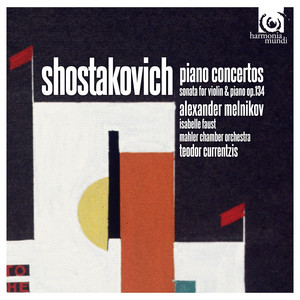 | Piano Concerto No. 2 Op. 102 in F Major: II. Andante | Dmitri Shostakovich, Alexander Melnikov, Mahler Chamber Orchestra, Teodor Currentzis | C Minor | 0 | 5A | 78 BPM | |
 | Elgar: Introduction and Allegro, Op. 47: I. Moderato | Edward Elgar, Sir John Barbirolli, Allegri String Quartet, Sinfonia Of London | G Major | 6 | 9B | 100 BPM | |
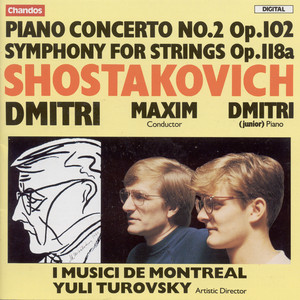 | Piano Concerto No. 2 in F Major, Op. 102: I. Allegro | Dmitri Shostakovich, I Musici de Montréal, Maxim Shostakovich | B♭ Major | 3 | 6B | 160 BPM | |
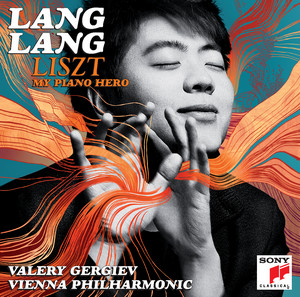 | Liebestraum No. 3 in A-Flat Major, S. 541 / 3 | Franz Liszt, Lang Lang | A♭ Major | 0 | 4B | 137 BPM | |
 | Mendelssohn: Song Without Words in D Major, Op. 109, MWV Q34 | Felix Mendelssohn, Jacqueline du Pré, Gerald Moore | D Major | 0 | 10B | 93 BPM | |
 | Bach, JS : Well-Tempered Clavier Book 1 : Prelude No.1 in C major BWV846 | Daniel Barenboim | C Major | 0 | 8B | 95 BPM | |
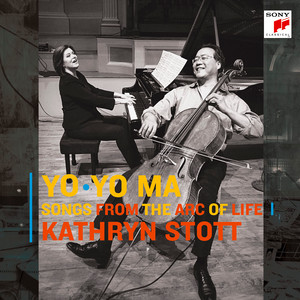 | Il bell'Antonio, Tema III | Giovanni Sollima, Yo-Yo Ma, Kathryn Stott | C Minor | 1 | 5A | 88 BPM | |
 | Romeo and Juliet, Op. 64, Act I: No. 13, Dance of the Knights | Sergei Prokofiev, Orchestre Symphonique de Montréal, Charles Dutoit | A Minor | 1 | 8A | 95 BPM | |
 | Tristan und Isolde, WWV 90: Prelude To Act I | Richard Wagner, Gewandhausorchester Leipzig, Andris Nelsons | A Minor | 1 | 8A | 79 BPM | |
 | Suite No. 3, P. 172: I. Italiana: Andantino | Ottorino Respighi, RTÉ National Symphony Orchestra | B♭ Major | 1 | 6B | 94 BPM | |
 | Cello Concerto No. 1 in A Minor, Op. 33: I. Allegro non troppo | Camille Saint-Saëns, Mischa Maisky, Orpheus Chamber Orchestra | F Major | 2 | 7B | 131 BPM | |
 | Prince Igor: Polovtsian Dances (Version for Chorus) | Alexander Borodin, Kiev Chamber Choir, Ukraine National Radio Symphony Orchestra, Theodore Kuchar | A Major | 2 | 11B | 110 BPM | |
 | Pelléas et Mélisande, Op.80: 3. Sicilienne | Gabriel Fauré, Academy of St. Martin in the Fields, Sir Neville Marriner | G Minor | 0 | 6A | 111 BPM | |
 | Valse triste, Op. 44 No. 1 | Jean Sibelius, Berliner Philharmoniker, Herbert von Karajan | G Major | 0 | 9B | 78 BPM | |
 | Scheherazade: The Sea & Sinbad's Ship | Nikolai Rimsky-Korsakov, Lars Hjalmar Joakim | E Major | 1 | 12B | 82 BPM | |
 | 1st Movement: Adaggio / Allegro Molto | London Philharmonic Orchestra | E Minor | 1 | 9A | 116 BPM | |
| La campanella in G-Sharp Minor (From "Grandes études de Paganini", S. 141/3) | Franz Liszt, Lang Lang | A♭ Minor | 3 | 1A | 88 BPM | |
 | Symphony No. 2: III. Adagio | Sergei Rachmaninoff, Valery Gergiev, London Symphony Orchestra | A Major | 0 | 11B | 70 BPM | |
 | Dvořák: Cello Concerto in B Minor, Op. 104, B. 191: II. Adagio ma non troppo | Antonín Dvořák, Jacqueline du Pré, Daniel Barenboim, Chicago Symphony Orchestra | G Major | 1 | 9B | 106 BPM | |
 | Scarborough Fair (Arr. Parkin for Cello and Guitar) | Traditional, Sheku Kanneh-Mason, Plínio Fernandes | D Major | 0 | 10B | 117 BPM | |
 | Etude in D-Sharp Minor, Op. 8, No. 12: Patetico - Remastered | Alexander Scriabin, Vladimir Horowitz | D♭ Minor | 3 | 12A | 72 BPM | |
 | 3 Pieces in Old Style: No. 1, Aria | Krzysztof Penderecki, Warsaw Philharmonic Chamber Orchestra, Antoni Wit | B♭ Major | 0 | 6B | 75 BPM |
- ISRC
- GBAYC9703140
- Label
- L-M Records/RCA Records