- BPM
- 75
- Key
- B♭ Major
- Camelot
- 6B
Variations on an Original Theme, Op. 36 "Enigma": 12. B.G.N. (Andante) by Edward Elgar, Wiener Philharmoniker, John Eliot Gardiner Song Details
"Variations on an Original Theme, Op. 36 "Enigma": 12. B.G.N. (Andante)" by Edward Elgar, Wiener Philharmoniker, John Eliot Gardiner had its release date on December 20, 2001. The duration of This song is about two minutes long, specifically at 2:50. This song does not appear to have any foul language. Variations on an Original Theme, Op. 36 "Enigma": 12. B.G.N. (Andante)'s duration is considered a little bit shorter than the average duration of a typical track. The song is number 16 out of 18 in Elgar: In the South; Enigma Variations by Edward Elgar, Wiener Philharmoniker, John Eliot Gardiner. Going off of the ISRC code of this track, we detected that the origin of this track is from Germany. Variations on an Original Theme, Op. 36 "Enigma": 12. B.G.N. (Andante) is not that popular right now. In our opinion, the overall tone is not very danceable and projects negative sounds, such as being sad, depressed, or angry.
BPM and Tempo
The tempo marking of Variations on an Original Theme, Op. 36 "Enigma": 12. B.G.N. (Andante) by Edward Elgar, Wiener Philharmoniker, John Eliot Gardiner is Adagio (slowly with great expression), since this song has a tempo of 75 BPM. With that information, we can conclude that the song has a slow tempo. The time signature for this track is 3/4.
Music Key
B♭ Major is the music key of this track. This also means that this song has a camelot key of 6B. So, the perfect camelot match for 6B would be either 6B or 7A. While, 7B can give you a low energy boost. For moderate energy boost, you would use 3B and a high energy boost can either be 8B or 1B. Though, if you want a low energy drop, you should looking for songs with either a camelot key of 6A or 5B will give you a low energy drop, 9B would be a moderate one, and 4B or 11B would be a high energy drop. Lastly, 3A allows you to change the mood.
Want to find the BPM and music key for other songs? Check out our BPM and Key Finder page!
- Popularity
- 15%
- Loudness
- -26.171 dB
- Acousticness
- 98%
- Danceability
- 11%
- Energy
- 6%
- Instrumentalness
- 86%
- Liveness
- 19%
- Loudness
- 56%
- Speechiness
- 5%
- Valence
- 4%
Recommendations
| Track | Artist | Key | Energy | Camelot | BPM | ||
|---|---|---|---|---|---|---|---|
 | Pictures At An Exhibition (Orch. Ravel): 8a. Catacombae (Sepulchrum Romanum) | Modest Mussorgsky, Wiener Philharmoniker, Gustavo Dudamel | B Minor | 0 | 10A | 71 BPM | |
 | Vaughan Williams: Job, a Masque for Dancing, Scene 1: Sarabande of the Sons of God | Ralph Vaughan Williams, Andrew Davis, BBC Symphony Orchestra | D Major | 1 | 10B | 110 BPM | |
 | Elgar: Variations on an Original Theme, Op. 36 "Enigma": Variation XII. B.G.N. | Edward Elgar, London Symphony Orchestra, Sir Adrian Boult | G Minor | 1 | 6A | 117 BPM | |
 | Scheherazade: The voice of Scheherazade | Nikolai Rimsky-Korsakov, Lars Hjalmar Joakim | G Major | 1 | 9B | 132 BPM | |
 | The Holy Boy | John Ireland, Richard Hickox, London Symphony Orchestra | G Minor | 0 | 6A | 101 BPM | |
 | Two Lyric pieces Op. 68: I. Evening in the Mountains: Andantino | Edvard Grieg, Gothenburg Symphony Orchestra, Neeme Järvi, Marten Larsson | D Minor | 2 | 7A | 140 BPM | |
 | On hearing the first Cuckoo in Spring | Frederick Delius, Academy of St. Martin in the Fields, Sir Neville Marriner | G Major | 1 | 9B | 80 BPM | |
 | Poeme in D-Flat Major, Op. 39a | Zdeněk Fibich, Deutsche Streicherphilharmonie, Wolfgang Hentrich | D Major | 1 | 10B | 89 BPM | |
 | Symphony No. 4 in F Minor, Op. 36: II. Andantino in modo di canzona | Pyotr Ilyich Tchaikovsky, Wiener Philharmoniker, Herbert von Karajan | B♭ Minor | 0 | 3A | 134 BPM | |
 | Roman Festivals: III. L'Ottobrata | Ottorino Respighi, New York Philharmonic, Giuseppe Sinopoli | C Major | 1 | 8B | 77 BPM | |
 | Symphony No. 3 In C Minor, Op. 78 "Organ Symphony": 1. Adagio - Allegro moderato - Poco adagio | Camille Saint-Saëns, Simon Preston, Berliner Philharmoniker, James Levine | A♭ Major | 1 | 4B | 118 BPM | |
 | Piano Concerto No. 1 in F-Sharp Minor, Op. 1: II. Andante | Sergei Rachmaninoff, Vladimir Ashkenazy, Royal Concertgebouw Orchestra, Bernard Haitink | A Major | 0 | 11B | 69 BPM | |
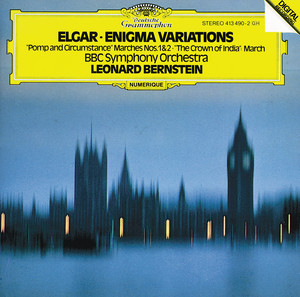 | Enigma Variations, Op. 36: Var. 5. Moderato "R.P.A." | Edward Elgar, BBC Symphony Orchestra, Leonard Bernstein | C Minor | 0 | 5A | 83 BPM | |
 | Walton: Henry V: Passacaglia "The Death of Falstaff" | William Walton, Douglas Boyd, Chamber Orchestra of Europe | E Minor | 0 | 9A | 86 BPM | |
 | Mass No. 1 in D Minor, WAB 26: I. Kyrie | Anton Bruckner, Luba Orgonasova, Bernarda Fink, Christoph Prégardien, The Monteverdi Choir, Wiener Philharmoniker, John Eliot Gardiner | D Minor | 0 | 7A | 124 BPM | |
 | 2 Pieces for Small Orchestra: No. 1, On Hearing the First Cuckoo in Spring | Frederick Delius, Royal Scottish National Orchestra, David Lloyd-Jones | E Minor | 0 | 9A | 79 BPM | |
 | Hamlet: In the Garden - Music from the Film | Dmitri Shostakovich, Royal Concertgebouw Orchestra, Riccardo Chailly | G Major | 0 | 9B | 140 BPM | |
 | Sinfonia antartica "Symphony No. 7": I. Prelude. Andante maestoso | Ralph Vaughan Williams, Elizabeth Watts, BBC Symphony Chorus, BBC Symphony Orchestra, Martyn Brabbins | F Major | 2 | 7B | 116 BPM | |
 | Symphony No. 1 in B-Flat Minor: II. Scherzo. Presto, con malizia | William Walton, London Symphony Orchestra, Sir Colin Davis | F Major | 2 | 7B | 153 BPM | |
 | Imperial March, Op. 32 | Edward Elgar, BBC Philharmonic, George Hurst | B♭ Major | 3 | 6B | 105 BPM | |
| Pictures at an Exhibition (Orch. Ravel): VIIIb. Cum mortuis in lingua mortua | Modest Mussorgsky, Wiener Philharmoniker, Gustavo Dudamel | F♯ Major | 0 | 2B | 69 BPM | |
 | Symphony No. 2 in C minor - "Resurrection" / 3rd Movement - (Scherzo): In ruhig fliessender Bewegung | Gustav Mahler, Wiener Philharmoniker, Gilbert Kaplan | F Minor | 0 | 4A | 174 BPM | |
 | Concerto for 2 Pianos and Orchestra: III. Fuga chromatica - Allegro | Ralph Vaughan Williams, Tal & Groethuysen, Douglas Boyd | D Minor | 3 | 7A | 77 BPM | |
 | A Shropshire Lad - Rhapsody | George Butterworth, Academy of St. Martin in the Fields, Sir Neville Marriner | A♭ Major | 1 | 4B | 95 BPM | |
 | Apollon musagète, K48: I. Birth of Apollo | Igor Stravinsky, Berliner Philharmoniker, Herbert von Karajan | B Minor | 1 | 10A | 86 BPM |
- ISRC
- DEF059831013
- Label
- L-M Records/RCA Records