- BPM
- 88
- Key
- A♭ Major
- Camelot
- 4B
Variations for Orchestra, Op. 31: Variation II. Langsam by Arnold Schoenberg, Berliner Philharmoniker, Kirill Petrenko Song Details
"Variations for Orchestra, Op. 31: Variation II. Langsam" by Arnold Schoenberg, Berliner Philharmoniker, Kirill Petrenko had its release date on October 31, 2025. With This song being less than two minutes long, at 1:41, we are fairly confident that this song is not explicit and is safe for all ages. Based on the duration of this song, this song duration is much smaller than the average song duration. There are a total of 12 in the song's album "Schoenberg: Variations for Orchestra, Op. 31". In this album, this song's track order is #4. Furthermore, we believe that the track originated from Germany. Variations for Orchestra, Op. 31: Variation II. Langsam is not that popular right now. In our opinion, the overall tone is not very danceable and projects negative sounds, such as being sad, depressed, or angry.
BPM and Tempo
With Variations for Orchestra, Op. 31: Variation II. Langsam by Arnold Schoenberg, Berliner Philharmoniker, Kirill Petrenko having a BPM of 88 with a half-time of 44 BPM and a double-time of 176 BPM, we would consider this track to have a Andante (at a walking pace) tempo marking. Because of this, we believe that the song has an overall slow tempo. Looking at the BPM of this song, this song might go great with yoga or pilates. The time signature for this track is 3/4.
Music Key
A♭ Major is the music key of this track. Or for those who are familiar with the camelot wheel, this song has a camelot key of 4B. So, the perfect camelot match for 4B would be either 4B or 5A. While, 5B can give you a low energy boost. For moderate energy boost, you would use 1B and a high energy boost can either be 6B or 11B. Though, if you want a low energy drop, you should looking for songs with either a camelot key of 4A or 3B will give you a low energy drop, 7B would be a moderate one, and 2B or 9B would be a high energy drop. Lastly, 1A allows you to change the mood.
Want to find the BPM and music key for other songs? Check out our BPM and Key Finder page!
- Popularity
- 14%
- Loudness
- -31.659 dB
- Acousticness
- 93%
- Danceability
- 20%
- Energy
- 3%
- Instrumentalness
- 90%
- Liveness
- 10%
- Loudness
- 47%
- Speechiness
- 4%
- Valence
- 10%
Recommendations
| Track | Artist | Key | Energy | Camelot | BPM | ||
|---|---|---|---|---|---|---|---|
 | Moses und Aron, Act I: Scene IV - "Bringt ihr Erhörung" | Arnold Schoenberg, Pierre Boulez, BBC Symphony Orchestra | A Minor | 0 | 8A | 74 BPM | |
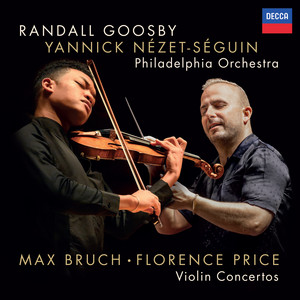 | Adoration (Arr. Gray for Violin & Orchestra) | Florence Beatrice Price, Randall Goosby, Philadelphia Orchestra, Yannick Nézet-Séguin | D Major | 3 | 10B | 74 BPM | |
 | 3 Liebesträume, S. 541/3: No. 3, O lieb, so lang du lieben kannst (Arr. for Harp by Nora von Marschall) | Franz Liszt, Nora von Marschall | B♭ Major | 0 | 6B | 85 BPM | |
 | Stille Musik: III. Augenblicke der Serenade | Valentin Silvestrov | C Major | 0 | 8B | 86 BPM | |
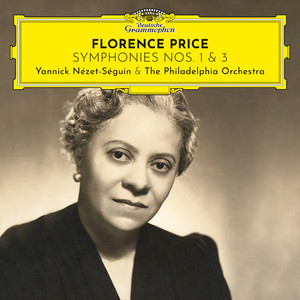 | Symphony No. 3 in C Minor: II. Andante ma non troppo | Florence Beatrice Price, Philadelphia Orchestra, Yannick Nézet-Séguin | A♭ Major | 0 | 4B | 88 BPM | |
 | Consolation No. 3 in D-Flat Major, S. 172/3 | Franz Liszt, Vladimir Horowitz | D♭ Major | 0 | 3B | 70 BPM | |
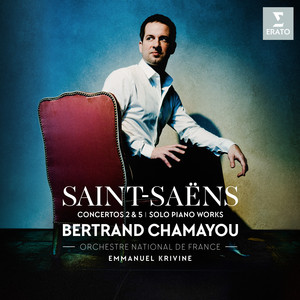 | Saint-Saëns: Piano Concerto No. 2 in G Minor, Op. 22: I. Andante sostenuto | Camille Saint-Saëns, Bertrand Chamayou, Emmanuel Krivine, Orchestre National De France | G Minor | 2 | 6A | 94 BPM | |
 | Trauermusik: IV. Choral (Arr. for Saxophone Quartet and Cello) | Paul Hindemith, Signum Saxophone Quartet, Hila Karni | B Minor | 0 | 10A | 70 BPM | |
 | Andante Festivo | Jean Sibelius, Gothenburg Symphony Orchestra, Neeme Järvi | G Major | 1 | 9B | 86 BPM | |
 | Sechs Klavierstücke, Op. 118: II. Intermezzo in A Major | Johannes Brahms, Arcadi Volodos | A Major | 0 | 11B | 69 BPM | |
 | Myrthen, Op. 25 - Version for Cello and Piano: XXIV. Du bist wie eine Blume | Robert Schumann, Kian Soltani, Aaron Pilsan | F Major | 0 | 7B | 116 BPM | |
 | Enigma Variations, Op. 36: Var. 1. L'istesso tempo "C.A.E." | Edward Elgar, BBC Symphony Orchestra, Leonard Bernstein | G Minor | 0 | 6A | 81 BPM | |
 | Pelléas et Mélisande, Op. 80 (Arr. C. Koechlin): V. Sicilienne. Allegretto molto moderato | Gabriel Fauré, Radio Sinfonieorchester Stuttgart des SWR, Heinz Holliger | G Minor | 0 | 6A | 91 BPM | |
 | 4 Lieder, Op. 27, TrV 170: IV. Morgen! (Arr. for Cello and Piano by Julian Riem) | Richard Strauss, Raphaela Gromes, Julian Riem | F Major | 0 | 7B | 174 BPM | |
 | Lyric Pieces: Melodie / Melody, Op. 47, 3 | Edvard Grieg, Heidi Kommerell | D♭ Minor | 1 | 12A | 73 BPM | |
 | Petite suite, L. 65: No. 1, En bateau (Orch. H. Buser) | Claude Debussy, フランス国立リヨン管弦楽団, 準・メルクル | E♭ Major | 1 | 5B | 92 BPM | |
 | Le carnaval des animaux, R. 125: Le cygne | Camille Saint-Saëns, Mischa Maisky, Orpheus Chamber Orchestra | C Major | 0 | 8B | 83 BPM | |
 | The Tempest: Suite No. 2, Op. 109: VI. Miranda | Jean Sibelius, Iceland Symphony Orchestra, Petri Sakari | C Major | 1 | 8B | 70 BPM | |
 | Fünf Klavierstücke: V. Walzer | Arnold Schoenberg, Maurizio Pollini | F♯ Major | 0 | 2B | 99 BPM | |
 | Pictures and Tales Suite: IV. Sleep, Baby, Sleep | Karl Weigl, Deutsche Staatsphilharmonie Rheinland-Pfalz, Jurgen Bruns | B Major | 0 | 1B | 119 BPM | |
 | Mahler: Blumine | Gustav Mahler, San Francisco Symphony, Michael Tilson Thomas | C Major | 1 | 8B | 100 BPM | |
 | Sibelius: Symphony No. 5 in E-Flat Major, Op. 82: III. Allegro molto | Jean Sibelius, Sakari Oramo, City Of Birmingham Symphony Orchestra | A♭ Major | 1 | 4B | 149 BPM | |
 | Schubert: Piano Sonata No. 20 in A Major, D. 959: II. Andantino | Franz Schubert, Eric Lu | F♯ Minor | 0 | 11A | 66 BPM | |
 | Elégie in C Minor, Op. 24 (Arr. Parkin) | Gabriel Fauré, Sheku Kanneh-Mason, Rowena Calvert, Ashok Klouda, Nicholas Trygstad, Caroline Dearnley, Desmond Neysmith, Josephine Knight, Hannah Roberts, Chris Murray, Robert Max | A♭ Major | 0 | 4B | 88 BPM | |
 | Three Romances for Violin and Piano, Op. 22: I. Andante molto | Clara Schumann, Esther Abrami, Iyad Sughayer | D♭ Major | 2 | 3B | 81 BPM |
- ISRC
- DESR72551126
- Label
- L-M Records/RCA Records