- BPM
- 88
- Key
- D♭ Minor
- Camelot
- 12A
String Quartet No. 2 'Intimate Pages': String Quartet No. 2 'Intimate Pages': III. Moderato. Andante. Adagio by Leoš Janáček, Jerusalem Quartet Song Details
"String Quartet No. 2 'Intimate Pages': String Quartet No. 2 'Intimate Pages': III. Moderato. Andante. Adagio" by Leoš Janáček, Jerusalem Quartet had its release date on January 13, 2014. With this song being about 5 minutes long, at This song is fairly a long song compared to the average song length. This song does not have an "Explicit" tag, making it safe for all ages. There are a total of 12 in the song's album "Smetana & Janáček: String Quartets". In this album, this song's track order is #11. Furthermore, we believe that the track originated from France. String Quartet No. 2 'Intimate Pages': String Quartet No. 2 'Intimate Pages': III. Moderato. Andante. Adagio is not that popular right now. In our opinion, the overall tone is not very danceable and projects negative sounds, such as being sad, depressed, or angry.
BPM and Tempo
With String Quartet No. 2 'Intimate Pages': String Quartet No. 2 'Intimate Pages': III. Moderato. Andante. Adagio by Leoš Janáček, Jerusalem Quartet having a BPM of 88 with a half-time of 44 BPM and a double-time of 176 BPM, we would consider this track to have a Andante (at a walking pace) tempo marking. Because of this, we believe that the song has an overall slow tempo. Looking at the BPM of this song, this song might go great with yoga or pilates. The time signature for this track is 5/4.
Music Key
This song is in the music key of D♭ Minor. Or for those who are familiar with the camelot wheel, this song has a camelot key of 12A. So, the perfect camelot match for 12A would be either 12A or 11B. While, a low energy boost can consist of either 12B or 1A. For moderate energy boost, you would use 9A and a high energy boost can either be 2A or 7A. However, if you are looking for a low energy drop, finding a song with a camelot key of 11A would be a great choice. Where 3A would give you a moderate drop, and 10A or 5A would be a high energy drop. Lastly, 3B allows you to change the mood.
Want to find the BPM and music key for other songs? Check out our BPM and Key Finder page!
- Popularity
- 9%
- Loudness
- -19.842 dB
- Acousticness
- 89%
- Danceability
- 22%
- Energy
- 10%
- Instrumentalness
- 25%
- Liveness
- 8%
- Loudness
- 67%
- Speechiness
- 5%
- Valence
- 4%
Recommendations
| Track | Artist | Key | Energy | Camelot | BPM | ||
|---|---|---|---|---|---|---|---|
 | 6 Consolations, S. 172: No. 1 in E Major. Andante con moto | Franz Liszt, Lilya Zilberstein | D♭ Major | 0 | 3B | 133 BPM | |
 | Sérénade, Op. 29 | Cécile Chaminade, Eric Parkin | D Major | 0 | 10B | 70 BPM | |
 | Preghiera (Arr. by Fritz Kreisler from Piano Concerto No. 2 in C Minor, Op. 18, 2nd Movement) | Sergei Rachmaninoff, Gidon Kremer, Daniil Trifonov | C Major | 1 | 8B | 104 BPM | |
 | 6 Romances sans paroles, Op.76: 6. Meditation | Cécile Chaminade, Daria van den Bercken | A♭ Major | 0 | 4B | 128 BPM | |
 | Massenet: 10 Pièces de genre, Op. 10: No. 5, Mélodie "Élégie" | Jules Massenet, Shani Diluka | F Major | 2 | 7B | 123 BPM | |
 | Nocturne No. 1 in E-Flat Minor, Op. 33 No. 1 | Gabriel Fauré, Kun-Woo Paik | B Major | 0 | 1B | 170 BPM | |
 | Simple Symphony, Op. 4: III. Sentimental Saraband | Benjamin Britten, English Chamber Orchestra | G Minor | 1 | 6A | 82 BPM | |
 | On an Overgrown Path, Series 1, JW VIII/17: No. 1, Naše večery | Leoš Janáček, Jennifer Elowsky-fox | B♭ Minor | 0 | 3A | 92 BPM | |
 | 7 Variations on Bei Männern, welche Liebe fühlen, WoO 46: Variation 6 | Ludwig van Beethoven, Simon Velthuis | G Minor | 4 | 6A | 78 BPM | |
 | Sonata Fantasie No. 2, Op. 19, in G-Sharp Minor - Welte-Mignon 2063 | Alexander Scriabin, Konstantin Igumnoff, Peter Phillips | E Major | 1 | 12B | 67 BPM | |
 | The Cunning Little Vixen (Prihody Lisky Bystrousky) / Act 2: Zlatohrbitek, lisák a krouzkovymi pesiky | Leoš Janáček, Eva Randová, Lucia Popp, Wiener Philharmoniker, Sir Charles Mackerras | D♭ Major | 1 | 3B | 175 BPM | |
 | Lieder ohne Worte (Songs without Words), Book 2, Op. 30: No. 7 in E-Flat Major, Op. 30, No. 1, MWV U103 | Felix Mendelssohn, Péter Nagy | E♭ Major | 0 | 5B | 65 BPM | |
 | Sadko: Hindu Song (arr. N. Mercz): Hindu Song from the Opera 'Sadko' | Nora Mercz, Nikolai Rimsky-Korsakov, Janos Balint | F Major | 0 | 7B | 65 BPM | |
 | No. 2, Choral. Poco più lento | César Franck, Jean-Pierre Armengaud | D♭ Minor | 0 | 12A | 126 BPM | |
 | 6 Pieces for Piano, P. 44: No. 3. Notturno. Lento (Version for Harp) | Ottorino Respighi, Magdalena Hoffmann | F♯ Major | 0 | 2B | 88 BPM | |
 | Mozart: Requiem in D Minor, K. 626: VIII. Lacrimosa | Wolfgang Amadeus Mozart, Pierre Génisson, Bruno Fontaine | D Minor | 0 | 7A | 121 BPM | |
 | 3 Pieces for cello and piano: No. 2. Sans vitesse et a l'aise | Nadia Boulanger, Nicolas Altstaedt, José Gallardo | F Major | 0 | 7B | 83 BPM | |
 | Morgen, Op. 27 No. 4 (Arr. Reger for Piano) | Richard Strauss, Angela Hewitt | A Major | 2 | 11B | 143 BPM | |
 | Sonata in D Minor, K. 9 | Domenico Scarlatti, Ivo Pogorelich | D Minor | 0 | 7A | 94 BPM | |
 | Sinfonietta: IV. Allegretto (The Street Leading to the Castle) - Live | Leoš Janáček, Leon Botstein, American Symphony Orchestra | F♯ Major | 1 | 2B | 138 BPM | |
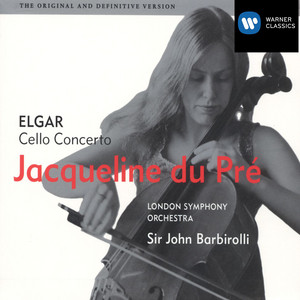 | Elgar: Cello Concerto in E Minor, Op. 85: I. Adagio - Moderato | Edward Elgar, Jacqueline du Pré, London Symphony Orchestra, Sir John Barbirolli | E Minor | 1 | 9A | 96 BPM | |
 | Piano Concerto No. 2 in F Major, Op. 102: II. Andante | Dmitri Shostakovich, Boris Giltburg, Royal Liverpool Philharmonic Orchestra, Vasily Petrenko | C Minor | 0 | 5A | 80 BPM | |
 | Prélude, Choral et Fugue, FWV 21: Prélude. Moderato | César Franck, Nikolai Lugansky | G Major | 0 | 9B | 68 BPM | |
 | String Quartet No. 2 in D Major: III. Notturno: Andante | Alexander Borodin, Budapest Haydn Quartet | A Major | 1 | 11B | 89 BPM | |
 | 24 Preludes and Fugues, Op. 87: Fugue No. 7 in A Major | Dmitri Shostakovich, Igor Levit | A Major | 0 | 11B | 97 BPM |
- ISRC
- FRZ141315110
- Label
- L-M Records/RCA Records