- BPM
- 133
- Key
- F♯ Minor
- Camelot
- 11A
Trio Sonata for Violin, Lute and Basso Continuo in G Minor, RV 85: I. Andante molto by Antonio Vivaldi, Rolf Lislevand, Manfredo Kraemer, The Rare Fruits Council Song Details
Antonio Vivaldi, Rolf Lislevand, Manfredo Kraemer, The Rare Fruits Council's 'Trio Sonata for Violin, Lute and Basso Continuo in G Minor, RV 85: I. Andante molto' had a release date set for January 1, 1996. With this song being around four minutes long, at 4:20, the duration of this song is pretty average compared to other songs. This track is safe for children and doesn't appear to contain any foul language, since the "Explicit" tag was not present in this track. This song is part of Vivaldi: L'œuvre complète pour luth by Antonio Vivaldi, Rolf Lislevand, Manfredo Kraemer, The Rare Fruits Council. The song's track number on the album is #1 out of 12 tracks. Based on our data, France was the country where this track was produced or recorded. Based on our statistics, Trio Sonata for Violin, Lute and Basso Continuo in G Minor, RV 85: I. Andante molto's popularity is not that popular right now. Although the tone can be danceable to some, this track does projects more of a negative sound rather than a postive one.
BPM and Tempo
Since Trio Sonata for Violin, Lute and Basso Continuo in G Minor, RV 85: I. Andante molto by Antonio Vivaldi, Rolf Lislevand, Manfredo Kraemer, The Rare Fruits Council has a tempo of 133 beats per a minute, the tempo markings of this song would be Allegro (fast, quick, and bright). With Trio Sonata for Violin, Lute and Basso Continuo in G Minor, RV 85: I. Andante molto being at 133 BPM, the half-time would be 66 BPM with a double-time of 266 BPM.In addition, we consider the tempo speed to be pretty fast for this song. This makes this song perfect for activities such as, walking. The time signature for this track is 4/4.
Music Key
F♯ Minor is the music key of this track. Or for those who are familiar with the camelot wheel, this song has a camelot key of 11A. So, the perfect camelot match for 11A would be either 11A or 10B. While, a low energy boost can consist of either 11B or 12A. For moderate energy boost, you would use 8A and a high energy boost can either be 1A or 6A. However, if you are looking for a low energy drop, finding a song with a camelot key of 10A would be a great choice. Where 2A would give you a moderate drop, and 9A or 4A would be a high energy drop. Lastly, 2B allows you to change the mood.
Want to find the BPM and music key for other songs? Check out our BPM and Key Finder page!
- Popularity
- 14%
- Loudness
- -21.146 dB
- Acousticness
- 95%
- Danceability
- 45%
- Energy
- 11%
- Instrumentalness
- 4%
- Liveness
- 10%
- Loudness
- 65%
- Speechiness
- 4%
- Valence
- 29%
Recommendations
| Track | Artist | Key | Energy | Camelot | BPM | ||
|---|---|---|---|---|---|---|---|
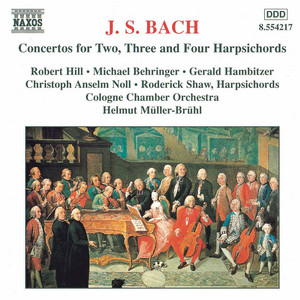 | Concerto For 2 Keyboards In C Minor, BWV 1062: I. - Allegro | Cologne Chamber Orchestra, Michael Behringer, Robert Hill, Johann Sebastian Bach | C Minor | 4 | 5A | 106 BPM | |
 | Concerto For 2 Mandolins In G Major, RV 532: III. Allegro | Budapest Strings, Bela Sztankovitz, Zoltan Tokos, Antonio Vivaldi | D Major | 2 | 10B | 149 BPM | |
 | Halvorsen: Passacaglia (After Handel's Keyboard Suite, HWV 432) | Johan Halvorsen, Itzhak Perlman, Pinchas Zukerman | G Minor | 2 | 6A | 109 BPM | |
 | Concerto for 2 oboes, strings & continuo in C Major, RV 534: I. Allegro | Antonio Vivaldi, La Serenissima, Adrian Chandler, Rachel Chaplin, Mark Baigent | C Major | 4 | 8B | 114 BPM | |
 | Cello Suite No. 1 in G Major, BWV 1007: I. Prélude | Johann Sebastian Bach, Yo-Yo Ma | G Major | 2 | 9B | 73 BPM | |
 | Concerto In G Major TWV 40:201, For 4 Violins Without Basso Continuo: 1. Largo e staccato | Georg Philipp Telemann, Reinhard Goebel, Stephan Schardt, Julia Huber-Warzecha, Mary Utiger | F♯ Major | 0 | 2B | 110 BPM | |
 | Violin Concerto No. 2 in B Minor, Op. 7, "La campanella": III. Rondo | Niccolò Paganini, Netherlands Symphony Orchestra, Rudolf Koelman, Jan Willem de Vriend | B Minor | 2 | 10A | 105 BPM | |
 | Ribbons of Thunderlight | Bheto VN | C Minor | 3 | 5A | 140 BPM | |
 | Paganini: Moto Perpetuo, Op. 11 No. 6 | Niccolò Paganini, Julie Berthollet, Mathieu Herzog, Ensemble Appassionato | C Major | 4 | 8B | 159 BPM | |
 | Les Boréades, RCT 31, Acte IV, Scène IV: Entrée pour les Muses, les Zéphyres, les Saisons, les Heures et les Arts | Jean-Philippe Rameau, Teodor Currentzis | D♭ Major | 1 | 3B | 130 BPM | |
 | The 4 Seasons: Violin Concerto In G Minor, Op. 8, No. 2, RV 315, "L'estate" (Summer): III. Presto | Sonatori de la Gioiosa Marca, Giuliano Carmignola, Antonio Vivaldi | G Minor | 4 | 6A | 168 BPM | |
| The 4 Seasons: Violin Concerto in F minor, Op. 8, No. 4, RV 297, "L'inverno" (Winter): II. Largo | Karoly Botvay | B♭ Major | 0 | 6B | 68 BPM | ||
 | Etude in F Minor | Felix Mendelssohn, Benjamin Frith | B♭ Major | 0 | 6B | 75 BPM | |
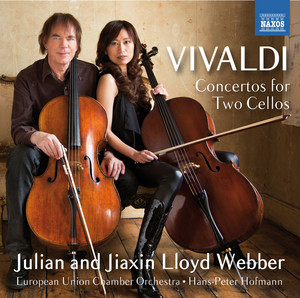 | Cello Concerto in E Minor, RV 409: III. Allegro | Jiaxin Lloyd Webber, Julian Lloyd Webber, European Union Chamber Orchestra, Hanspeter Hofmann | G Minor | 1 | 6A | 108 BPM | |
 | Concerto for 2 Violins in D Major, RV 511: III. Allegro | Antonio Vivaldi, Viktoria Mullova, Giuliano Carmignola, Venice Baroque Orchestra, Andrea Marcon | D Major | 2 | 10B | 139 BPM | |
 | The Four Seasons: Concerto No. 2 in G Minor, RV 315 "L'estate" (summer): III. Presto | Antonio Vivaldi, Adrian Chandler, La Serenissima | G Major | 5 | 9B | 157 BPM | |
 | Haydn: Symphony No. 94 in G Major, Hob. I:94 "Surprise": IV. Finale. Allegro di molto | Joseph Haydn, André Previn, Pittsburgh Symphony Orchestra | G Major | 2 | 9B | 140 BPM | |
 | Concerto for 2 Pianos in E-Flat Major, K. 365: III. Rondo. Allegro moderato | Wolfgang Amadeus Mozart, Alfred Brendel, Imogen Cooper, Academy of St. Martin in the Fields, Sir Neville Marriner | E♭ Major | 2 | 5B | 87 BPM | |
 | Concerto in E Minor: II. Vivace | Benedetto Marcello, Concerto Italiano, Rinaldo Alessandrini | E♭ Minor | 3 | 2A | 117 BPM | |
 | La tempesta di mare en fa majeur, RV 433: I. Allegro | Jean-Louis Beaumadier, Antonio Vivaldi, Christophe Poiget, Ensemble Instrumental La Follia | C Major | 4 | 8B | 123 BPM | |
 | Concerto Grosso In D Major, Op. 6, No. 1 : III. Largo | Arcangelo Corelli, Daniela Ruso, Anna Holbling, Ludovit Kanta, Quido Holbling, Capella Istropolitana | D Major | 1 | 10B | 78 BPM | |
 | Serenade in C Major, Op. 48: II. Walzer | Pyotr Ilyich Tchaikovsky, Vienna Chamber Orchestra, Philippe Entremont | G Major | 2 | 9B | 180 BPM | |
| The Four Seasons - Summer in G Minor, RV. 315: I. Allegro non molto – Allegro | Antonio Vivaldi, Adrian Chandler, La Serenissima | G Minor | 2 | 6A | 147 BPM | |
 | Orfeo ed Euridice, Wq. 30: Dance of the Blessed Spirits "Melody" (Arr. Sgambati for Piano) | Christoph Willibald Gluck, Yuja Wang | D Minor | 0 | 7A | 70 BPM | |
 | Symphony No. 40 in G Minor, K. 550: I. Molto allegro | Wolfgang Amadeus Mozart, Riccardo Minasi, Ensemble Resonanz | G Minor | 3 | 6A | 119 BPM |
- ISRC
- FR2X41719897
- Label
- L-M Records/RCA Records