- BPM
- 96
- Key
- B♭ Major
- Camelot
- 6B
La traviata: Act I: Un dì, felice, eterea by Giuseppe Verdi, Riccardo Muti, Roberto Alagna, Enrico Cossutta, Tiziana Fabbricini, Orchestra Del Teatro Alla Scala, Milano Song Details
Giuseppe Verdi, Riccardo Muti, Roberto Alagna, Enrico Cossutta, Tiziana Fabbricini, Orchestra Del Teatro Alla Scala, Milano's 'La traviata: Act I: Un dì, felice, eterea' had a release date set for 1993. With this song being about 5 minutes long, at This song is fairly a long song compared to the average song length. This song does not have an "Explicit" tag, making it safe for all ages. This song is part of Verdi: La Traviata - The Sony Opera House by Giuseppe Verdi, Riccardo Muti. The song's track number on the album is #6 out of 45 tracks. Based on our data, United States was the country where this track was produced or recorded. In terms of popularity, La traviata: Act I: Un dì, felice, eterea is currently not that popular. In our opinion, the overall tone is not very danceable and projects negative sounds, such as being sad, depressed, or angry.
BPM and Tempo
Since La traviata: Act I: Un dì, felice, eterea by Giuseppe Verdi, Riccardo Muti, Roberto Alagna, Enrico Cossutta, Tiziana Fabbricini, Orchestra Del Teatro Alla Scala, Milano has a tempo of 96 beats per a minute, the tempo markings of this song would be Andante (at a walking pace). With La traviata: Act I: Un dì, felice, eterea being at 96 BPM, the half-time would be 48 BPM with a double-time of 192 BPM.In addition, we consider the tempo speed to be pretty slow for this song. The time signature for this track is 3/4.
Music Key
This song is in the music key of B♭ Major. Or for those who are familiar with the camelot wheel, this song has a camelot key of 6B. So, the perfect camelot match for 6B would be either 6B or 7A. While, 7B can give you a low energy boost. For moderate energy boost, you would use 3B and a high energy boost can either be 8B or 1B. Though, if you want a low energy drop, you should looking for songs with either a camelot key of 6A or 5B will give you a low energy drop, 9B would be a moderate one, and 4B or 11B would be a high energy drop. Lastly, 3A allows you to change the mood.
Want to find the BPM and music key for other songs? Check out our BPM and Key Finder page!
- Popularity
- 2%
- Loudness
- -28.519 dB
- Acousticness
- 96%
- Danceability
- 29%
- Energy
- 7%
- Instrumentalness
- 0%
- Liveness
- 23%
- Loudness
- 52%
- Speechiness
- 6%
- Valence
- 23%
Recommendations
| Track | Artist | Key | Energy | Camelot | BPM | ||
|---|---|---|---|---|---|---|---|
 | Tristan und Isolde, Act I: Prelude | Richard Wagner, Staatskapelle Dresden, Carlos Kleiber | A Major | 1 | 11B | 82 BPM | |
 | Bizet: Carmen, WD 31, Act 3, Scene 1: "Je dis que rien ne m'épouvante" (Micaëla) | Georges Bizet, Giuseppe Sinopoli, Angela Gheorghiu, Bavarian State Orchestra | F Major | 1 | 7B | 190 BPM | |
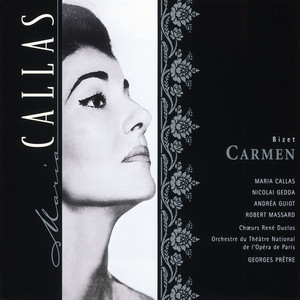 | Bizet: Carmen, Act 3: Entr'acte | Georges Bizet, Orchestre de l'Opéra National de Paris/Georges Prêtre, Georges Prêtre, Orchestre du Théâtre National de l'Opéra Paris, Orchestre de l'Opéra National de Paris, Paris Opera Orchestra | D Minor | 2 | 7A | 132 BPM | |
 | Also sprach Zarathustra, Op.30, TrV 176: Prelude (Sonnenaufgang) | Richard Strauss, Berliner Philharmoniker, Herbert von Karajan | C Major | 3 | 8B | 72 BPM | |
 | Tosca: Act III: O dolci mani mansuete e pure (Cavaradossi) | Giacomo Puccini, Nelly Miricioiu, Giorgio Lamberti, Silvano Carroli, Andrea Piccinni, Miroslav Dvorský, Jan Durco, Stanislav Beňačka, Jozef Spacek, Slovak Philharmonic Chorus, Slovak Radio Symphony Orchestra, Raimo Sirkia, Slovak Chamber Choir, Alexander Rahbari, Markus Lehtinen | F Major | 0 | 7B | 86 BPM | |
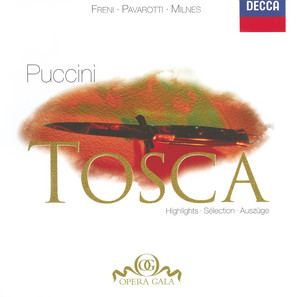 | Tosca / Act 2: "Vissi d'arte, vissi d'amore" | Giacomo Puccini, Mirella Freni, Sherrill Milnes, National Philharmonic Orchestra, Nicola Rescigno | A♭ Major | 1 | 4B | 84 BPM | |
 | Tannhäuser (Paris/Vienna Version), Act III: Beglückt darf nun dich, o Heimat "Pilgrims' Chorus" | Richard Wagner, Helga Dernesch, Victor Braun, Wiener Staatsopernchor, Wiener Philharmoniker, Sir Georg Solti | E♭ Major | 1 | 5B | 80 BPM | |
 | Nessun Dorma! | Mario del Monaco | D Major | 2 | 10B | 88 BPM | |
 | Chorus Of The Hebrew Slaves (Nabucco) | Choir and Orchestra of the Budapest State Opera, Josif Conta, Consortium Musicum Ljubjlana | D♭ Major | 0 | 3B | 142 BPM | |
 | Bizet: Carmen, WD 31, Act 4: "Les voici ! Voici le quadrille !" (Chœur) | Georges Bizet, Michel Plasson, La Lauzeta, Les Éléments, Orchestre National Du Capitole De Toulouse | D♭ Minor | 2 | 12A | 93 BPM | |
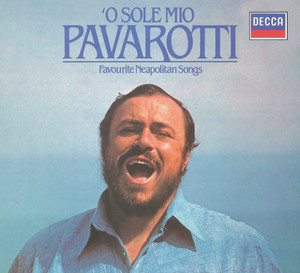 | Torna a Surriento (Arr. Chiaramello) | Ernesto de Curtis, Luciano Pavarotti, National Philharmonic Orchestra, Giancarlo Chiaramello | E Major | 2 | 12B | 83 BPM | |
 | La traviata / Act 1: "Libiamo ne'lieti calici" (Brindisi) | Giuseppe Verdi, Luciano Pavarotti, Wendy White, Anthony Laciura, Metropolitan Opera Orchestra, James Levine, Metropolitan Opera Chorus | B♭ Major | 1 | 6B | 111 BPM | |
 | The Abduction from the Seraglio, K. 384, Act III: Pasha Selim, live for ever (Chorus) | Wolfgang Amadeus Mozart, Yehudi Menuhin, Bath Festival Orchestra, Ambrosian Singers | D♭ Major | 0 | 3B | 138 BPM | |
 | Les Contes d'Hoffmann / Act 2: "Belle nuit, ô nuit d'amour" | Jacques Offenbach, Dame Joan Sutherland, Huguette Tourangeau, Chorus Pro Arte Lausanne Du Brassus, Radio Suisse Romande Chorus, Orchestre de la Suisse Romande, Richard Bonynge | D Major | 1 | 10B | 82 BPM | |
 | Così fan tutte, K. 588 / Act I: "Soave sia il vento" | Wolfgang Amadeus Mozart, Miah Persson, Angela Brower, Alessandro Corbelli, Chamber Orchestra of Europe, Yannick Nézet-Séguin | G Minor | 1 | 6A | 88 BPM | |
 | La sonnambula, Act I: Come per me sereno | Vincenzo Bellini, Maria Callas, Orchestra Del Teatro Alla Scala, Milano, Antonino Votto | E♭ Major | 1 | 5B | 88 BPM | |
 | Cavalleria rusticana: "Gli aranci olezzano sui verdi margini" | Pietro Mascagni, The London Opera Chorus, National Philharmonic Orchestra, Gianandrea Gavazzeni | A Major | 1 | 11B | 75 BPM | |
 | Fedora / Act 2: "Amor ti vieta" | Umberto Giordano, Luciano Pavarotti, National Philharmonic Orchestra, Oliviero de Fabritiis | C Major | 2 | 8B | 170 BPM | |
 | La Gioconda / Act 1: Feste! Pane! Feste! | Amilcare Ponchielli, Sherrill Milnes, The London Opera Chorus, National Philharmonic Orchestra, Bruno Bartoletti | B♭ Major | 4 | 6B | 67 BPM | |
 | Un bel di vedremo (Madame Butterfly) | Renata Tebaldi, Orchestre de la Suisse Romande | D Major | 2 | 10B | 88 BPM | |
 | Mozart: Le nozze di Figaro, K. 492, Act 2: "Voi, che sapete che cosa è amor" (Cherubino) | Wolfgang Amadeus Mozart, Riccardo Muti, Ann Murray, Wiener Philharmoniker | B♭ Major | 1 | 6B | 111 BPM | |
 | Barcarolle | Jacques Offenbach, Anna Netrebko, Elina Garanca | D Major | 2 | 10B | 132 BPM | |
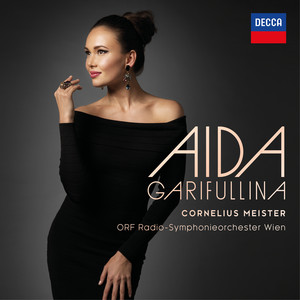 | Sadko: Song Of India | Nikolai Rimsky-Korsakov, Aida Garifullina, Vienna Radio Symphony Orchestra, Cornelius Meister | A Major | 2 | 11B | 75 BPM | |
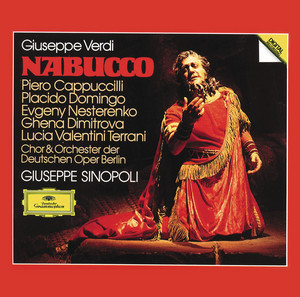 | Nabucco / Act I: Lo vedeste? | Giuseppe Verdi, Lucia Popp, Yevgeny Nesterenko, Orchester der Deutschen Oper Berlin, Giuseppe Sinopoli, Chor der Deutschen Oper Berlin | E♭ Major | 4 | 5B | 171 BPM | |
 | Rinaldo / Act 2: Lascia ch'io pianga | George Frideric Handel, Cecilia Bartoli, Academy of Ancient Music, Christopher Hogwood | E Major | 1 | 12B | 176 BPM |
- ISRC
- USSM19200829
- Label
- L-M Records/RCA Records