- BPM
- 121
- Key
- B♭ Major
- Camelot
- 6B
Concerto For Violin In A Minor, Op. 82: III. Allegro by Alexander Glazunov, Angèle Dubeau, Ivan Marinov, Bulgarian National Radio Symphony Orchestra Song Details
"Concerto For Violin In A Minor, Op. 82: III. Allegro" by Alexander Glazunov, Angèle Dubeau, Ivan Marinov, Bulgarian National Radio Symphony Orchestra had its release date on October 13, 2009. This song is about six minutes long, preciously at 6:29, making this song fairly long compared to other songs. This song is part of Virtuose by Angèle Dubeau. The song's track number on the album is #4 out of 12 tracks. Based on our data, Canada was the country where this track was produced or recorded. Based on our statistics, Concerto For Violin In A Minor, Op. 82: III. Allegro's popularity is unknown right now. In our opinion, the overall tone is not very danceable and projects negative sounds, such as being sad, depressed, or angry.
BPM and Tempo
Since Concerto For Violin In A Minor, Op. 82: III. Allegro by Alexander Glazunov, Angèle Dubeau, Ivan Marinov, Bulgarian National Radio Symphony Orchestra has a tempo of 121 beats per a minute, the tempo markings of this song would be Allegro (fast, quick, and bright). With Concerto For Violin In A Minor, Op. 82: III. Allegro being at 121 BPM, the half-time would be 60 BPM with a double-time of 242 BPM.In addition, we consider the tempo speed to be pretty fast for this song. This makes this song perfect for activities such as, walking. The time signature for this track is 4/4.
Music Key
B♭ Major is the music key of this track. Or for those who are familiar with the camelot wheel, this song has a camelot key of 6B. So, the perfect camelot match for 6B would be either 6B or 7A. While, 7B can give you a low energy boost. For moderate energy boost, you would use 3B and a high energy boost can either be 8B or 1B. Though, if you want a low energy drop, you should looking for songs with either a camelot key of 6A or 5B will give you a low energy drop, 9B would be a moderate one, and 4B or 11B would be a high energy drop. Lastly, 3A allows you to change the mood.
Want to find the BPM and music key for other songs? Check out our BPM and Key Finder page!
- Popularity
- 0%
- Loudness
- -19.318 dB
- Acousticness
- 92%
- Danceability
- 24%
- Energy
- 21%
- Instrumentalness
- 43%
- Liveness
- 8%
- Loudness
- 68%
- Speechiness
- 5%
- Valence
- 6%
Recommendations
| Track | Artist | Key | Energy | Camelot | BPM | ||
|---|---|---|---|---|---|---|---|
 | The Hebrides, Op. 26 "Fingal's Cave" | Felix Mendelssohn, John Eliot Gardiner, London Symphony Orchestra | D Major | 1 | 10B | 137 BPM | |
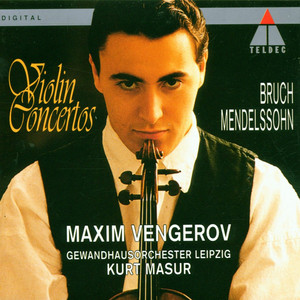 | Bruch : Violin Concerto No.1 in G minor Op.26 : III Finale - Allegro energico | Max Bruch, Maxim Vengerov, Kurt Masur, Gewandhausorchester Leipzig | G Major | 2 | 9B | 90 BPM | |
 | Serenade für Streicher, Op. 6: II. Allegro ma non troppo | Josef Suk, Jaroslav Krcek | F♯ Major | 1 | 2B | 81 BPM | |
 | Symphonie fantastique, Op. 14, H 48: IV. Marche au supplice | Hector Berlioz, London Symphony Orchestra, Sir Colin Davis | B♭ Major | 1 | 6B | 155 BPM | |
 | Serenade in C Major, Op. 48: III. Elegie | Pyotr Ilyich Tchaikovsky, Vienna Chamber Orchestra, Philippe Entremont | D Major | 1 | 10B | 89 BPM | |
 | Othello Suite: IV. Venice (Nocturne) | Aram Khachaturian, Slovak Radio Symphony Orchestra, Adriano | B♭ Major | 4 | 6B | 124 BPM | |
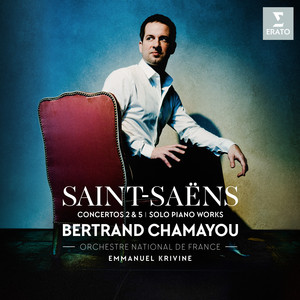 | Saint-Saëns: Piano Concerto No. 5 in F Major, Op. 103 "Egyptian": III. Molto allegro | Camille Saint-Saëns, Bertrand Chamayou, Emmanuel Krivine, Orchestre National De France | G Major | 0 | 9B | 130 BPM | |
 | Suite in A Major "American Suite", Op. 98b, B. 190: I. Andante con moto | Antonín Dvořák, Luzerner Sinfonieorchester, James Gaffigan | A Major | 0 | 11B | 157 BPM | |
 | Petite suite I. En bateau - Andantino En bateau - Andantino I - En bateu (Andantino) | Orchestra Sinfonica Abruzzese, Umberto Clerici, Marzio Conti | G Major | 0 | 9B | 96 BPM | |
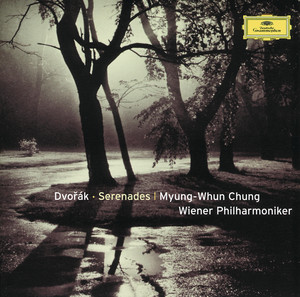 | Serenade for Strings in E Major, Op. 22, B. 52: V. Finale (Allegro vivace) | Antonín Dvořák, Wiener Philharmoniker, Myung-Whun Chung | E Major | 1 | 12B | 84 BPM | |
 | Ravel: La Valse, M. 72 | Maurice Ravel, Yannick Nézet-Séguin, Rotterdam Philharmonic Orchestra | E Minor | 2 | 9A | 108 BPM | |
 | Scottish Fantasy for Violin and Orchestra, Op. 46: IV. Finale: Allegro guerriero | Max Bruch, Joshua Bell, Academy of St. Martin in the Fields | E♭ Major | 2 | 5B | 97 BPM | |
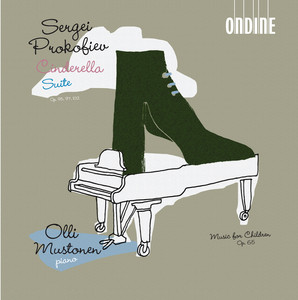 | 10 Pieces, Op. 12: No. 7, Prelude | Sergei Prokofiev, Olli Mustonen | C Major | 1 | 8B | 76 BPM | |
 | Debussy: La plus que lente, L. 121 | Claude Debussy, San Francisco Symphony, Michael Tilson Thomas | G Major | 0 | 9B | 133 BPM | |
 | Symphony in C Major, Op. 46: II. Sehr langsam - | Hans Pfitzner, Seattle Symphony Orchestra, Gerard Schwarz | F Major | 0 | 7B | 87 BPM | |
 | String Quartet No. 2 in D Major: III. Notturno: Andante | Alexander Borodin, Budapest Haydn Quartet | A Major | 1 | 11B | 89 BPM | |
 | Petite suite: III. Menuet (Arr. H. Büsser for orchestra) | Claude Debussy, フランス国立リヨン管弦楽団, 準・メルクル | E♭ Major | 1 | 5B | 92 BPM | |
 | Jeux d'enfants, Op. 22, WD 56: XI. Petit mari, petite femme (Arr. for Orchestra) | Georges Bizet, Jean-Luc Tingaud, RTÉ National Symphony Orchestra | C Major | 1 | 8B | 172 BPM | |
 | Piano Concerto in F-Sharp Minor, Op. 20: II. Andante | Alexander Scriabin, Konstantin Scherbakov, Moscow Philharmonic Orchestra, Igor Golovschin | E♭ Major | 0 | 5B | 81 BPM | |
 | Double Concerto in A Minor, Op. 102 for Violin, Cello and Orchestra: III. Vivace non troppo | Johannes Brahms, Joshua Bell, Steven Isserlis, Academy of St. Martin in the Fields | A Minor | 2 | 8A | 86 BPM | |
 | Variation 6: Sostenuto (quasi adagietto) | Max Reger, New Zealand Symphony Orchestra, Franz-Paul Decker | D Major | 1 | 10B | 74 BPM | |
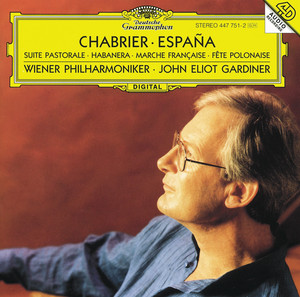 | Suite pastorale: II. Danse villageoise | Emmanuel Chabrier, Wiener Philharmoniker, John Eliot Gardiner | A Major | 1 | 11B | 126 BPM | |
 | Poulenc: Concerto for Two Pianos in D Minor, FP 61: I. Allegro ma non troppo | Francis Poulenc, James Conlon, Rotterdam Philharmonic Orchestra | E♭ Major | 1 | 5B | 103 BPM | |
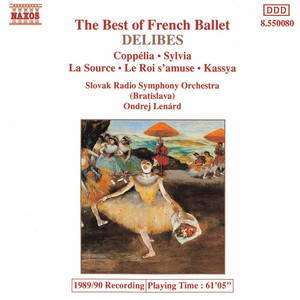 | Le roi s'amuse: Scene du bouquet | Léo Delibes, Slovak Philharmonic, Ondrej Lenard | F♯ Minor | 0 | 11A | 136 BPM | |
 | Serenade in E Minor, Op. 20: I. Allegro piacevole | Edward Elgar, Wales Camerata, Owain Arwel Hughes | E Minor | 0 | 9A | 76 BPM |
- ISRC
- CALC40800126
- Label
- L-M Records/RCA Records