- BPM
- 93
- Key
- B♭ Major
- Camelot
- 6B
String Quartet No. 5 in B Flat Major, Op. 92: II. Andante - Live by Dmitri Shostakovich, Emerson String Quartet Song Details
"String Quartet No. 5 in B Flat Major, Op. 92: II. Andante - Live" by Dmitri Shostakovich, Emerson String Quartet had its release date on January 1, 2000. Since This song is still less than 10 minute long, it is still considered a pretty long duration song compared to the average song length. This song does not appear to be explicit due to the lack of the "E" tag. There are a total of 62 in the song's album "Shostakovich: The String Quartets". In this album, this song's track order is #6. Furthermore, we believe that the track originated from Germany. In terms of popularity, String Quartet No. 5 in B Flat Major, Op. 92: II. Andante - Live is currently not that popular. In our opinion, the overall tone is not very danceable and projects negative sounds, such as being sad, depressed, or angry.
BPM and Tempo
With String Quartet No. 5 in B Flat Major, Op. 92: II. Andante - Live by Dmitri Shostakovich, Emerson String Quartet having a BPM of 93 with a half-time of 46 BPM and a double-time of 186 BPM, we would consider this track to have a Andante (at a walking pace) tempo marking. Because of this, we believe that the song has an overall slow tempo. Looking at the BPM of this song, this song might go great with yoga or pilates. The time signature for this track is 4/4.
Music Key
B♭ Major is the music key of this track. Or for those who are familiar with the camelot wheel, this song has a camelot key of 6B. So, the perfect camelot match for 6B would be either 6B or 7A. While, 7B can give you a low energy boost. For moderate energy boost, you would use 3B and a high energy boost can either be 8B or 1B. Though, if you want a low energy drop, you should looking for songs with either a camelot key of 6A or 5B will give you a low energy drop, 9B would be a moderate one, and 4B or 11B would be a high energy drop. Lastly, 3A allows you to change the mood.
Want to find the BPM and music key for other songs? Check out our BPM and Key Finder page!
- Popularity
- 1%
- Loudness
- -22.413 dB
- Acousticness
- 93%
- Danceability
- 29%
- Energy
- 4%
- Instrumentalness
- 43%
- Liveness
- 7%
- Loudness
- 63%
- Speechiness
- 4%
- Valence
- 4%
Recommendations
| Track | Artist | Key | Energy | Camelot | BPM | ||
|---|---|---|---|---|---|---|---|
 | Prince Igor: Polovtsian Dances (Version for Chorus) | Alexander Borodin, Kiev Chamber Choir, Ukraine National Radio Symphony Orchestra, Theodore Kuchar | A Major | 2 | 11B | 110 BPM | |
 | Variations on a Rococo Theme, Op. 33, TH 57: Var: VI. Andante | Pyotr Ilyich Tchaikovsky, Jean-Guihen Queyras, BBC Symphony Orchestra, Jiří Bělohlávek | D Major | 0 | 10B | 114 BPM | |
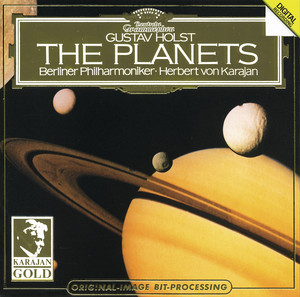 | The Planets, Op. 32: 4. Jupiter, the Bringer of Jollity | Gustav Holst, Berliner Philharmoniker, Herbert von Karajan | G Minor | 3 | 6A | 140 BPM | |
 | Zigeunerweisen, Op. 20: II. Lento | Pablo de Sarasate, Jascha Heifetz, William Steinberg, RCA Victor Symphony Orchestra | C Minor | 1 | 5A | 101 BPM | |
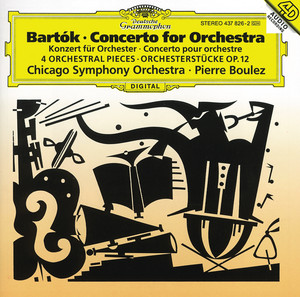 | Concerto for Orchestra, Sz. 116: IV. Intermezzo interrotto (Allegretto) | Béla Bartók, Chicago Symphony Orchestra, Pierre Boulez | D Major | 1 | 10B | 73 BPM | |
 | 8 Slavonic Dances, Op. 72, B. 147: No. 2 in E Minor (Allegretto grazioso) | Antonín Dvořák, Budapest Festival Orchestra, Iván Fischer | B♭ Major | 1 | 6B | 60 BPM | |
 | The Rite of Spring, K15, Pt. 1: II. The Augurs of Spring | Igor Stravinsky, Berliner Philharmoniker, Herbert von Karajan | C Major | 7 | 8B | 91 BPM | |
 | Masquerade Suite: Maskarad (Masquerade): I. Waltz | St. Petersburg State Symphony Orchestra, Aram Khachaturian | C Major | 3 | 8B | 94 BPM | |
 | L'Arlésienne Suite No. 1, WD 40: II. Minuetto | Georges Bizet, Daniel Deffayet, Berliner Philharmoniker, Herbert von Karajan | A♭ Major | 0 | 4B | 175 BPM | |
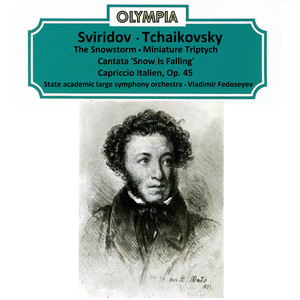 | The Snowstorm: II. Waltz | Georgy Sviridov, Vladimir Fedoseyev, State Academic Large Symphony Orchestra | A Major | 2 | 11B | 70 BPM | |
 | Symphony No. 40 in G Minor, K. 550: I. Molto allegro | Wolfgang Amadeus Mozart, Il Pomo D'oro, Maxim Emelyanychev | C Major | 1 | 8B | 163 BPM | |
 | Mozart: Requiem in D Minor, K. 626: VIII. Lacrimosa | Wolfgang Amadeus Mozart, Pierre Génisson, Bruno Fontaine | D Minor | 0 | 7A | 121 BPM | |
 | The Danube Waves: Donauwellen, Walzer | Ion Ivanovici, Budapest Strauss Ensemble, Istvan Bogar | C Major | 2 | 8B | 95 BPM | |
 | The Firebird (L'oiseau De Feu) - Suite (1919): Finale | Igor Stravinsky, Orchestre de l'Opéra National de Paris, Myung-Whun Chung | E Major | 2 | 12B | 78 BPM | |
 | Prince Igor: Polovtsian Dances (Remastered): No. 17e, Moderato alla breve | Alexander Borodin, Leonard Bernstein, New York Philharmonic | A Major | 2 | 11B | 0 BPM | |
 | Peer Gynt, Op. 23: No. 16, Anitra's Dance | Edvard Grieg, San Francisco Symphony, Herbert Blomstedt | A Minor | 0 | 8A | 82 BPM | |
 | Voices of Spring Waltz, Op. 410 | Orchestra of the Viennese Volksoper & Alfred Scholz | C Minor | 1 | 5A | 99 BPM | |
 | Glinka: Overture from Ruslan and Ludmilla | Mikhail Glinka, Budapest Philharmonic Orchestra, Rico Saccani | D Major | 3 | 10B | 76 BPM | |
 | Symphony No. 25 in G Minor, K. 183: I. Allegro con brio | Wolfgang Amadeus Mozart, Academy of St. Martin in the Fields, Sir Neville Marriner | G Minor | 2 | 6A | 80 BPM | |
 | The Rite of Spring: Part One: Adoration of the Earth: The Augurs of Spring - Dance of the Young Girls | Igor Stravinsky, Teodor Currentzis, musicAeterna | B♭ Major | 3 | 6B | 120 BPM | |
 | Symphony No. 1 in D Major: III. Feierlich und gemessen, ohne zu schleppen - Live | Gustav Mahler, Berliner Philharmoniker, Claudio Abbado | G Minor | 0 | 6A | 56 BPM | |
| The Planets, Op. 32: I. Mars, the Bringer of War | Gustav Holst, Berliner Philharmoniker, Herbert von Karajan | A♭ Major | 5 | 4B | 149 BPM | |
 | Handel / Orch. Hale: Keyboard Suite No. 4 in D Minor, HWV 437: III. Sarabande | George Frideric Handel, Alexander Briger, Academy of St. Martin in the Fields | D Minor | 0 | 7A | 116 BPM | |
 | Jazz Suite No. 2: III. Dance 1 | Dmitri Shostakovich, Russian State Symphony Orchestra, Dmitry Yablonsky | A Major | 3 | 11B | 153 BPM | |
 | 21 Hungarian Dances, WoO 1: Hungarian Dance No. 11 in D Minor | Johannes Brahms, Seattle Symphony Orchestra, Gerard Schwarz | A Minor | 0 | 8A | 104 BPM |
- ISRC
- DEF059903672
- Label
- L-M Records/RCA Records