- BPM
- 138
- Key
- G Major
- Camelot
- 9B
Symphony No.2 in E flat, Op.63: 3. Rondo. Presto by Edward Elgar, Staatskapelle Berlin, Daniel Barenboim Song Details
"Symphony No.2 in E flat, Op.63: 3. Rondo. Presto" by Edward Elgar, Staatskapelle Berlin, Daniel Barenboim had its release date on January 1, 2014. Since This song is still less than 10 minute long, it is still considered a pretty long duration song compared to the average song length. This song does not appear to be explicit due to the lack of the "E" tag. The song is number 3 out of 4 in Elgar: Symphony No.2 by Edward Elgar, Staatskapelle Berlin, Daniel Barenboim. Going off of the ISRC code of this track, we detected that the origin of this track is from United Kingdom. Based on our statistics, Symphony No.2 in E flat, Op.63: 3. Rondo. Presto's popularity is not that popular right now. In our opinion, the overall tone is not very danceable and projects negative sounds, such as being sad, depressed, or angry.
BPM and Tempo
The tempo marking of Symphony No.2 in E flat, Op.63: 3. Rondo. Presto by Edward Elgar, Staatskapelle Berlin, Daniel Barenboim is Allegro (fast, quick, and bright), since this song has a tempo of 138 BPM. With that information, we can conclude that the song has a fast tempo. This song can go great with walking. The time signature for this track is 3/4.
Music Key
G Major is the music key of this track. This also means that this song has a camelot key of 9B. So, the perfect camelot match for 9B would be either 9B or 10A. While, 10B can give you a low energy boost. For moderate energy boost, you would use 6B and a high energy boost can either be 11B or 4B. Though, if you want a low energy drop, you should looking for songs with either a camelot key of 9A or 8B will give you a low energy drop, 12B would be a moderate one, and 7B or 2B would be a high energy drop. Lastly, 6A allows you to change the mood.
Want to find the BPM and music key for other songs? Check out our BPM and Key Finder page!
- Popularity
- 10%
- Loudness
- -20.517 dB
- Acousticness
- 92%
- Danceability
- 25%
- Energy
- 15%
- Instrumentalness
- 87%
- Liveness
- 23%
- Loudness
- 66%
- Speechiness
- 4%
- Valence
- 17%
Recommendations
| Track | Artist | Key | Energy | Camelot | BPM | ||
|---|---|---|---|---|---|---|---|
 | Callirhoé, suite de ballet: I. Prélude | Cécile Chaminade, Orchestre national de Metz Grand Est, David Reiland | E Major | 1 | 12B | 101 BPM | |
 | Romeo and Juliet Suite No. 2, Op. 64ter: II. Juliet as a Young Girl | Sergei Prokofiev, Bergen Philharmonic Orchestra, Andrew Litton | C Major | 0 | 8B | 154 BPM | |
 | Symphony No. 2, Op. 9, "Antar": I. Largo - Allegro - Largo - Allegretto - Adagio - Allegretto - Largo | Nikolai Rimsky-Korsakov, St. Petersburg State Symphony Orchestra, Andre Anichanov | F♯ Major | 0 | 2B | 71 BPM | |
 | Symphony No. 2 in One Movement, Op. 30: III. Andante | Ruth Gipps, Rumon Gamba, BBC National Orchestra Of Wales | F♯ Minor | 0 | 11A | 64 BPM | |
 | Polovtsian Dances from Prince Igor: VI. Moderato alla breve | Alexander Borodin, Chicago Symphony Orchestra, Daniel Barenboim | A Major | 4 | 11B | 184 BPM | |
 | Pictures at an Exhibition (Orch. Ravel): VI. Samuel Goldenberg und Schmuÿle | Modest Mussorgsky, Wiener Philharmoniker, Gustavo Dudamel | F♯ Minor | 1 | 11A | 114 BPM | |
 | Rachmaninov: Piano Concerto No. 1 in F-Sharp Minor, Op. 1: III. Allegro vivace | Sergei Rachmaninoff, Leif Ove Andsnes, Antonio Pappano, Berliner Philharmoniker | F Minor | 2 | 4A | 71 BPM | |
 | IV. Intelude | Dmitri Shostakovich, Ukraine National Symphony Orchestra, Theodore Kuchar | F♯ Major | 0 | 2B | 62 BPM | |
 | Variations on a Theme by Haydn, Op. 56a: Var. 5. Vivace | Johannes Brahms, Berliner Philharmoniker, Herbert von Karajan | B♭ Major | 2 | 6B | 130 BPM | |
 | Symphony No. 3 - 'Pastoral Symphony': I. Molto moderato | Ralph Vaughan Williams, Hallé, Sir Mark Elder | A Minor | 0 | 8A | 81 BPM | |
 | Symphony No. 1 in B Flat Major, Op. 38 "Spring": IV. Allegro animato e grazioso | Robert Schumann, Staatskapelle Berlin, Daniel Barenboim | B♭ Major | 2 | 6B | 98 BPM | |
 | Masques et Bergamasques, suite, Op.112: 2. Menuet | Gabriel Fauré, Academy of St. Martin in the Fields, Sir Neville Marriner | D Major | 1 | 10B | 146 BPM | |
 | Symphony No. 2 in C minor - "Resurrection" / 3rd Movement - (Scherzo): Zum Tempo I. zurückkehren | Gustav Mahler, Wiener Philharmoniker, Gilbert Kaplan | G Minor | 1 | 6A | 83 BPM | |
 | Schoenberg: Verklärte Nacht, Op. 4: III. A tempo | Arnold Schoenberg, Daniel Barenboim, Chicago Symphony Orchestra, Charles Pikler, John Sharp, Joseph Golan, Li-Kuo Chang, Ruben Gonzalez, Stephen Balderston | B♭ Minor | 1 | 3A | 86 BPM | |
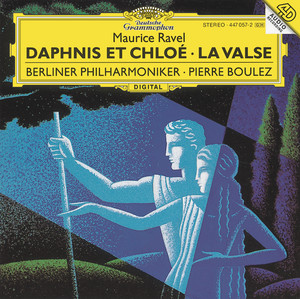 | Daphnis et Chloé, M. 57, Pt. 1: III. Danse grotesque de Dorcon | Maurice Ravel, Berliner Philharmoniker, Pierre Boulez | F Major | 1 | 7B | 189 BPM | |
 | Ein Heldenleben, Op. 40, TrV 190: Des Helden Friedenswerke (the Hero's Works of Peace) - | Richard Strauss, Chicago Symphony Orchestra, Bernard Haitink | G Major | 0 | 9B | 84 BPM | |
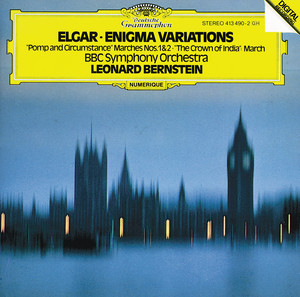 | Enigma Variations, Op. 36: Var. 1. L'istesso tempo "C.A.E." | Edward Elgar, BBC Symphony Orchestra, Leonard Bernstein | G Minor | 0 | 6A | 81 BPM | |
 | Suite d'orchestre No. 3, Op. 79: II. Molto moderato | Moritz Moszkowski, Sinfonia Varsovia, Ian Hobson | F Major | 0 | 7B | 93 BPM | |
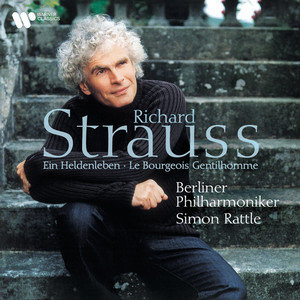 | Strauss, R: Ein Heldenleben, Op. 40: V. Des Helden Friedenswerke | Richard Strauss, Sir Simon Rattle, Berliner Philharmoniker, Guy Braunstein | D Major | 1 | 10B | 87 BPM | |
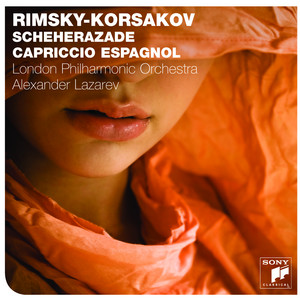 | Scheherazade: The Ship breaks up against a cliff surmounted by a bronze horseman | Nikolai Rimsky-Korsakov, Lars Hjalmar Joakim | A Minor | 5 | 8A | 93 BPM | |
 | Mahler: Symphony No. 5 in C-Sharp Minor: IV. Adagietto. Sehr langsam | Gustav Mahler, Daniel Barenboim, Chicago Symphony Orchestra | F Major | 1 | 7B | 82 BPM | |
 | Albumblatt In E Minor, Op.117, MWV U134 | Felix Mendelssohn, Daniel Barenboim | E Minor | 1 | 9A | 68 BPM | |
 | Violin Concerto No. 1 in G Minor, Op. 26: III. Finale. Allegro energico | Max Bruch, Anne-Sophie Mutter, Berliner Philharmoniker, Herbert von Karajan | G Major | 1 | 9B | 82 BPM | |
 | The Music Makers, Op. 69: II. We Are the music makers | Edward Elgar, Sarah Connolly, Greg Beardsell, Bournemouth Symphony Chorus, Bournemouth Symphony Orchestra, Simon Wright | B♭ Minor | 0 | 3A | 79 BPM | |
 | La Damnation de Faust, Op. 24, H 111 / Pt. 1: Marche hongroise | Hector Berlioz, Chicago Symphony Orchestra, Sir Georg Solti | A Major | 2 | 11B | 93 BPM |
- ISRC
- GBF071304273
- Label
- L-M Records/RCA Records