- BPM
- 93
- Key
- A Major
- Camelot
- 11B
Symphonic Rhapsody For Violin And Orchestra, Op. 147 by Max Reger, Florizel Von Reuter, Bamberg Symphony, Horst Stein Song Details
Max Reger, Florizel Von Reuter, Bamberg Symphony, Horst Stein's 'Symphonic Rhapsody For Violin And Orchestra, Op. 147' had a release date set for June 29, 2018. This song appears to be safe for all ages as it is not explicit. The track order of this song in Max Reger, Various Artists's "Max Reger - Orchestral Edition - Concertos, Sinfonietta" album is number 9 out of 22. On top of that, Germany appears to be the country where this track was created. In terms of popularity, Symphonic Rhapsody For Violin And Orchestra, Op. 147 is currently unknown. In our opinion, the overall tone is not very danceable and projects negative sounds, such as being sad, depressed, or angry.
BPM and Tempo
We consider the tempo marking of Symphonic Rhapsody For Violin And Orchestra, Op. 147 by Max Reger, Florizel Von Reuter, Bamberg Symphony, Horst Stein to be Andante (at a walking pace) because the track has a tempo of 93 BPM, a half-time of 46BPM, and a double-time of 186 BPM. Based on that, the speed of the song's tempo is slow. Activities such as, yoga or pilates, can go well with this song. The time signature for this track is 4/4.
Music Key
This song is in the music key of A Major. This also means that this song has a camelot key of 11B. So, the perfect camelot match for 11B would be either 11B or 12A. While, 12B can give you a low energy boost. For moderate energy boost, you would use 8B and a high energy boost can either be 1B or 6B. Though, if you want a low energy drop, you should looking for songs with either a camelot key of 11A or 10B will give you a low energy drop, 2B would be a moderate one, and 9B or 4B would be a high energy drop. Lastly, 8A allows you to change the mood.
Want to find the BPM and music key for other songs? Check out our BPM and Key Finder page!
- Popularity
- 0%
- Loudness
- -23.702 dB
- Acousticness
- 92%
- Danceability
- 33%
- Energy
- 14%
- Instrumentalness
- 49%
- Liveness
- 12%
- Loudness
- 60%
- Speechiness
- 4%
- Valence
- 22%
Recommendations
| Track | Artist | Key | Energy | Camelot | BPM | ||
|---|---|---|---|---|---|---|---|
 | Godowsky: Triakontameron, Vol. 3: No. 11, Alt Wien | Leopold Godowsky, Aurélien Pontier | D♭ Major | 0 | 3B | 73 BPM | |
 | Piano Quintet in B Minor, Op. 74: II. Larghetto | Ferdinand Ries, Klavierquintett Wien | C Minor | 4 | 5A | 136 BPM | |
 | The Threepenny Opera, Act II: Pollys Lied (Arr. for Piano by Florian Noack) | Kurt Weill, Florian Noack | B Minor | 0 | 10A | 110 BPM | |
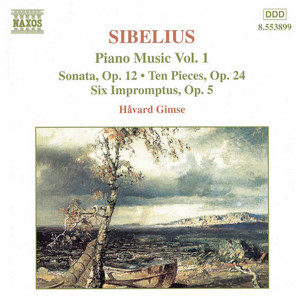 | 10 Pieces, Op. 24: 4. Romance | Jean Sibelius, Håvard Gimse | B♭ Major | 0 | 6B | 68 BPM | |
 | Lyrical Pieces, Op. 43: No. 6, To Spring | Edvard Grieg, Denis Kozhukhin | F♯ Major | 1 | 2B | 138 BPM | |
 | Piano Concerto in A Minor, Op. 7: II. Romanze. Andante non troppo, con Grazia | Clara Schumann, Ragna Schirmer, Staatskapelle Halle, Ariane Matiakh | A♭ Major | 0 | 4B | 176 BPM | |
 | Cello Concerto in B Minor, Op. 104: III. Allegro moderato. Original Ending | Antonín Dvořák, Steven Isserlis, Daniel Harding, Mahler Chamber Orchestra | B Major | 0 | 1B | 77 BPM | |
| Piano Trio in G Minor, Op. 17: II. Scherzo. Tempo di Menuetto | Clara Schumann, Ragna Schirmer, Iason Keramidis, Benedict Kloeckner | E♭ Major | 0 | 5B | 83 BPM | |
 | Variations & Fugue on a Theme by J.S. Bach, Op. 81: Var. 14. Con moto | Max Reger, Marc-André Hamelin | E♭ Major | 0 | 5B | 92 BPM | |
| Variations & Fugue on a Theme by J.S. Bach, Op. 81: Var. 3. Grave assai | Max Reger, Marc-André Hamelin | B♭ Major | 2 | 6B | 169 BPM | |
 | Nielsen: 5 Piano Pieces, Op. 3: No. 1, Folk Tune | Carl Nielsen, Leif Ove Andsnes | C Major | 0 | 8B | 76 BPM | |
| Nielsen: Violin Sonata No. 2 in G Minor, Op. 35: II. Molto adagio | Carl Nielsen, Leif Ove Andsnes, Christian Tetzlaff | B♭ Minor | 0 | 3A | 80 BPM | |
| Piano Trio in G Minor, Op. 17: IV. Allegretto | Clara Schumann, Ragna Schirmer, Iason Keramidis, Benedict Kloeckner | G Minor | 1 | 6A | 86 BPM | |
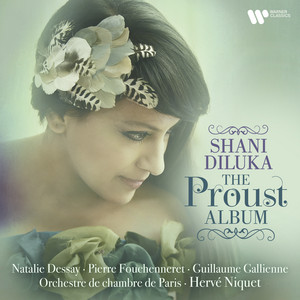 | Massenet: 10 Pièces de genre, Op. 10: No. 5, Mélodie "Élégie" | Jules Massenet, Shani Diluka | F Major | 2 | 7B | 123 BPM | |
 | Symphony No. 3 in E Flat Major, Op. 90: III. Menuetto. Moderato - Trio I - Trio II | Ferdinand Ries, Tapiola Sinfonietta, Janne Nisonen | E♭ Major | 0 | 5B | 174 BPM | |
 | 6 Romances sans paroles: No. 4, Le calme, CG 2e | Charles Gounod, Warren Lee | D♭ Major | 1 | 3B | 73 BPM | |
 | Lied in F Minor | Sergei Rachmaninoff, Lynn Harrell, Vladimir Ashkenazy | F Minor | 0 | 4A | 131 BPM | |
 | Lieder ohne Worte, Op. 19b: VI. Andante sostenuto in G Minor | Felix Mendelssohn, Roberte Mamou | C Major | 0 | 8B | 83 BPM | |
 | Zwei Dialoge mit Nachwort: I. Hochzeitswalzer | Valentin Silvestrov, Alexei Lubimov, Munich Chamber Orchestra, Christoph Poppen | F♯ Major | 0 | 2B | 175 BPM | |
 | Pas des sylphes. Intermezzo | Cécile Chaminade, Eric Parkin | D♭ Major | 1 | 3B | 67 BPM | |
 | Holberg Suite, Op. 40: II. Sarabande. Andante | Edvard Grieg, Aristo Sham | G Major | 2 | 9B | 148 BPM | |
 | 3 Romances, Op. 11: No. 1 in E-Flat Minor | Clara Schumann, Jean-Pierre Armengaud | B Minor | 0 | 10A | 70 BPM | |
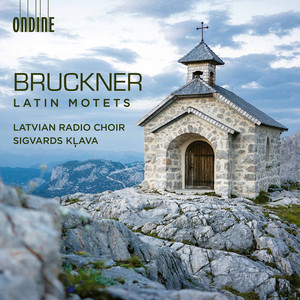 | Christus factus est, WAB 11 | Anton Bruckner, Latvian Radio Choir, Sigvards Kļava | D Minor | 1 | 7A | 83 BPM | |
 | Mariä Wiegenlied (Mary’s Cradle-Song), Op. 76, No. 52 | Marshall McGuire, Max Reger, Jane Edwards | F Major | 0 | 7B | 112 BPM | |
 | Prelude No. 3 | Florence Ewart, Jeanell Carrigan | A Minor | 0 | 8A | 74 BPM |
- ISRC
- DEC989500705
- Label
- L-M Records/RCA Records