- BPM
- 109
- Key
- D Major
- Camelot
- 10B
ワーグナー(リスト:イゾルデの愛の死) by Richard Wagner, Keisuke Toyama Song Details
"ワーグナー(リスト:イゾルデの愛の死)" by Richard Wagner, Keisuke Toyama had its release date on June 21, 2017. Since This song is still less than 10 minute long, it is still considered a pretty long duration song compared to the average song length. This song does not appear to be explicit due to the lack of the "E" tag. The track order of this song in Keisuke Toyama's "MY FAVORITES" album is number 4 out of 8. On top of that, Japan appears to be the country where this track was created. In terms of popularity, ワーグナー(リスト:イゾルデの愛の死) is currently not that popular. In our opinion, the overall tone is not very danceable and projects negative sounds, such as being sad, depressed, or angry.
BPM and Tempo
We consider the tempo marking of ワーグナー(リスト:イゾルデの愛の死) by Richard Wagner, Keisuke Toyama to be Moderato (at a moderate speed) because the track has a tempo of 109 BPM, a half-time of 54BPM, and a double-time of 218 BPM. Based on that, the speed of the song's tempo is moderate. The time signature for this track is 3/4.
Music Key
This song has a musical key of D Major. This also means that this song has a camelot key of 10B. So, the perfect camelot match for 10B would be either 10B or 11A. While, 11B can give you a low energy boost. For moderate energy boost, you would use 7B and a high energy boost can either be 12B or 5B. Though, if you want a low energy drop, you should looking for songs with either a camelot key of 10A or 9B will give you a low energy drop, 1B would be a moderate one, and 8B or 3B would be a high energy drop. Lastly, 7A allows you to change the mood.
Want to find the BPM and music key for other songs? Check out our BPM and Key Finder page!
- Popularity
- 2%
- Loudness
- -17.108 dB
- Acousticness
- 99%
- Danceability
- 34%
- Energy
- 24%
- Instrumentalness
- 89%
- Liveness
- 11%
- Loudness
- 71%
- Speechiness
- 3%
- Valence
- 4%
Recommendations
| Track | Artist | Key | Energy | Camelot | BPM | ||
|---|---|---|---|---|---|---|---|
 | Der Freischütz, Op. 77, J. 277: Jägerchor | Carl Maria von Weber, Radio Kamer Filharmonie, Groot Omroepkoor, Michael Schønwandt, Michael Gläser | D♭ Major | 2 | 3B | 123 BPM | |
 | Symphony No. 5 in C Minor, Op. 67: IV. Allegro | Ludwig van Beethoven, Wiener Philharmoniker, Carlos Kleiber | C Major | 3 | 8B | 83 BPM | |
 | The Moldau (Vltava), JB 1:112/2 | Bedřich Smetana, Leopold Stokowski | G Major | 2 | 9B | 98 BPM | |
 | Liber scriptus | Giuseppe Verdi, Carmen Giannattasio, Veronica Simeoni, Alxander Timchenko, Carlo Colombara, Yuri Temirkanov, St. Petersburg Philharmonic Orchestra | D Major | 1 | 10B | 79 BPM | |
 | Norma: Sinfonia | Vincenzo Bellini, Welsh National Opera Orchestra, Richard Bonynge | G Major | 1 | 9B | 140 BPM | |
 | Sinfonie Nr. 3 c-Moll, Op. 78, "Orgelsinfonie": 2. Maestoso - Allegro - Più allegro - Molto allegro - Pesante (Ein Schweinchen names Babe): II. Maestoso - Allegro - Piu allegro - Molto allegro - Pesante | Camille Saint-Saëns, Imrich Szabo, Slovak Radio Symphony Orchestra, Stephen Gunzenhauser | G Major | 2 | 9B | 101 BPM | |
 | Prokofiev: Romeo and Juliet, Op. 64, Act 1, Scene 2: No. 13, Dance of the Knights | Sergei Prokofiev, Toronto Symphony Orchestra, Jukka-Pekka Saraste | D Minor | 0 | 7A | 137 BPM | |
 | Wagner: Lohengrin, Act 3: "In fernem Land, unnahbar euren Schritten" (Lohengrin, König, Chorus) | Richard Wagner, Daniel Barenboim, Chor der Deutschen Staatsoper Berlin, Peter Seiffert, René Pape, Staatskapelle Berlin | A Major | 1 | 11B | 164 BPM | |
 | La gazza ladra (The Thieving Magpie): Overture | Gioachino Rossini, Zagreb Festival Orchestra, Michael Halasz | G Major | 2 | 9B | 159 BPM | |
 | Symphony No. 1 in D Major: 2. Kräftig bewegt - Live | Gustav Mahler, Berliner Philharmoniker, Claudio Abbado | A Major | 1 | 11B | 96 BPM | |
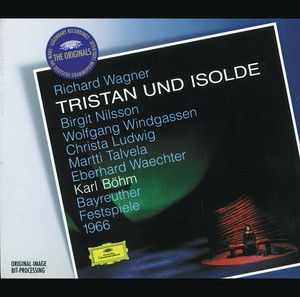 | Tristan und Isolde, WWV 90 / Act III: Mild und leise wie er lächelt | Richard Wagner, Birgit Nilsson, Bayreuth Festival Orchestra, Karl Böhm | E Major | 3 | 12B | 92 BPM | |
 | Toccata | Johann Sebastian Bach, Symphonica Orchestra, Leopold Stokowski | D Major | 2 | 10B | 130 BPM | |
 | El sombrero de tres picos, Pt. 1: III. Danza de la molinera | Manuel de Falla, Carlos Miguel Prieto, The Orchestra of the Americas | D Major | 1 | 10B | 121 BPM | |
| Confutatis | Giuseppe Verdi, Carmen Giannattasio, Veronica Simeoni, Alxander Timchenko, Carlo Colombara, Yuri Temirkanov, St. Petersburg Philharmonic Orchestra | B Major | 1 | 1B | 82 BPM | |
 | Requiem, Op. 89, B. 165: Introitus | Antonín Dvořák, Czech Philharmonic | B♭ Minor | 1 | 3A | 85 BPM | |
 | Le Prophète: Coronation March | Giacomo Meyerbeer, Leonard Bernstein, New York Philharmonic | E♭ Major | 4 | 5B | 112 BPM | |
 | Carmina Burana: V. Ecce gratum | Carl Orff, Chor der Deutschen Oper Berlin, Orchester der Deutschen Oper Berlin, Eugen Jochum | B♭ Major | 4 | 6B | 139 BPM | |
 | Monteverdi: L'Orfeo, SV 318, Prologue: Toccata | Claudio Monteverdi, Emmanuelle Haïm, Le Concert d'Astrée | E♭ Major | 3 | 5B | 133 BPM | |
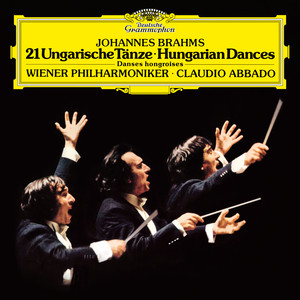 | 21 Hungarian Dances, WoO 1: Hungarian Dance No. 3 in F Major. Allegretto (Orch. Brahms) | Johannes Brahms, Wiener Philharmoniker, Claudio Abbado | F Major | 0 | 7B | 77 BPM | |
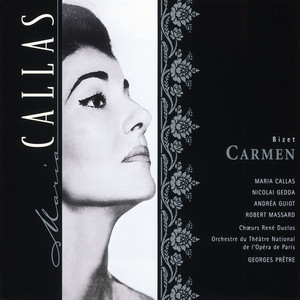 | Bizet: Carmen, Act 3: Entr'acte | Georges Bizet, Orchestre de l'Opéra National de Paris/Georges Prêtre, Georges Prêtre, Orchestre du Théâtre National de l'Opéra Paris, Orchestre de l'Opéra National de Paris, Paris Opera Orchestra | D Minor | 2 | 7A | 132 BPM | |
 | Symphonie Fantastique, Op.14, H 48: 5b. Songe d'une nuit du Sabbat - Dies irae | Hector Berlioz, Chicago Symphony Orchestra, Claudio Abbado | G Minor | 1 | 6A | 63 BPM | |
 | Boris Godunov: Opera in Four Acts With a Prologue: Prologue, Scene 1, Introduction | Modest Mussorgsky, Claudio Abbado, Berliner Philharmoniker, Rundfunkchor Berlin | D Minor | 2 | 7A | 72 BPM | |
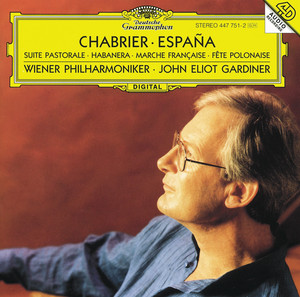 | España - Rhapsody For Orchestra | Emmanuel Chabrier, Wiener Philharmoniker, John Eliot Gardiner | F Major | 3 | 7B | 129 BPM | |
 | Stabat Mater: 8. Inflammatus et accensus | Gioachino Rossini, Katia Ricciarelli, Philharmonia Orchestra, Carlo Maria Giulini, Philharmonia Chorus, Heinz Mende | D Major | 2 | 10B | 112 BPM | |
| Carmina Burana: XXIV. Ave formosissima | Carl Orff, Chor der Deutschen Oper Berlin, Orchester der Deutschen Oper Berlin, Eugen Jochum | E Minor | 3 | 9A | 172 BPM |
- ISRC
- JPB601701669
- Label
- L-M Records/RCA Records