- BPM
- 112
- Key
- B Minor
- Camelot
- 10A
Passing Line of Clouds Grows Thinner by Maxim Rubtsov, Sergei Kvitko, Nikolai Rimsky-Korsakov Song Details
"Passing Line of Clouds Grows Thinner" by Maxim Rubtsov, Sergei Kvitko, Nikolai Rimsky-Korsakov had its release date on August 7, 2011. The duration of This song is about 3 minutes long, at 3:28. Based on our data, This song appears to be safe for all ages and is not considered explicit. This track is about the average length of a typical track. There are a total of 22 in the song's album "Russian Romance". In this album, this song's track order is #20. In terms of popularity, Passing Line of Clouds Grows Thinner is currently unknown. In our opinion, the overall tone is not very danceable and projects negative sounds, such as being sad, depressed, or angry.
BPM and Tempo
With Passing Line of Clouds Grows Thinner by Maxim Rubtsov, Sergei Kvitko, Nikolai Rimsky-Korsakov having a BPM of 112 with a half-time of 56 BPM and a double-time of 224 BPM, we would consider this track to have a Moderato (at a moderate speed) tempo marking. Because of this, we believe that the song has an overall moderate tempo. The time signature for this track is 4/4.
Music Key
This song is in the music key of B Minor. Or for those who are familiar with the camelot wheel, this song has a camelot key of 10A. So, the perfect camelot match for 10A would be either 10A or 9B. While, a low energy boost can consist of either 10B or 11A. For moderate energy boost, you would use 7A and a high energy boost can either be 12A or 5A. However, if you are looking for a low energy drop, finding a song with a camelot key of 9A would be a great choice. Where 1A would give you a moderate drop, and 8A or 3A would be a high energy drop. Lastly, 1B allows you to change the mood.
Want to find the BPM and music key for other songs? Check out our BPM and Key Finder page!
- Popularity
- 0%
- Loudness
- -13.113 dB
- Acousticness
- 99%
- Danceability
- 31%
- Energy
- 28%
- Instrumentalness
- 95%
- Liveness
- 7%
- Loudness
- 78%
- Speechiness
- 5%
- Valence
- 11%
Recommendations
| Track | Artist | Key | Energy | Camelot | BPM | ||
|---|---|---|---|---|---|---|---|
 | Bach, JS: Orchestral Suite No. 2 in B Minor, BWV 1067: VII. Badinerie | Johann Sebastian Bach, Emmanuel Pahud, Berliner Barock Solisten, Rainer Kussmaul | B Minor | 2 | 10A | 121 BPM | |
 | Montgomery Variations: Montgomery Variations: I. Decision | Margaret Bonds, Kellen Gray, Royal Scottish National Orchestra | D Minor | 1 | 7A | 82 BPM | |
 | Waltz-Fantasy: Waltz-Fantasy | Mikhail Glinka, Yuri Simonov, Moscow Philharmonic Orchestra | E Minor | 3 | 9A | 99 BPM | |
 | You Won’t Believe How Sweet You Are | Maxim Rubtsov, Sergei Kvitko, Unknown | B♭ Major | 2 | 6B | 86 BPM | |
 | Cinderella Ball Night | Sinfonietta Cinematica | A Major | 5 | 11B | 129 BPM | |
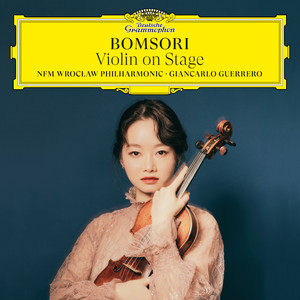 | Thaïs: Méditation | Jules Massenet, Bomsori, NFM Wrocław Philharmonic, Giancarlo Guerrero | D Major | 0 | 10B | 84 BPM | |
 | Swan Lake - Waltz | London Philharmonic Orchestra | A Major | 1 | 11B | 76 BPM | |
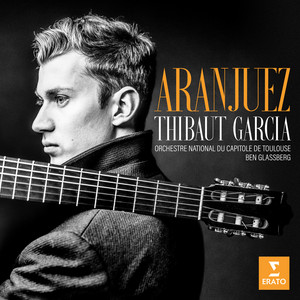 | Rodrigo: Concierto de Aranjuez: II. Adagio | Joaquín Rodrigo, Thibaut García, Ben Glassberg, Orchestre National Du Capitole De Toulouse | B Minor | 1 | 10A | 85 BPM | |
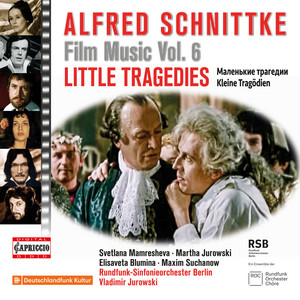 | Little Tragedies, Chapter 2 "Egyptian Nights": Waltz No. 1 | Alfred Schnittke, Rundfunk-Sinfonieorchester Berlin, Vladimir Jurowski | D Major | 0 | 10B | 96 BPM | |
| Dance of the Mosquito | Maxim Rubtsov, Anatoly Lyadov, Sergei Kvitko | G Major | 4 | 9B | 97 BPM | |
 | Peer Gynt: In der Halle des Bergkönigs | Edvard Grieg, Gürzenich Fagottquintett | F♯ Major | 2 | 2B | 89 BPM | |
 | Stravinsky: L'histoire du Soldat, Pt. 1: Musique pour la scène 3. Petits airs au bord du ruisseau (Le Narrateur) | Igor Stravinsky, Charles Dutoit, Ensemble Instrumental de Lausanne, Gérard Carrat | A Minor | 4 | 8A | 117 BPM | |
 | Gold und Silber, Op. 79: Gold und Silber (Gold and Silver), Op. 79: Waltz | Franz Lehár, Budapest Symphony Orchestra, Géza Oberfrank | F Major | 0 | 7B | 81 BPM | |
 | Masquerade Suite: I. Waltz | Aram Khachaturian, Berlin Rundfunk Symphonie Orchester, Horst Stein | C Major | 4 | 8B | 108 BPM | |
 | Dvořák: 8 Slavonic Dances, Op. 72, B. 147: No. 10 in E Minor | Antonín Dvořák, Lorin Maazel, Berliner Philharmoniker | C Major | 1 | 8B | 81 BPM | |
 | Spanish Dances, Op. 23: Danza española No. 5: Playera, Op. 23, No. 1 | Pablo de Sarasate, Tianwa Yang, Markus Hadulla | G Major | 2 | 9B | 168 BPM | |
 | Sonata for Violin & Harp No. 4 in E-Flat Major, Op. 113 (Version for Cello & Harp): II. Adagio | Louis Spohr, Helga Storck, Klaus Storck | A Major | 0 | 11B | 117 BPM | |
 | La vie en rose | Die 12 Cellisten der Berliner Philharmoniker | A♭ Major | 2 | 4B | 75 BPM | |
 | 24 Flute Etudes, Op. 15: No. 3 in G Major | Joachim Andersen, Kyle Dzapo | A Minor | 0 | 8A | 147 BPM | |
 | Boccherini Minuet | Noel Chamber Orchestra | D Major | 2 | 10B | 91 BPM | |
 | Romanian Folk Dances, Sz. 56 - Arr. for String Orchestra by Arthur Wilner | Béla Bartók, Orchestra of the Swan, David le Page | B Minor | 0 | 10A | 78 BPM | |
 | Schön Rosmarin | Fritz Kreisler, Salonorchester Colln | G Major | 2 | 9B | 77 BPM | |
 | Gnossiene No. 1 | dom pub, Chantal De Buchy | B♭ Major | 6 | 6B | 127 BPM | |
 | Dance macabre, Op. 40, R. 171 (Arr. for Violin & Piano) | Camille Saint-Saëns, Valeria Zorina, Evgeny Sinaiski | E♭ Major | 2 | 5B | 112 BPM | |
 | Our Old Beach House | Sinfonietta Cinematica | D♭ Major | 7 | 3B | 121 BPM |
- ISRC
- This song does not have an ISRC.
- Label
- L-M Records/RCA Records