- BPM
- 85
- Key
- A♭ Major
- Camelot
- 4B
Liverpool Oratorio by Hallé, Claire Rutter, Eric Traulert Song Details
"Liverpool Oratorio" by Hallé, Claire Rutter, Eric Traulert had its release date on September 1, 2003. The duration of This song is about two minutes long, specifically at 2:44. This song does not appear to have any foul language. Liverpool Oratorio's duration is considered a little bit shorter than the average duration of a typical track. The track order of this song in Hallé, Claire Rutter, Eric Traulert's "Hallé Christmas Classics" album is number 5 out of 15. Liverpool Oratorio is not that popular right now. In our opinion, the overall tone is not very danceable and projects negative sounds, such as being sad, depressed, or angry.
BPM and Tempo
We consider the tempo marking of Liverpool Oratorio by Hallé, Claire Rutter, Eric Traulert to be Andante (at a walking pace) because the track has a tempo of 85 BPM, a half-time of 42BPM, and a double-time of 170 BPM. Based on that, the speed of the song's tempo is slow. Activities such as, yoga or pilates, can go well with this song. The time signature for this track is 5/4.
Music Key
This song is in the music key of A♭ Major. This also means that this song has a camelot key of 4B. So, the perfect camelot match for 4B would be either 4B or 5A. While, 5B can give you a low energy boost. For moderate energy boost, you would use 1B and a high energy boost can either be 6B or 11B. Though, if you want a low energy drop, you should looking for songs with either a camelot key of 4A or 3B will give you a low energy drop, 7B would be a moderate one, and 2B or 9B would be a high energy drop. Lastly, 1A allows you to change the mood.
Want to find the BPM and music key for other songs? Check out our BPM and Key Finder page!
- Popularity
- 6%
- Loudness
- -31.097 dB
- Acousticness
- 96%
- Danceability
- 26%
- Energy
- 3%
- Instrumentalness
- 1%
- Liveness
- 28%
- Loudness
- 48%
- Speechiness
- 6%
- Valence
- 4%
Recommendations
| Track | Artist | Key | Energy | Camelot | BPM | ||
|---|---|---|---|---|---|---|---|
 | Le roi s'amuse: Pavane | Léo Delibes, Slovak Philharmonic, Ondrej Lenard | B♭ Major | 0 | 6B | 91 BPM | |
 | Mozart: Piano Concerto No. 9 in E-Flat Major, K. 271 "Jeunehomme": III. Rondeau. Presto, Pt. 9 | Wolfgang Amadeus Mozart, Stephen Hough, Bryden Thomson, Hallé | E♭ Major | 1 | 5B | 146 BPM | |
 | Hungarian Dance No. 1 in G Minor, WoO 1 | Johannes Brahms, Budapest Festival Orchestra, Iván Fischer | G Minor | 2 | 6A | 115 BPM | |
 | MUSETTA'S WALTZ | 101 Strings Orchestra | F♯ Minor | 3 | 11A | 136 BPM | |
 | Melody in F, Op.3, No.1 - Arr. G. Saborow | Anton Rubinstein, Irina Saizewa, Violin Ensemble of the Bolshoi Theatre, Moscow, Julij Rejentowitsch | F Major | 2 | 7B | 85 BPM | |
 | Salut For August Bournonville, Galop (1869) | Hans Christian Lumbye, Tivoli Symphony Orchestra | D Major | 3 | 10B | 161 BPM | |
 | Salut d'amour, Op. 12 (version for orchestra) | Edward Elgar, Slovak Radio Symphony Orchestra, Adrian Leaper | B♭ Major | 1 | 6B | 82 BPM | |
 | Vienna Blood - Waltz Op. 354 | Johann Strauss II, Hallé, Bryden Thomson | C Major | 0 | 8B | 178 BPM | |
 | The Planets, Op. 32: IV. Jupiter, the Bringer of Jollity | Gustav Holst, Sir Mark Elder, Hallé | E Major | 0 | 12B | 91 BPM | |
 | Danse Bacchanale | Camille Saint-Saëns, N/A, Banda de Lalín, Bram Sniekers | D Major | 2 | 10B | 125 BPM | |
 | Sibelius: Scènes historiques II, Op. 66: No. 1, The Hunt | Jean Sibelius, Sir John Barbirolli, Hallé | E♭ Major | 2 | 5B | 115 BPM | |
 | La Damnation de Faust, Op. 24, H 111 / Pt. 1: Marche hongroise | Hector Berlioz, Chicago Symphony Orchestra, Sir Georg Solti | A Major | 2 | 11B | 93 BPM | |
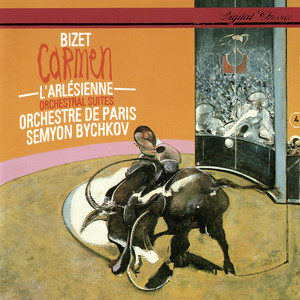 | Carmen Suite No. 1: 1. Prélude | Georges Bizet, Orchestre de Paris, Semyon Bychkov | A Minor | 1 | 8A | 96 BPM | |
 | Mahler: Lieder eines fahrenden Gesellen: No. 3, Ich hab' ein glühend Messer | Gustav Mahler, Sir John Barbirolli, Dame Janet Baker, Hallé | C Major | 1 | 8B | 84 BPM | |
 | Peer Gynt, Op. 23, Act IV: No. 13, Prelude. Morning Mood | Edvard Grieg, San Francisco Symphony, Herbert Blomstedt | E Major | 0 | 12B | 66 BPM | |
| Carmen Suite No.2: 5. Danse bohème | Georges Bizet, Orchestre de Paris, Semyon Bychkov | E Major | 1 | 12B | 142 BPM | |
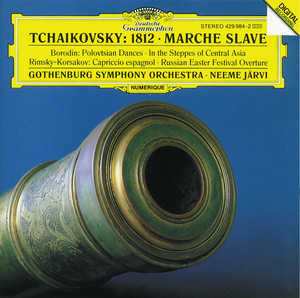 | Eine Steppenskizze aus Mittelasien: Allegretto con moto | Alexander Borodin, Gothenburg Symphony Orchestra, Neeme Järvi | A Minor | 0 | 8A | 139 BPM | |
 | Aladdin Suite, Op. 34, FS 89: I. The Festival March | Carl Nielsen, South Jutland Symphony Orchestra, Niklas Willen | A♭ Major | 0 | 4B | 132 BPM | |
| Le roi s'amuse: Madrigal | Léo Delibes, Slovak Philharmonic, Ondrej Lenard | A Major | 0 | 11B | 82 BPM | |
 | Brook Green Suite: II. Air | Gustav Holst, English Sinfonia, Howard Griffiths | E♭ Major | 0 | 5B | 128 BPM | |
 | Les Contes d'Hoffmann / Act 4: Entr'acte (Barcarolle) | Jacques Offenbach, Staatskapelle Dresden, Silvio Varviso | D Major | 0 | 10B | 121 BPM | |
 | Petite suite de concert, Op. 77: III. Un sonnet d'amour | Samuel Coleridge-Taylor, Chicago Sinfonietta, Paul Freeman | A Major | 0 | 11B | 70 BPM | |
 | Ludus pro Patria, La Nuit et l'Amour: La Nuit et l'Amour: Interlude de l'ode symphonique - Ludus pro Patria | Augusta Holmès, Staatsphilharmonie Rheinland-Pfalz, Patrick Davin | B♭ Major | 0 | 6B | 78 BPM | |
| Kanon Galop (1853) | Hans Christian Lumbye, Tivoli Symphony Orchestra | E Major | 4 | 12B | 150 BPM | |
 | Chanson de Matin, Op. 15 No. 2 (Version for Orchestra) | Edward Elgar, New Zealand Symphony Orchestra, James Judd | G Major | 1 | 9B | 141 BPM |
- ISRC
- This song does not have an ISRC.
- Label
- L-M Records/RCA Records