- BPM
- 126
- Key
- A Minor
- Camelot
- 8A
Prelude on an Old Carol Tune by Ralph Vaughan Williams, Northern Sinfonia of England/Bradley Creswick/Richard Hickox, Richard Hickox, Northern Sinfonia Of England Song Details
"Prelude on an Old Carol Tune" by Ralph Vaughan Williams, Northern Sinfonia of England/Bradley Creswick/Richard Hickox, Richard Hickox, Northern Sinfonia Of England had its release date on June 5, 2000. With this song being about 5 minutes long, at This song is fairly a long song compared to the average song length. This song does not have an "Explicit" tag, making it safe for all ages. The track order of this song in Ralph Vaughan Williams, Richard Hickox, Northern Sinfonia Of England's "Hickox conducts Vaughan Williams" album is number 15 out of 36. On top of that, United Kingdom appears to be the country where this track was created. Based on our statistics, Prelude on an Old Carol Tune's popularity is not that popular right now. In our opinion, the overall tone is not very danceable and projects negative sounds, such as being sad, depressed, or angry.
BPM and Tempo
We consider the tempo marking of Prelude on an Old Carol Tune by Ralph Vaughan Williams, Northern Sinfonia of England/Bradley Creswick/Richard Hickox, Richard Hickox, Northern Sinfonia Of England to be Allegro (fast, quick, and bright) because the track has a tempo of 126 BPM, a half-time of 63BPM, and a double-time of 252 BPM. Based on that, the speed of the song's tempo is fast. Activities such as, walking, can go well with this song. The time signature for this track is 4/4.
Music Key
This song has a musical key of A Minor. Because this track belongs in the A Minor key, the camelot key is 8A. So, the perfect camelot match for 8A would be either 8A or 7B. While, a low energy boost can consist of either 8B or 9A. For moderate energy boost, you would use 5A and a high energy boost can either be 10A or 3A. However, if you are looking for a low energy drop, finding a song with a camelot key of 7A would be a great choice. Where 11A would give you a moderate drop, and 6A or 1A would be a high energy drop. Lastly, 11B allows you to change the mood.
Want to find the BPM and music key for other songs? Check out our BPM and Key Finder page!
- Popularity
- 3%
- Loudness
- -18.742 dB
- Acousticness
- 98%
- Danceability
- 19%
- Energy
- 8%
- Instrumentalness
- 92%
- Liveness
- 15%
- Loudness
- 69%
- Speechiness
- 4%
- Valence
- 6%
Recommendations
| Track | Artist | Key | Energy | Camelot | BPM | ||
|---|---|---|---|---|---|---|---|
 | Serenade: Allegretto | William Mathias, Royal Ballet Sinfonia, Andrew Penny | E Minor | 0 | 9A | 118 BPM | |
 | An English Suite: VI. Air | Hubert Parry, London Symphony Orchestra, Sir Adrian Boult | G Major | 0 | 9B | 91 BPM | |
 | Two Eligiac Melodies Last Spring | Academy of St. Martin in the Fields | G Major | 1 | 9B | 88 BPM | |
 | A Severn Rhapsody, Op. 3 | Gerald Finzi, Robert Plane, Royal Northern Sinfonia, Howard Griffiths | C Minor | 0 | 5A | 62 BPM | |
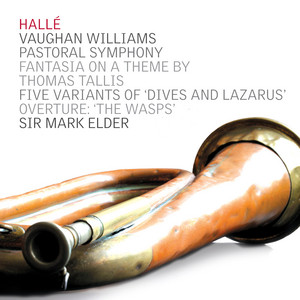 | Symphony No. 3 - 'Pastoral Symphony': II. Lento moderato | Ralph Vaughan Williams, Hallé, Sir Mark Elder | G Minor | 0 | 6A | 103 BPM | |
 | Pictures At An Exhibition: Promenade I | Modest Mussorgsky, Chicago Symphony Orchestra, Carlo Maria Giulini | F Major | 1 | 7B | 79 BPM | |
 | Ludus pro Patria, La Nuit et l'Amour: La Nuit et l'Amour: Interlude de l'ode symphonique - Ludus pro Patria | Augusta Holmès, Staatsphilharmonie Rheinland-Pfalz, Patrick Davin | B♭ Major | 0 | 6B | 78 BPM | |
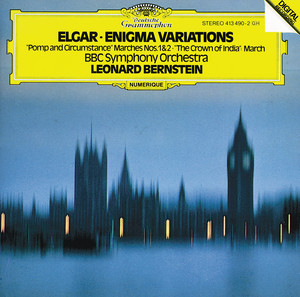 | Variations On An Original Theme, Op.36 "Enigma": 12. B.G.N. (Andante) | Edward Elgar, BBC Symphony Orchestra, Leonard Bernstein | B♭ Major | 0 | 6B | 82 BPM | |
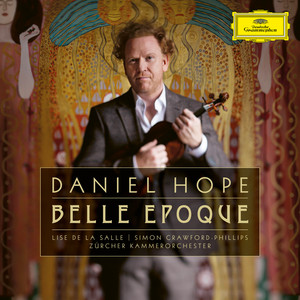 | Notturno for Strings and Harp | Arnold Schoenberg, Daniel Hope, Zürcher Kammerorchester, Jane Berthe | A♭ Major | 1 | 4B | 75 BPM | |
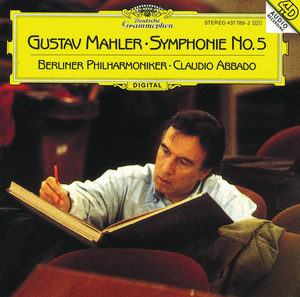 | Symphony No. 5: IV. Adagietto. Sehr langsam | Gustav Mahler, Berliner Philharmoniker, Claudio Abbado | F Major | 0 | 7B | 91 BPM | |
 | Mahler: Symphony No. 5 in C-Sharp Minor, Part. 3: IV. Adagietto (Sehr langsam) | Gustav Mahler, Sir Simon Rattle, Berliner Philharmoniker | F Major | 0 | 7B | 80 BPM | |
 | Symphony No. 6 in B Minor, Op. 74 "Pathétique": III. Allegro molto vivace | Pyotr Ilyich Tchaikovsky, Berliner Philharmoniker, Kirill Petrenko | G Major | 3 | 9B | 81 BPM | |
 | Elgar: Variations on an Original Theme, Op. 36 "Enigma": Variation IX. Nimrod | Edward Elgar, City Of Birmingham Symphony Orchestra, Sir Simon Rattle | E♭ Major | 1 | 5B | 49 BPM | |
 | The Planets Suite, Op. 32: IV. Jupiter | Gustav Holst, Vladimir Jurowski, London Philharmonic Choir, London Philharmonic Orchestra, Neville Creed | G Minor | 3 | 6A | 151 BPM | |
 | Symphony No. 9 in E Minor, Op. 95 "From the New World": I. Adagio — Allegro molto | Antonín Dvořák, New York Philharmonic, Alan Gilbert | E Minor | 1 | 9A | 125 BPM | |
| Peer Gynt Suite No.1 op. 46 Morning (Allegro pastorale) | Academy of St. Martin in the Fields | E Major | 0 | 12B | 68 BPM | |
 | Mors et Vita: Judex | Charles Gounod, Richard Hickox Orchestra, Richard Hickox | C Minor | 1 | 5A | 95 BPM | |
 | Orpheo ed Euridice, Wq. 30, Act II: Dance of the Blessed Spirits | Christoph Willibald Gluck, Eugene Ormandy, Philadelphia Orchestra | D Minor | 1 | 7A | 67 BPM | |
 | Andante Cantabile | Pyotr Ilyich Tchaikovsky, St. Lawrence String Quartet | B♭ Major | 0 | 6B | 90 BPM | |
 | First Suite of English Folk Dances: No. 3 Dick's Maggot | Ernest Tomlinson, Slovak Radio Symphony Orchestra | B♭ Major | 0 | 6B | 183 BPM | |
 | Pelléas et Mélisande Suite, Op. 80: III. Sicilienne. Allegretto molto moderato | Gabriel Fauré, Berliner Philharmoniker, Daniel Barenboim | E♭ Major | 0 | 5B | 56 BPM | |
 | Appalachian Spring: IV. Quite Fast | Aaron Copland, Leonard Bernstein, New York Philharmonic | E Major | 3 | 12B | 127 BPM | |
 | Karadec Suite, Op. 34: II. Chanson | Vincent d'Indy, Malmö Symphony Orchestra, Darrell Ang | E♭ Major | 0 | 5B | 71 BPM | |
 | Violin Concerto No. 1 in G Minor, Op. 26: II. Adagio | Max Bruch, Joshua Bell, Academy of St. Martin in the Fields, Sir Neville Marriner | E♭ Major | 1 | 5B | 85 BPM | |
 | Walton: Henry V: Passacaglia "The Death of Falstaff" | William Walton, Douglas Boyd, Chamber Orchestra of Europe | E Minor | 0 | 9A | 86 BPM |
- ISRC
- GBAYD8400246
- Label
- L-M Records/RCA Records