- BPM
- 93
- Key
- E Minor
- Camelot
- 9A
Symphonic Dance No. 14, Op. 34: Vocalise by Sergei Rachmaninoff, Akira Eguchi, Chee-Yun Song Details
"Symphonic Dance No. 14, Op. 34: Vocalise" by Sergei Rachmaninoff, Akira Eguchi, Chee-Yun had its release date on January 1, 2009. With this song being about 5 minutes long, at This song is fairly a long song compared to the average song length. This song does not have an "Explicit" tag, making it safe for all ages. There are a total of 22 in the song's album "The Ultimate Most Relaxing Music for Strings In the Universe". In this album, this song's track order is #12. In terms of popularity, Symphonic Dance No. 14, Op. 34: Vocalise is currently unknown. In our opinion, the overall tone is not very danceable and projects negative sounds, such as being sad, depressed, or angry.
BPM and Tempo
With Symphonic Dance No. 14, Op. 34: Vocalise by Sergei Rachmaninoff, Akira Eguchi, Chee-Yun having a BPM of 93 with a half-time of 46 BPM and a double-time of 186 BPM, we would consider this track to have a Andante (at a walking pace) tempo marking. Because of this, we believe that the song has an overall slow tempo. Looking at the BPM of this song, this song might go great with yoga or pilates. The time signature for this track is 4/4.
Music Key
This song has a musical key of E Minor. Which also means that the camelot key for this song is 9A. So, the perfect camelot match for 9A would be either 9A or 8B. While, a low energy boost can consist of either 9B or 10A. For moderate energy boost, you would use 6A and a high energy boost can either be 11A or 4A. However, if you are looking for a low energy drop, finding a song with a camelot key of 8A would be a great choice. Where 12A would give you a moderate drop, and 7A or 2A would be a high energy drop. Lastly, 12B allows you to change the mood.
Want to find the BPM and music key for other songs? Check out our BPM and Key Finder page!
- Popularity
- 0%
- Loudness
- -22.844 dB
- Acousticness
- 98%
- Danceability
- 17%
- Energy
- 12%
- Instrumentalness
- 16%
- Liveness
- 11%
- Loudness
- 62%
- Speechiness
- 4%
- Valence
- 4%
Recommendations
| Track | Artist | Key | Energy | Camelot | BPM | ||
|---|---|---|---|---|---|---|---|
 | Piano Concerto No. 1 in G Minor, Op. 25, MWV O7: III. Presto. Molto allegro e vivace | Felix Mendelssohn, Jan Lisiecki, Orpheus Chamber Orchestra | G Major | 2 | 9B | 91 BPM | |
 | Piano Concerto No. 2 in A Minor, Op. 85: II. Larghetto | Johann Nepomuk Hummel, Stephen Hough, English Chamber Orchestra, Bryden Thomson | F Major | 1 | 7B | 127 BPM | |
 | 6 Pezzi, P. 44: No. 3. Notturno | Ottorino Respighi, Konstantin Scherbakov | F♯ Major | 0 | 2B | 87 BPM | |
 | Notturno for Strings and Harp | Arnold Schoenberg, Daniel Hope, Zürcher Kammerorchester, Jane Berthe | A♭ Major | 1 | 4B | 75 BPM | |
 | Shéhérazade, Op. 35: I. The Sea and Sinbad's Ship | Nikolai Rimsky-Korsakov, Sergej Galaktionov, Gianandrea Noseda, Filarmonica Teatro Regio Torino | E Major | 1 | 12B | 136 BPM | |
 | Piano Concerto No.1 in E minor, Op.11: 2. Romance (Larghetto) | Frédéric Chopin, Krystian Zimerman, Polish Festival Orchestra | E Major | 0 | 12B | 65 BPM | |
 | Thaïs: Méditation | Jules Massenet, Bomsori, NFM Wrocław Philharmonic, Giancarlo Guerrero | D Major | 0 | 10B | 84 BPM | |
 | Symphony No. 6 in B Minor, Op. 74 "Pathétique": III. Allegro molto vivace | Pyotr Ilyich Tchaikovsky, Berliner Philharmoniker, Kirill Petrenko | G Major | 3 | 9B | 81 BPM | |
 | Minuet in G Minor, HWV 434 No. 4 (Transc. W. Kempff) | George Frideric Handel, Roberto Cominati | G Minor | 0 | 6A | 66 BPM | |
 | Ravel: Pavane pour une infante défunte, M. 19 | Maurice Ravel, Bertrand Chamayou | E Minor | 0 | 9A | 126 BPM | |
![Etudes symphoniques (Symphonic Etudes), Op. 13, Adagio and Allegro brillante: Variation 11 [arr. P.I. Tchaikovsky for orchestra] by Robert Schumann, Seattle Symphony Orchestra, Gerard Schwarz](https://i.scdn.co/image/ab67616d00001e029057c124b554163ef1edd618) | Etudes symphoniques (Symphonic Etudes), Op. 13, Adagio and Allegro brillante: Variation 11 [arr. P.I. Tchaikovsky for orchestra] | Robert Schumann, Seattle Symphony Orchestra, Gerard Schwarz | A Minor | 0 | 8A | 104 BPM | |
 | Capriccio brillant, Op. 22: Andante | Felix Mendelssohn, Matthias Kirschnereit, Michael Sanderling, Frankfurt Radio Symphony Orchestra | B Major | 0 | 1B | 91 BPM | |
 | 4 Short Pieces for Violin & Piano, H. 104: No. 2, Spring Song (Version for Cello & Piano) | Frank Bridge, Gerald Peregrine, Antony Ingham | G Major | 0 | 9B | 86 BPM | |
 | Après un rêve, Op. 7, No. 1 | Gabriel Fauré, Yo-Yo Ma | F Minor | 0 | 4A | 115 BPM | |
 | Piano Trio No. 1 in D Minor, Op. 32: III. Elegie: Adagio | Anton Arensky, The Rembrandt Trio | G Minor | 0 | 6A | 76 BPM | |
 | Beau soir, L. 6 (L. 84) (Arr. Heifetz for Violin and Piano) | Claude Debussy, Lisa Batiashvili, Yannick Nézet-Séguin | F Minor | 1 | 4A | 79 BPM | |
 | Prelude in E Minor, Op. 28, No. 4 | Frédéric Chopin, Arthur Rubinstein | A Minor | 0 | 8A | 110 BPM | |
 | Schluss | Fanny Mendelssohn, Heather Schmidt | E Major | 1 | 12B | 87 BPM | |
| 3 Preludi Sopra Melodie Gregoriane, P. 131: I. Molto Lento | Ottorino Respighi, Konstantin Scherbakov | A♭ Minor | 0 | 1A | 70 BPM | |
 | Symphony in B Minor (arr. T. Finno for orchestra): Ii. Un poco lento, cantabile | Claude Debussy, フランス国立リヨン管弦楽団, 準・メルクル | E♭ Major | 1 | 5B | 92 BPM | |
 | 6 Impromptus, Op. 5: Impromptu No. 5 in B Minor | Jean Sibelius, Håvard Gimse | B Minor | 0 | 10A | 84 BPM | |
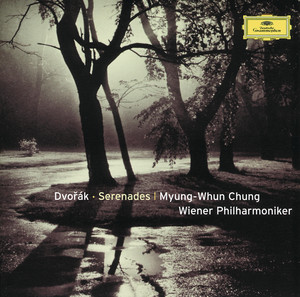 | Serenade for Strings in E Major, Op. 22, B. 52: IV. Larghetto | Antonín Dvořák, Wiener Philharmoniker, Myung-Whun Chung | A Major | 1 | 11B | 79 BPM | |
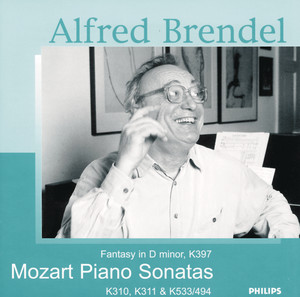 | Fantasia in D Minor, K. 397 | Wolfgang Amadeus Mozart, Alfred Brendel | D Major | 0 | 10B | 126 BPM | |
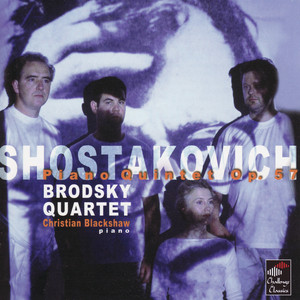 | Five pieces for Two Violins and Piano: IV. Waltz- Tempo di Valse. Moderato | Dmitri Shostakovich, Brodsky Quartet, Christian Blackshaw | G Minor | 0 | 6A | 140 BPM | |
 | Orfeo ed Euridice, Wq. 30: Dance of the Blessed Spirits "Melody" (Arr. Sgambati for Piano) | Christoph Willibald Gluck, Yuja Wang | D Minor | 0 | 7A | 70 BPM |
- ISRC
- This song does not have an ISRC.
- Label
- L-M Records/RCA Records