- BPM
- 99
- Key
- A♭ Minor
- Camelot
- 1A
Circus Polka for a Young Elephant by Igor Stravinsky, Los Angeles Philharmonic, Zubin Mehta Song Details
Igor Stravinsky, Los Angeles Philharmonic, Zubin Mehta's ' "Circus Polka for a Young Elephant" was released on its scheduled release date, January 1, 1968. With this song being around four minutes long, at 3:41, the duration of this song is pretty average compared to other songs. This track is safe for children and doesn't appear to contain any foul language, since the "Explicit" tag was not present in this track. There are a total of 26 in the song's album "Stravinsky: Petrushka (1947 version); Rite of Spring; 8 Instrumental Miniatures; Circus Polka". In this album, this song's track order is #18. Furthermore, we believe that the track originated from United Kingdom. In terms of popularity, Circus Polka for a Young Elephant is currently not that popular. Since there is more of a neutral sound being played, this makes the track somewhat danceable.
BPM and Tempo
With Circus Polka for a Young Elephant by Igor Stravinsky, Los Angeles Philharmonic, Zubin Mehta having a BPM of 99 with a half-time of 50 BPM and a double-time of 198 BPM, we would consider this track to have a Andante (at a walking pace) tempo marking. Because of this, we believe that the song has an overall slow tempo. The time signature for this track is 4/4.
Music Key
This song is in the music key of A♭ Minor. Which also means that the camelot key for this song is 1A. So, the perfect camelot match for 1A would be either 1A or 12B. While, a low energy boost can consist of either 1B or 2A. For moderate energy boost, you would use 10A and a high energy boost can either be 3A or 8A. However, if you are looking for a low energy drop, finding a song with a camelot key of 12A would be a great choice. Where 4A would give you a moderate drop, and 11A or 6A would be a high energy drop. Lastly, 4B allows you to change the mood.
Want to find the BPM and music key for other songs? Check out our BPM and Key Finder page!
- Popularity
- 11%
- Loudness
- -16.002 dB
- Acousticness
- 97%
- Danceability
- 55%
- Energy
- 19%
- Instrumentalness
- 87%
- Liveness
- 31%
- Loudness
- 73%
- Speechiness
- 4%
- Valence
- 58%
Recommendations
| Track | Artist | Key | Energy | Camelot | BPM | ||
|---|---|---|---|---|---|---|---|
 | Oedipus Rex: Epilogue | Igor Stravinsky, Joseph Cornwell, Edward Fox, Andrew Greenan, Martyn Hill, Jennifer Lane, David Wilson-Johnson, Simon Joly Male Chorus, Philharmonia Orchestra, Robert Craft | D♭ Major | 6 | 3B | 90 BPM | |
 | Children's Corner (arr. A. Caplet for orchestra): Golliwogg's Cake-walk | Andre Caplet, Claude Debussy, Rheinland-Pfalz State Philharmonic Orchestra, Leif Segerstam | B♭ Major | 0 | 6B | 103 BPM | |
 | Symphony No. 8 in G Minor, Op. 88, B. 163: IV. Allegro, ma non troppo | Antonín Dvořák, London Symphony Orchestra, Sir Colin Davis | G Major | 1 | 9B | 74 BPM | |
 | Eine Alpensinfonie: I. Nacht - Sonnenaufgang | Richard Strauss, Bernard Haitink, London Symphony Orchestra | B♭ Minor | 0 | 3A | 88 BPM | |
 | Peter Grimes, 4 Sea Interludes, Op. 33a: III. Moonlight | Benjamin Britten, London Symphony Orchestra, Steuart Bedford | E♭ Major | 0 | 5B | 78 BPM | |
 | In the Steppes of Central Asia | Alexander Borodin, Royal Philharmonic Orchestra, Vladimir Ashkenazy | A Major | 0 | 11B | 69 BPM | |
 | Music for Strings, Percussion and Celesta, Sz. 106: 1. Andante tranquillo | Béla Bartók, Chicago Symphony Orchestra, Sir Georg Solti | B♭ Minor | 0 | 3A | 85 BPM | |
 | The Rite of Spring, K15, Pt. 2: XII. Evocation of the Ancestors | Igor Stravinsky, Berliner Philharmoniker, Herbert von Karajan | B Minor | 0 | 10A | 86 BPM | |
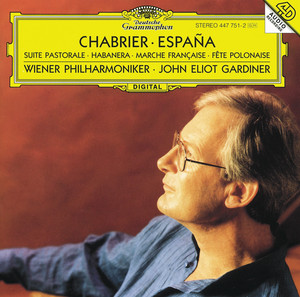 | Suite pastorale: II. Danse villageoise | Emmanuel Chabrier, Wiener Philharmoniker, John Eliot Gardiner | A Major | 1 | 11B | 126 BPM | |
| The Rite of Spring, K15, Pt. 2: X. Mystic Circles of the Adolescents | Igor Stravinsky, Berliner Philharmoniker, Herbert von Karajan | B Minor | 0 | 10A | 86 BPM | |
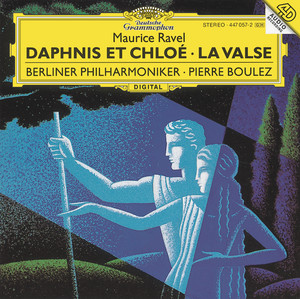 | Daphnis et Chloé, M. 57, Pt. 3: XIa-b. Pantomime. Daphnis et Chloé miment l'aventure de Pan et de Syrinx | Maurice Ravel, Berliner Philharmoniker, Pierre Boulez | F♯ Minor | 0 | 11A | 169 BPM | |
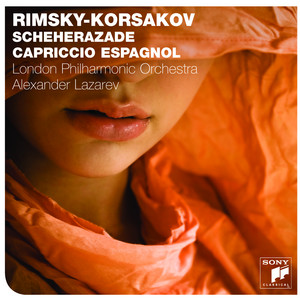 | Scheherazade: Calm at Sea | Nikolai Rimsky-Korsakov, Lars Hjalmar Joakim | E Major | 2 | 12B | 84 BPM | |
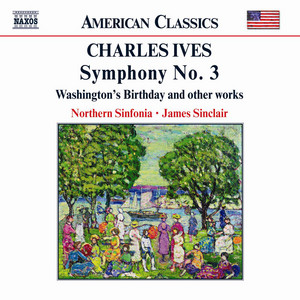 | The Unanswered Question | Charles Ives, Royal Northern Sinfonia, James Sinclair | C Major | 0 | 8B | 63 BPM | |
 | Requiem Canticles: Libera me | Igor Stravinsky, Sally Burgess, Roderick Williams, Simon Joly Chorale, Philharmonia Orchestra, Robert Craft | B♭ Major | 3 | 6B | 136 BPM | |
 | Bruch: Violin Concerto No. 1 in G Minor, Op. 26: I. Prelude. Allegro moderato | Max Bruch, Maxim Vengerov, Kurt Masur, Gewandhausorchester | E♭ Major | 1 | 5B | 113 BPM | |
 | Symphony No. 2 in C minor - "Resurrection" / 5th Movement: Sehr langsam und gedehnt ("der grosse Appell") | Gustav Mahler, Wiener Philharmoniker, Gilbert Kaplan | D♭ Minor | 0 | 12A | 67 BPM | |
 | Mendelssohn: Violin Concerto in E Minor, Op. 64, MWV O14: II. Andante | Felix Mendelssohn, Maxim Vengerov, Kurt Masur, Gewandhausorchester | C Major | 1 | 8B | 96 BPM | |
 | Sinfonietta: 5. Andante con moto - Maestoso - Tempo I - Allegretto - Allegro - Maestoso - Adagio | Leoš Janáček, Bavarian Radio Symphony Orchestra, Rafael Kubelik | E♭ Minor | 3 | 2A | 60 BPM | |
 | Chamber Symphony No. 5 in A-Flat Major, Op. 118a: II. Allegretto furioso | Dmitri Shostakovich, Yuli Turovsky, I Musici de Montréal | D♭ Major | 0 | 3B | 78 BPM | |
 | Concerto for Orchestra, Sz. 116: V. Finale. Pesante – Presto | Béla Bartók, Chicago Symphony Orchestra, Pierre Boulez | A♭ Major | 2 | 4B | 127 BPM | |
 | Fontane di Roma, P. 106: I. La fontana di Valle Giulia all'alba | Ottorino Respighi, New York Philharmonic, Giuseppe Sinopoli | F♯ Major | 2 | 2B | 73 BPM | |
 | String Quartet No. 12 in F major, Op. 96 - "American" B.179: 2. Lento | Antonín Dvořák, Hagen Quartett | D Minor | 1 | 7A | 88 BPM | |
| Symphony No. 1 in E-Flat Major: I. Adagio – Allegro | Alexander Borodin, Royal Philharmonic Orchestra, Vladimir Ashkenazy | E♭ Major | 0 | 5B | 88 BPM | |
 | Violin Concerto in D Major, Op. 35: III. Finale. Allegro assai vivace | Erich Wolfgang Korngold, Vadim Gluzman, Hague Residentie Orchestra, Neeme Järvi | G Major | 2 | 9B | 75 BPM | |
| Four Orchestral Pieces Op. 12 (Sz 51): II. Scherzo: Allegro | Béla Bartók, Chicago Symphony Orchestra, Pierre Boulez | D Major | 1 | 10B | 73 BPM |
- ISRC
- GBF076711640
- Label
- L-M Records/RCA Records