- BPM
- 139
- Key
- B Major
- Camelot
- 1B
Clarae stellae, scintillate, in F major, RV625: 4. Alleluia (Allegro) by Antonio Vivaldi, Andreas Scholl, Australian Brandenburg Orchestra, Paul Dyer Song Details
Antonio Vivaldi, Andreas Scholl, Australian Brandenburg Orchestra, Paul Dyer's 'Clarae stellae, scintillate, in F major, RV625: 4. Alleluia (Allegro)' had a release date set for January 1, 2000. The duration of This song is about two minutes long, specifically at 2:42. This song does not appear to have any foul language. Clarae stellae, scintillate, in F major, RV625: 4. Alleluia (Allegro)'s duration is considered a little bit shorter than the average duration of a typical track. This song is part of Vivaldi: Nisi Dominus; Concerto for Strings & Continuo in F etc. by Antonio Vivaldi, Andreas Scholl, Australian Brandenburg Orchestra, Paul Dyer. The song's track number on the album is #16 out of 29 tracks. Based on our data, United Kingdom was the country where this track was produced or recorded. Based on our statistics, Clarae stellae, scintillate, in F major, RV625: 4. Alleluia (Allegro)'s popularity is not that popular right now. In our opinion, the overall tone is not very danceable and projects negative sounds, such as being sad, depressed, or angry.
BPM and Tempo
Since Clarae stellae, scintillate, in F major, RV625: 4. Alleluia (Allegro) by Antonio Vivaldi, Andreas Scholl, Australian Brandenburg Orchestra, Paul Dyer has a tempo of 139 beats per a minute, the tempo markings of this song would be Allegro (fast, quick, and bright). With Clarae stellae, scintillate, in F major, RV625: 4. Alleluia (Allegro) being at 139 BPM, the half-time would be 70 BPM with a double-time of 278 BPM.In addition, we consider the tempo speed to be pretty fast for this song. This makes this song perfect for activities such as, walking. The time signature for this track is 3/4.
Music Key
B Major is the music key of this track. Or for those who are familiar with the camelot wheel, this song has a camelot key of 1B. So, the perfect camelot match for 1B would be either 1B or 2A. While, 2B can give you a low energy boost. For moderate energy boost, you would use 10B and a high energy boost can either be 3B or 8B. Though, if you want a low energy drop, you should looking for songs with either a camelot key of 1A or 12B will give you a low energy drop, 4B would be a moderate one, and 11B or 6B would be a high energy drop. Lastly, 10A allows you to change the mood.
Want to find the BPM and music key for other songs? Check out our BPM and Key Finder page!
- Popularity
- 14%
- Loudness
- -24.092 dB
- Acousticness
- 99%
- Danceability
- 31%
- Energy
- 6%
- Instrumentalness
- 0%
- Liveness
- 24%
- Loudness
- 60%
- Speechiness
- 5%
- Valence
- 39%
Recommendations
| Track | Artist | Key | Energy | Camelot | BPM | ||
|---|---|---|---|---|---|---|---|
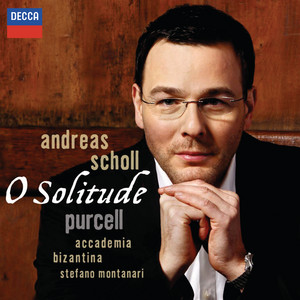 | Pausanius, the Betrayer of his Country. (1695), Z585 - original version: Sweeter Than Roses | Henry Purcell, Andreas Scholl, Accademia Bizantina, Stefano Montanari | F♯ Major | 1 | 2B | 136 BPM | |
 | Concerto a cinque No. 5, Op. 9: II. Adagio | Tomaso Albinoni, Paul Dombrecht, Il Fondamento | A♭ Minor | 1 | 1A | 97 BPM | |
 | Laudate pueri: Quis sicut Dominus (Salmo 112), RV 600 | Antonio Vivaldi, Concerto Italiano, Rinaldo Alessandrini, Gemma Bertagnolli | A Minor | 0 | 8A | 77 BPM | |
 | Orfeo ed Euridice, Wq. 30, Act III, Scene 1: "Che faro senza Euridice ?" (Orfeo) | Christoph Willibald Gluck, James Bowman, La Grande Écurie et la Chambre du Roy, Jean-Claude Malgoire | F♯ Major | 1 | 2B | 112 BPM | |
 | Purcell: Music for a while, Z 583/2 | Philippe Jaroussky | F♯ Minor | 0 | 11A | 90 BPM | |
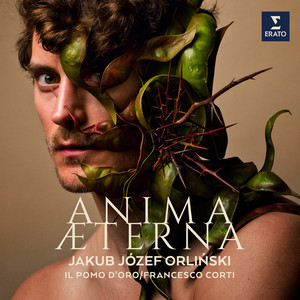 | Manna: Laudate pueri: I. Laudate pueri, Dominum | Gennaro Manna, Jakub Józef Orliński, Il pomo d'oro Choir, Francesco Corti, Il Pomo D'oro | E Major | 3 | 12B | 129 BPM | |
 | Concerto For 2 Violins, Strings And Continuo In G Major, RV 516: 2. Andante (molto) | Antonio Vivaldi, Viktoria Mullova, Giuliano Carmignola, Venice Baroque Orchestra, Andrea Marcon | B Minor | 0 | 10A | 106 BPM | |
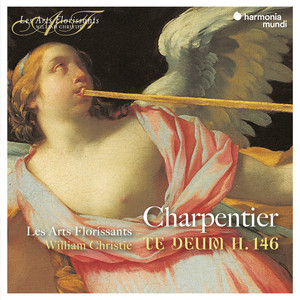 | Te Deum, H. 146: III. Te aeternum Patrem | Marc-Antoine Charpentier, Véronique Gens, William Christie, Gilles Ragon, Jean-Paul Fouchécourt, Les Arts Florissants, Bernard Deletré | D♭ Major | 3 | 3B | 116 BPM | |
 | Charpentier: Rentrez, trop indiscrets soupirs, H. 464 | Marc-Antoine Charpentier, Les Arts Florissants, William Christie, Adèle Eikenes | A♭ Minor | 0 | 1A | 178 BPM | |
 | Dido and Aeneas, Z. 626, Act I: No. 5, Recit. Whence Could So Much Virtue Spring? | Henry Purcell, Catherine Bott, Emma Kirkby, Julianne Baird, Academy of Ancient Music, Christopher Hogwood | B Minor | 0 | 10A | 170 BPM | |
 | Nisi Dominus, RV 608: II. Vanum est vobis – III. Surgite | Antonio Vivaldi, James Bowman, Academy of Ancient Music, Christopher Hogwood | F♯ Minor | 1 | 11A | 98 BPM | |
 | Laudate pueri in G Major, RV 601 "Salmo 112": I. Laudate, pueri (Allegro non molto) | Antonio Vivaldi, Sandrine Piau, Accademia Bizantina, Ottavio Dantone, Stefano Montanari | D♭ Major | 2 | 3B | 92 BPM | |
 | Dido and Aeneas / Act 1: "Ah! Belinda, I am prest with torment" | Henry Purcell, Jessye Norman, Marie McLaughlin, English Chamber Orchestra Chorus, English Chamber Orchestra, Raymond Leppard | C Minor | 0 | 5A | 101 BPM | |
 | Cantique Quatrième "sur le bonheur des justes & sur le malheur des resprouvez": II. De quelle douleur profonde | Michel Richard Delalande, Véronique Gens, Noemi Rime, Les Arts Florissants, William Christie | D♭ Minor | 0 | 12A | 67 BPM | |
 | Vespro della Beata Vergine, SV 206: Concerto "Pulchra es" | Claudio Monteverdi, Raphael Pichon, Ensemble Pygmalion, Céline Scheen, Perrine Devillers | G Major | 2 | 9B | 84 BPM | |
 | Laudate pueri Dominum, RV 600: A solis ortu | Antonio Vivaldi, Tracy Smith Bessette, Aradia Ensemble, Kevin Mallon | B Major | 1 | 1B | 142 BPM | |
 | Venite videte | Claudio Monteverdi, Jordi Savall, Montserrat Figueras, Hespèrion XX | G Major | 1 | 9B | 99 BPM | |
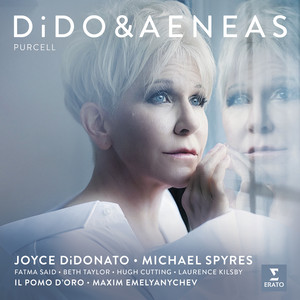 | Purcell: Dido and Aeneas, Z. 626, Act 1: "Whence Could so Much Virtue Spring" (Dido, Belinda) | Henry Purcell, Maxim Emelyanychev, Fatma Said, Il Pomo D'oro, Joyce DiDonato | G Minor | 2 | 6A | 104 BPM | |
 | Requiem In C Major: I. Introitus, Requiem | Johann Adolf Hasse, Il Fondamento, Paul Dombrecht | B Minor | 3 | 10A | 82 BPM | |
 | La Susanna: Voi donzelle | Alessandro Stradella, Filippo Mineccia, Nereydas, Javier Ulises Illán | D Major | 1 | 10B | 111 BPM | |
 | Maddalena ai piedi di Cristo: No. 18 Aria Maddalena "Pompe inutili" | Antonio Caldara, René Jacobs, Schola Cantorum Basiliensis, Chiara Banchini, Maria Cristina Kiehr | F♯ Minor | 1 | 11A | 82 BPM | |
 | Messe de requiem: II. Kyrie | André Campra, Philippe Herreweghe, La Chapelle Royale, Orchestre de La Chapelle Royale | E♭ Minor | 2 | 2A | 111 BPM | |
 | Confitebor tibi, ZWV 71: I. Confitebor tibi Domine | Jan Dismas Zelenka, Accademia Barocca Lucernensis, Alexandre Beuchat, Javier Ulises Illán | B Major | 1 | 1B | 79 BPM | |
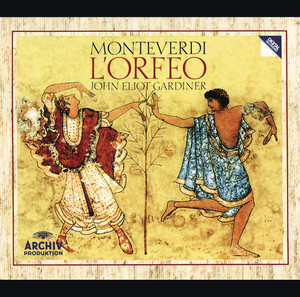 | L'Orfeo, SV 318 / Act II: Sinfonia - "Ecco pur ch'a voi ritorno" | Claudio Monteverdi, Anthony Rolfe Johnson, John Eliot Gardiner, English Baroque Soloists | B♭ Major | 2 | 6B | 114 BPM | |
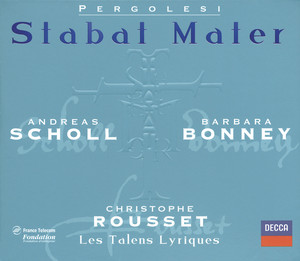 | Stabat Mater: 2. Cujus animam | Giovanni Battista Pergolesi, Barbara Bonney, Les Talens Lyriques, Christophe Rousset | G Major | 1 | 9B | 75 BPM |
- ISRC
- GBBBB2400016
- Label
- L-M Records/RCA Records