- BPM
- 80
- Key
- E♭ Major
- Camelot
- 5B
Simple Symphony, Op. 4: II. Playful Pizzicato by Benjamin Britten, Ross Pople Song Details
"Simple Symphony, Op. 4: II. Playful Pizzicato" by Benjamin Britten, Ross Pople had its release date on May 1, 1996. The duration of This song is about two minutes long, specifically at 2:47. This song does not appear to have any foul language. Simple Symphony, Op. 4: II. Playful Pizzicato's duration is considered a little bit shorter than the average duration of a typical track. The song is number 13 out of 15 in Britten: Simple Symphony Op.1 / Lachrymae Op.48 by Benjamin Britten, Ross Pople. Going off of the ISRC code of this track, we detected that the origin of this track is from Germany. Simple Symphony, Op. 4: II. Playful Pizzicato is unknown right now. In our opinion, the overall tone is not very danceable and projects negative sounds, such as being sad, depressed, or angry.
BPM and Tempo
The tempo marking of Simple Symphony, Op. 4: II. Playful Pizzicato by Benjamin Britten, Ross Pople is Andante (at a walking pace), since this song has a tempo of 80 BPM. With that information, we can conclude that the song has a slow tempo. The time signature for this track is 3/4.
Music Key
E♭ Major is the music key of this track. This also means that this song has a camelot key of 5B. So, the perfect camelot match for 5B would be either 5B or 6A. While, 6B can give you a low energy boost. For moderate energy boost, you would use 2B and a high energy boost can either be 7B or 12B. Though, if you want a low energy drop, you should looking for songs with either a camelot key of 5A or 4B will give you a low energy drop, 8B would be a moderate one, and 3B or 10B would be a high energy drop. Lastly, 2A allows you to change the mood.
Want to find the BPM and music key for other songs? Check out our BPM and Key Finder page!
- Popularity
- 0%
- Loudness
- -24.102 dB
- Acousticness
- 95%
- Danceability
- 8%
- Energy
- 5%
- Instrumentalness
- 77%
- Liveness
- 9%
- Loudness
- 60%
- Speechiness
- 4%
- Valence
- 4%
Recommendations
| Track | Artist | Key | Energy | Camelot | BPM | ||
|---|---|---|---|---|---|---|---|
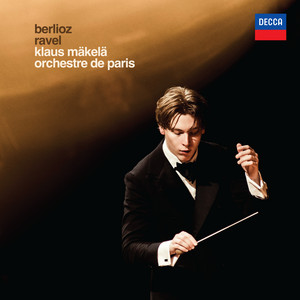 | Symphonie fantastique, H. 48: II. Un bal. Valse | Hector Berlioz, Orchestre de Paris, Klaus Mäkelä | A Major | 1 | 11B | 100 BPM | |
 | Korngold: Die tote Stadt, Op. 12, Act I: Lied. "Glück, das mir verblied" (Marietta) [Arr. for Trumpet] | Erich Wolfgang Korngold, Tine Thing Helseth, Eivind Aadland, Royal Liverpool Philharmonic Orchestra | B♭ Major | 1 | 6B | 71 BPM | |
 | Pinocchio: V. Il sorriso di Arlecchino | Alexander Litvinovsky, Metamorphose String Orchestra, Pavel Lyubomudrov, Anna Ignatova | D Minor | 2 | 7A | 85 BPM | |
 | Violin Sonata in E Minor, P. 85: IV. Giga. Vivace assai (After J.S. Bach's BWV 1023) | Ottorino Respighi, Ilkka Talvi, Seattle Symphony Orchestra, Gerard Schwarz | E Minor | 0 | 9A | 121 BPM | |
 | Water Music Suite No. 2 in D Major, HWV 349: Alla Hornpipe | George Frideric Handel, Ross Pople | D Major | 1 | 10B | 110 BPM | |
 | Montero: Improvisation on Handel's Largo | Gabriela Montero | G Major | 0 | 9B | 135 BPM | |
 | Ballet Suite No. 1 (arr. L. Atovmyan): Lyric Waltz (Suite for Jazz Orchestra No. 1) | Lev Atovmyan, Dmitri Shostakovich, Russian Philharmonic Orchestra, Dmitry Yablonsky | E♭ Major | 2 | 5B | 103 BPM | |
 | Simple Symphony, Op. 4: II. Playful Pizzicato | Benjamin Britten, Metamorphose String Orchestra, Pavel Lyubomudrov | C Major | 2 | 8B | 175 BPM | |
 | Dances in the Canebrakes (Arr. W.G. Still for Orchestra): No. 2, Tropical Noon | Florence Beatrice Price, Chicago Sinfonietta, Mei-Ann Chen | A Major | 1 | 11B | 134 BPM | |
 | Variations on a theme of Frank Bridge, Op. 10: IX. Funeral March | Benjamin Britten, English Chamber Orchestra | F Minor | 1 | 4A | 81 BPM | |
 | Antiche danze ed arie per liuto, Suite No. 3, P. 172: I. Italianaed | Ottorino Respighi, Munich Radio Orchestra, Henry Raudales | G Minor | 0 | 6A | 95 BPM | |
 | Serenade for String Orchestra in C Minor, Op. posth.: VI. Andante sostenuto | Max Bruch, George Hanson, Sinfonieorchester Wuppertal | E♭ Major | 0 | 5B | 87 BPM | |
 | Pizzicato Polka | Patrick Thomas Hawes | G Major | 2 | 9B | 100 BPM | |
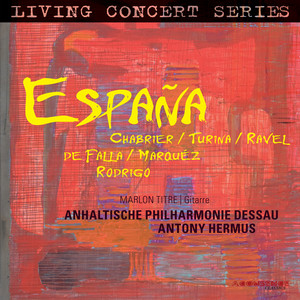 | Danzon No. 2 | Arturo Márquez, Dessau Anhalt Philharmonic Orchestra, Antony Hermus | D Minor | 2 | 7A | 97 BPM | |
 | Suite No. 3, P. 172: I. Italiana: Andantino | Ottorino Respighi, RTÉ National Symphony Orchestra | B♭ Major | 1 | 6B | 94 BPM | |
 | Marietta's Lied | Erich Wolfgang Korngold, Yo-Yo Ma, Kathryn Stott | B♭ Major | 0 | 6B | 78 BPM | |
 | Fantaisie sur des motifs de l'opéra "Guillaume Tell" de Rossini (Arr. for 3 Cellos): III. Moderato - Allegro | Alexandre Batta, Gioachino Rossini, Sol Gabetta, Victor Julien-Laferrière, Luca Magariello | D Major | 5 | 10B | 76 BPM | |
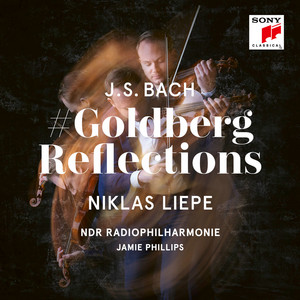 | GoldBergHain (Quodlibet on "Kraut und Rüben haben mich vertrieben") for Violin & String Orchestra | Stephan Koncz, Niklas Liepe, NDR Radiophilharmonie, Jamie Phillips | G Major | 1 | 9B | 117 BPM | |
 | Two Dialogues with Postscript: I. Wedding Waltz | Valentin Silvestrov, Hélène Grimaud, Camerata Salzburg | D♭ Minor | 1 | 12A | 164 BPM | |
 | Concerto grosso No. 11 in D Minor from L'estro armonico, Op. 3: II. Largo (Arr. Leopold Stokowski) | Antonio Vivaldi, Matthias Bamert, BBC Philharmonic | D Minor | 0 | 7A | 80 BPM | |
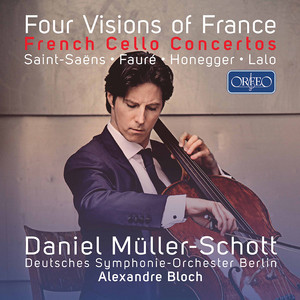 | Cello Concerto No. 1 in A Minor, Op. 33, R. 193: III. Allegro non troppo | Camille Saint-Saëns, Daniel Müller-Schott, Deutsches Symphonie-Orchester Berlin, Alexandre Bloch | F Major | 0 | 7B | 78 BPM | |
 | Rêve Astral | Etoilee | F Minor | 8 | 4A | 119 BPM | |
| Pinocchio: IV. Mangiafuoco terrificante | Alexander Litvinovsky, Metamorphose String Orchestra, Pavel Lyubomudrov, Anna Ignatova | D Minor | 2 | 7A | 85 BPM | |
 | Quantum Flow | Jarko Vento | G Major | 3 | 9B | 121 BPM | |
 | Straussiana | Erich Wolfgang Korngold, John Wilson, Sinfonia Of London | B♭ Major | 2 | 6B | 153 BPM |
- ISRC
- DEP629500555
- Label
- L-M Records/RCA Records