- BPM
- 118
- Key
- C Major
- Camelot
- 8B
Cello Concerto in E-Flat Major, RV 408: I. Allegro non molto by Antonio Vivaldi, Raphael Wallfisch, City of London Sinfonia, Nicholas Kraemer Song Details
Antonio Vivaldi, Raphael Wallfisch, City of London Sinfonia, Nicholas Kraemer's ' "Cello Concerto in E-Flat Major, RV 408: I. Allegro non molto" was released on its scheduled release date, February 8, 1995. With this song being around four minutes long, at 3:30, the duration of this song is pretty average compared to other songs. This track is safe for children and doesn't appear to contain any foul language, since the "Explicit" tag was not present in this track. This song is part of Vivaldi: Cello Concerti, Vol. 2 by Antonio Vivaldi, Raphael Wallfisch, City of London Sinfonia, Nicholas Kraemer. The song's track number on the album is #1 out of 18 tracks. Based on our data, Hong Kong was the country where this track was produced or recorded. In terms of popularity, Cello Concerto in E-Flat Major, RV 408: I. Allegro non molto is currently unknown. Since there is more of a neutral sound being played, this makes the track somewhat danceable.
BPM and Tempo
Since Cello Concerto in E-Flat Major, RV 408: I. Allegro non molto by Antonio Vivaldi, Raphael Wallfisch, City of London Sinfonia, Nicholas Kraemer has a tempo of 118 beats per a minute, the tempo markings of this song would be Moderato (at a moderate speed). With Cello Concerto in E-Flat Major, RV 408: I. Allegro non molto being at 118 BPM, the half-time would be 59 BPM with a double-time of 236 BPM.In addition, we consider the tempo speed to be pretty moderate for this song. This makes this song perfect for activities such as, walking. The time signature for this track is 3/4.
Music Key
C Major is the music key of this track. Or for those who are familiar with the camelot wheel, this song has a camelot key of 8B. So, the perfect camelot match for 8B would be either 8B or 9A. While, 9B can give you a low energy boost. For moderate energy boost, you would use 5B and a high energy boost can either be 10B or 3B. Though, if you want a low energy drop, you should looking for songs with either a camelot key of 8A or 7B will give you a low energy drop, 11B would be a moderate one, and 6B or 1B would be a high energy drop. Lastly, 5A allows you to change the mood.
Want to find the BPM and music key for other songs? Check out our BPM and Key Finder page!
- Popularity
- 0%
- Loudness
- -22.865 dB
- Acousticness
- 95%
- Danceability
- 56%
- Energy
- 9%
- Instrumentalness
- 84%
- Liveness
- 17%
- Loudness
- 62%
- Speechiness
- 5%
- Valence
- 45%
Recommendations
| Track | Artist | Key | Energy | Camelot | BPM | ||
|---|---|---|---|---|---|---|---|
 | Passacaglia for Violin and Violoncello after G.F. Händel | George Frideric Handel, Georg Friedrich Händel, Johan August Halvorsen, Johan Halvorsen, Kyung Sun Lee, Tilmann Wick | G Minor | 1 | 6A | 74 BPM | |
 | The Four Seasons - Summer in G Minor, RV. 315: I. Allegro non molto – Allegro | Antonio Vivaldi, Adrian Chandler, La Serenissima | G Minor | 2 | 6A | 147 BPM | |
 | Concerto for 2 Violins in A Minor, RV 523: I. Allegro molto | Antonio Vivaldi, L'Arte dell' Arco | D Minor | 2 | 7A | 122 BPM | |
 | Die Walküre, Act III: Ride of the Valkyries | Richard Wagner, Budapest Symphony Orchestra, György Lehel | D♭ Major | 1 | 3B | 72 BPM | |
 | Sonata for Violin and Basso Continuo in G Major, TWV 41:G1: II. Allegro | Georg Philipp Telemann, Boris Begelman | F♯ Major | 4 | 2B | 116 BPM | |
 | Adagio in G Minor (Arr. for Harp and Orchestra) | Tomaso Albinoni, Remo Giazotto, Stefan Klieme, Xavier De Maistre, L'Arte del mondo | C Minor | 1 | 5A | 175 BPM | |
![Pièces de viole: No. 24, Rondeau (Attrib. Jean-Baptiste Lully) [Arr. for Violin & Piano] by Jean-Baptiste Lully, Takako Nishizaki, Terence Dennis](https://i.scdn.co/image/ab67616d00001e02b6c84e5f5836f76594cfc961) | Pièces de viole: No. 24, Rondeau (Attrib. Jean-Baptiste Lully) [Arr. for Violin & Piano] | Jean-Baptiste Lully, Takako Nishizaki, Terence Dennis | A Minor | 1 | 8A | 81 BPM | |
 | Songs Without Words, Book VI Opus 67: No. 2 in F-Sharp Minor | Felix Mendelssohn, Bertrand Chamayou | F♯ Minor | 1 | 11A | 69 BPM | |
 | Saint-Saëns: Le carnaval des animaux, R 125: XIII. Le cygne | Camille Saint-Saëns, Güher Pekinel, Éric Levionnais, Süher Pekinel | E♭ Major | 1 | 5B | 82 BPM | |
 | Grand Caprice on Schubert's "Der Erlkönig", Op. 26. Presto | Heinrich Wilhelm Ernst, Ning Feng | C Major | 2 | 8B | 67 BPM | |
 | Albinoni: Adagio in G Minor | Tomaso Albinoni, Sir Neville Marriner, Academy of St. Martin in the Fields | C Minor | 1 | 5A | 90 BPM | |
 | Halvorsen: Passacaglia (After Handel's Keyboard Suite, HWV 432) | Johan Halvorsen, Itzhak Perlman, Pinchas Zukerman | G Minor | 2 | 6A | 109 BPM | |
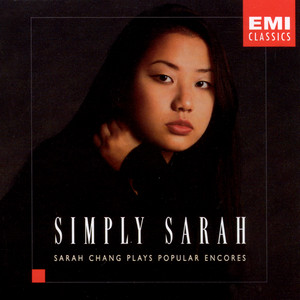 | Zapateado Op. 23 | Pablo de Sarasate, Sarah Chang, Charles Abramovic | A Major | 3 | 11B | 113 BPM | |
 | Danse macabre in G Minor, Op. 40 | Camille Saint-Saëns, Slovak Radio Symphony Orchestra, Keith Clark | G Minor | 2 | 6A | 116 BPM | |
 | 21 Hungarian Dances for Orchestra, WoO 1: No. 5, Allegro (Arr. A. Parlow) | Johannes Brahms, Magyar Szimfonikus Zenekarok, Istvan Bogar | G Minor | 2 | 6A | 144 BPM | |
 | Prélude in E minor, Op. 28, No. 4 | Frédéric Chopin, Janusz Olejniczak | E Minor | 0 | 9A | 63 BPM | |
 | Keyboard Suite No. 1 in B-Flat Major, HWV 434: IV. Minuet (Arr. W. Kempff for Piano) | George Frideric Handel, Idil Biret | G Minor | 0 | 6A | 73 BPM | |
 | Orfeo ed Euridice, Wq. 30: Dance of the Blessed Spirits "Melody" (Arr. Sgambati for Piano) | Christoph Willibald Gluck, Yuja Wang | D Minor | 0 | 7A | 70 BPM | |
 | Haydn: Cello Concerto No. 1 in C Major, Hob. VIIb, 1: I. Moderato (Cadenza by Britten) | Franz Joseph Haydn, Mstislav Rostropovich, Academy of St. Martin in the Fields | C Major | 1 | 8B | 68 BPM | |
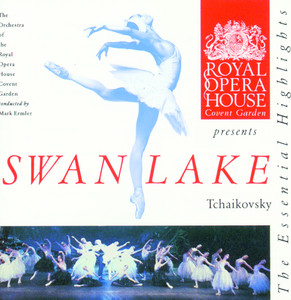 | Swan Lake, Op. 20: No. 2 Valse | Pyotr Ilyich Tchaikovsky, Orchestra of the Royal Opera House, Covent Garden, Mark Ermler | A Major | 1 | 11B | 96 BPM | |
 | Concerto for 2 Oboes, Violin, Strings and Continuo in D, R.563 - Arr. 2 Trumpets: 2. Grave | Antonio Vivaldi, Michael Laird, William Houghton, Academy of St. Martin in the Fields, Sir Neville Marriner | D♭ Major | 1 | 3B | 103 BPM | |
 | Solfeggio in C Minor, Wq. 117/2, H. 220 | Carl Philipp Emanuel Bach, Matthias Veit | F Minor | 1 | 4A | 73 BPM | |
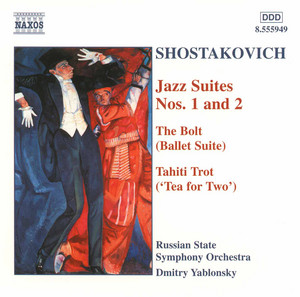 | Jazz Suite No. 1: I. Waltz | Dmitri Shostakovich, Russian State Symphony Orchestra, Dmitry Yablonsky | E♭ Major | 1 | 5B | 173 BPM | |
 | Sarasate: Zigeunerweisen, Op. 20 | Pablo de Sarasate, Itzhak Perlman, Abbey Road Ensemble | C Minor | 1 | 5A | 83 BPM | |
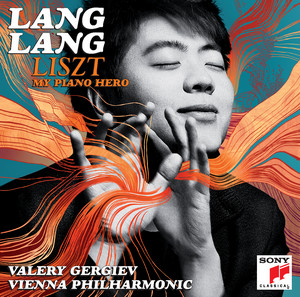 | Liebestraum No. 3 in A-Flat Major, S. 541 / 3 | Franz Liszt, Lang Lang | A♭ Major | 0 | 4B | 137 BPM |
- ISRC
- HKI199328101
- Label
- L-M Records/RCA Records