- BPM
- 80
- Key
- E Major
- Camelot
- 12B
Bernstein: Wonderful Town, Act I: "What a waste" (Robert Baker, Associate Editors) by Leonard Bernstein, Sir Simon Rattle, Birmingham Contemporary Music Group Song Details
Leonard Bernstein, Sir Simon Rattle, Birmingham Contemporary Music Group's ' "Bernstein: Wonderful Town, Act I: "What a waste" (Robert Baker, Associate Editors)" was released on its scheduled release date, 1999. The duration of This song is about 3 minutes long, at 3:07. Based on our data, This song appears to be safe for all ages and is not considered explicit. This track is about the average length of a typical track. The track order of this song in Leonard Bernstein, Sir Simon Rattle, Birmingham Contemporary Music Group's "Leonard Bernstein: Wonderful Town" album is number 6 out of 20. Bernstein: Wonderful Town, Act I: "What a waste" (Robert Baker, Associate Editors) is unknown right now. The overall mood can be danceable to some, especially with it's high amount of postive energy.
BPM and Tempo
We consider the tempo marking of Bernstein: Wonderful Town, Act I: "What a waste" (Robert Baker, Associate Editors) by Leonard Bernstein, Sir Simon Rattle, Birmingham Contemporary Music Group to be Andante (at a walking pace) because the track has a tempo of 80 BPM, a half-time of 40BPM, and a double-time of 160 BPM. Based on that, the speed of the song's tempo is slow. The time signature for this track is 4/4.
Music Key
This song is in the music key of E Major. This also means that this song has a camelot key of 12B. So, the perfect camelot match for 12B would be either 12B or 1A. While, 1B can give you a low energy boost. For moderate energy boost, you would use 9B and a high energy boost can either be 2B or 7B. Though, if you want a low energy drop, you should looking for songs with either a camelot key of 12A or 11B will give you a low energy drop, 3B would be a moderate one, and 10B or 5B would be a high energy drop. Lastly, 9A allows you to change the mood.
Want to find the BPM and music key for other songs? Check out our BPM and Key Finder page!
- Popularity
- 0%
- Loudness
- -14.993 dB
- Acousticness
- 93%
- Danceability
- 55%
- Energy
- 30%
- Instrumentalness
- 0%
- Liveness
- 5%
- Loudness
- 75%
- Speechiness
- 17%
- Valence
- 60%
Recommendations
| Track | Artist | Key | Energy | Camelot | BPM | ||
|---|---|---|---|---|---|---|---|
 | VII. Finale | Igor Stravinsky, Brussels Philharmonic, Alexander Rahbari | D♭ Minor | 3 | 12A | 81 BPM | |
 | Adagio for Strings - Live | Samuel Barber, Los Angeles Philharmonic, Leonard Bernstein | D♭ Major | 2 | 3B | 119 BPM | |
 | Poet and Peasant: Overture | Franz von Suppé, Detroit Symphony Orchestra, Paul Paray | A Major | 3 | 11B | 81 BPM | |
 | Symphony No. 4 in F Minor: IVa. Finale | Ralph Vaughan Williams, Leonard Bernstein, New York Philharmonic | C Minor | 2 | 5A | 59 BPM | |
 | Pictures at an Exhibition (Orch. Ravel): Promenade I | Modest Mussorgsky, Wiener Philharmoniker, Gustavo Dudamel | F Major | 0 | 7B | 88 BPM | |
 | L'Arlésienne Suite No. 1: III. Adagietto - Adagio | Georges Bizet, Leonard Bernstein, New York Philharmonic | F Major | 0 | 7B | 84 BPM | |
 | Khachaturian: Spartacus (Highlights from the Ballet): Adagio of Spartacus and Phrygia | Aram Khachaturian, London Symphony Orchestra | A♭ Major | 1 | 4B | 88 BPM | |
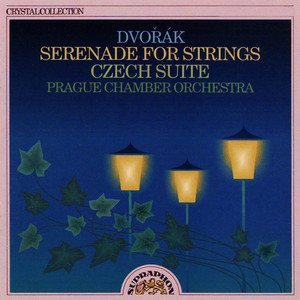 | Serenade for Strings in E Major, Op. 22, B. 52: IV. Larghetto | Antonín Dvořák, Prague Chamber Orchestra, Petr Skvor | A Major | 1 | 11B | 91 BPM | |
 | Piano Concerto in F Major: III. Allegro agitato | George Gershwin, Jon Nakamatsu, Jeff Tyzik, Rochester Philharmonic Orchestra | F Minor | 2 | 4A | 139 BPM | |
 | Symphony No. 2 "Resurrection": V. Finale: k. Mit Aufschwung, aber nicht eilen - Live | Gustav Mahler, Barbara Hendricks, Christa Ludwig, New York Philharmonic, Leonard Bernstein, Westminster Choir, Joseph Flummerfelt | E♭ Major | 4 | 5B | 90 BPM | |
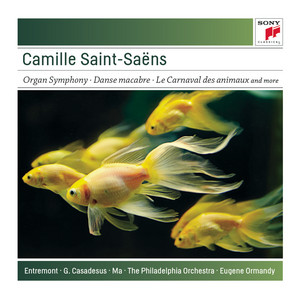 | Samson et Dalila, Op. 47: Bacchanale | Camille Saint-Saëns, Eugene Ormandy, Philadelphia Orchestra | D Minor | 3 | 7A | 134 BPM | |
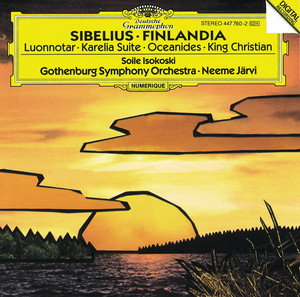 | Andante Festivo | Jean Sibelius, Gothenburg Symphony Orchestra, Neeme Järvi | G Major | 1 | 9B | 86 BPM | |
 | Peer Gynt Suite No. 1, Op. 46: II. Åse's Death | Edvard Grieg, Wiener Philharmoniker, Zubin Mehta | G Major | 0 | 9B | 99 BPM | |
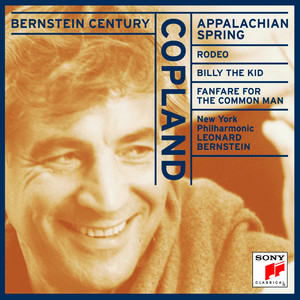 | Billy the Kid Suite: VIII. The Open Prairie Again | Aaron Copland, Leonard Bernstein, New York Philharmonic | C Minor | 3 | 5A | 72 BPM | |
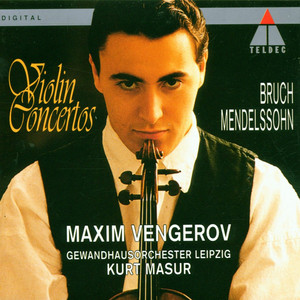 | Bruch : Violin Concerto No.1 in G minor Op.26 : III Finale - Allegro energico | Max Bruch, Maxim Vengerov, Kurt Masur, Gewandhausorchester Leipzig | G Major | 2 | 9B | 90 BPM | |
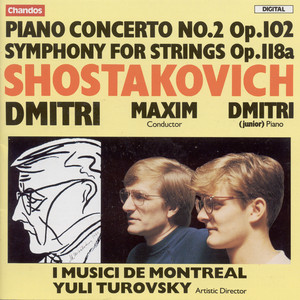 | Piano Concerto No. 2 in F Major, Op. 102: II. Andante | Dmitri Shostakovich, I Musici de Montréal, Maxim Shostakovich | C Minor | 0 | 5A | 177 BPM | |
 | Schoenberg: Verklärte Nacht, Op. 4: IV. Adagio (1943 Version) | Arnold Schoenberg, Daniel Barenboim, Chicago Symphony Orchestra | D Major | 1 | 10B | 82 BPM | |
 | Symphony No. 5 in E Minor, Op. 64: IV. Finale. Andante maestoso – Allegro vivace – Moderato assai e molto maestoso – Presto – Molto meno mosso | Pyotr Ilyich Tchaikovsky, Berliner Philharmoniker, Kirill Petrenko | E Major | 3 | 12B | 141 BPM | |
 | Symphony No.3 In C Minor, Op.78 "Organ Symphony": 1b. Poco adagio | Camille Saint-Saëns, Simon Preston, Berliner Philharmoniker, James Levine | D♭ Major | 0 | 3B | 80 BPM | |
 | Symphony No. 1 "Jeremiah": III. Lamentation | Leonard Bernstein, Jennifer Johnson Cano, Baltimore Symphony Orchestra, Marin Alsop | B Minor | 0 | 10A | 79 BPM | |
 | Overture Candide | Leonard Bernstein, Los Angeles Philharmonic, Zubin Mehta | E♭ Major | 4 | 5B | 159 BPM | |
 | Academic Festival Overture, Op. 80 | Johannes Brahms, Chicago Symphony Orchestra, Sir Georg Solti | C Major | 2 | 8B | 73 BPM | |
 | Symphony No. 7 in A Major, Op. 92: III. Presto. Trio I und II. Assai meno presto | Ludwig van Beethoven, Berliner Philharmoniker, Kirill Petrenko | D Major | 2 | 10B | 105 BPM | |
 | Symphonie Fantastique, Op.14, H 48: 5b. Songe d'une nuit du Sabbat - Dies irae | Hector Berlioz, Chicago Symphony Orchestra, Claudio Abbado | G Minor | 1 | 6A | 63 BPM | |
 | Carmen Suite No. 1 (Arr. E. Guiraud): IV. Séguedille | Georges Bizet, Orquestra Simfònica de Barcelona i Nacional de Catalunya, Pablo González | G Minor | 0 | 6A | 66 BPM |
- ISRC
- This song does not have an ISRC.
- Label
- L-M Records/RCA Records