- BPM
- 79
- Key
- F♯ Minor
- Camelot
- 11A
Semele, HWV 58, Act 3: Thus let my thanks be pay'd by George Frideric Handel, Jennifer Vyvyan, New Symphony Orchestra, Anthony Lewis Song Details
"Semele, HWV 58, Act 3: Thus let my thanks be pay'd" by George Frideric Handel, Jennifer Vyvyan, New Symphony Orchestra, Anthony Lewis had its release date on January 1, 1956. With this song being around four minutes long, at 3:35, the duration of this song is pretty average compared to other songs. This track is safe for children and doesn't appear to contain any foul language, since the "Explicit" tag was not present in this track. The track order of this song in George Frideric Handel, Jennifer Vyvyan, Anthony Lewis, The New Symphony Orchestra Of London, Helen Watts, William Herbert, Anna Pollak's "Handel: Semele" album is number 38 out of 49. On top of that, United Kingdom appears to be the country where this track was created. Semele, HWV 58, Act 3: Thus let my thanks be pay'd is unknown right now. In our opinion, the overall tone is not very danceable and projects negative sounds, such as being sad, depressed, or angry.
BPM and Tempo
We consider the tempo marking of Semele, HWV 58, Act 3: Thus let my thanks be pay'd by George Frideric Handel, Jennifer Vyvyan, New Symphony Orchestra, Anthony Lewis to be Andante (at a walking pace) because the track has a tempo of 79 BPM, a half-time of 40BPM, and a double-time of 158 BPM. Based on that, the speed of the song's tempo is slow. The time signature for this track is 3/4.
Music Key
This song is in the music key of F♯ Minor. This also means that this song has a camelot key of 11A. So, the perfect camelot match for 11A would be either 11A or 10B. While, a low energy boost can consist of either 11B or 12A. For moderate energy boost, you would use 8A and a high energy boost can either be 1A or 6A. However, if you are looking for a low energy drop, finding a song with a camelot key of 10A would be a great choice. Where 2A would give you a moderate drop, and 9A or 4A would be a high energy drop. Lastly, 2B allows you to change the mood.
Want to find the BPM and music key for other songs? Check out our BPM and Key Finder page!
- Popularity
- 0%
- Loudness
- -17.56 dB
- Acousticness
- 94%
- Danceability
- 14%
- Energy
- 19%
- Instrumentalness
- 0%
- Liveness
- 28%
- Loudness
- 71%
- Speechiness
- 5%
- Valence
- 8%
Recommendations
| Track | Artist | Key | Energy | Camelot | BPM | ||
|---|---|---|---|---|---|---|---|
 | Albinoni: Adagio in G Minor | Tomaso Albinoni, Sir Neville Marriner, Academy of St. Martin in the Fields | C Minor | 1 | 5A | 90 BPM | |
 | Symphony in E minor, H.I No. 44 -"Mourning": 3. Adagio | Joseph Haydn, English Chamber Orchestra, Daniel Barenboim | D Major | 3 | 10B | 105 BPM | |
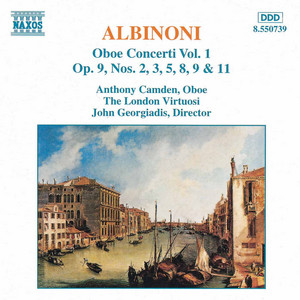 | Oboe Concerto in C Major, Op. 9, No. 5: II. Adagio (non troppo) | Tomaso Albinoni, Anthony Camden, London Virtuosi, John Georgiadis | A Minor | 1 | 8A | 79 BPM | |
 | The Arts and the Hours | Víkingur Ólafsson, Jean-Philippe Rameau | D♭ Major | 0 | 3B | 136 BPM | |
 | Violin Sonata in E Minor, P. 85: I. Allegro (After J.S. Bach's BWV 1023) | Ottorino Respighi, Ilkka Talvi, Seattle Symphony Orchestra, Gerard Schwarz | C Minor | 1 | 5A | 123 BPM | |
 | Trumpet Sonata in D Major, Z. 850: I. Allegro | Henry Purcell, Ede Inhoff, Hungarian State Opera Chamber Orchestra | E♭ Minor | 0 | 2A | 83 BPM | |
 | Mendelssohn: String Octet in E-Flat Major, Op. 20, MWV R20: III. Scherzo. Allegro leggierissimo | Felix Mendelssohn, Sir Neville Marriner, Academy of St. Martin in the Fields | D Major | 1 | 10B | 123 BPM | |
 | Concerto a due cori No. 1 in B flat (1989 Digital Remaster): II. Allegro | George Frideric Handel, Yehudi Menuhin, Menuhin Festival Orchestra | B♭ Major | 2 | 6B | 101 BPM | |
 | Sonata in C Minor, Jung III.2.B: I. Largo | Johann Georg Pisendel, Concerto Köln, Mayumi Hirasaki | B Minor | 1 | 10A | 96 BPM | |
 | Castor et Pollux, RCT 32, Acte I, Scène III: Prélude - Air accompagné "Tristes apprêts" | Jean-Philippe Rameau, Teodor Currentzis | D Major | 0 | 10B | 86 BPM | |
| Oboe Concerto in C Major, Op. 9, No. 5: I. Allegro | Tomaso Albinoni, Anthony Camden, London Virtuosi, John Georgiadis | C Major | 3 | 8B | 108 BPM | |
 | Concerto Grosso in D Minor, H. 143 "La Folia" (after Corelli Violin Sonata, Op. 5 No. 12): Theme & Var. I - VII | Francesco Geminiani, Nicola Benedetti, Benedetti Baroque Orchestra | D♭ Minor | 3 | 12A | 147 BPM | |
 | Te Deum Motet à deux choeurs | Jean-Baptiste Lully, Musica Antiqua Köln, Reinhard Goebel | B Major | 3 | 1B | 147 BPM | |
 | Pavane in F-Sharp Minor, Op. 50 | Gabriel Fauré, Lucas Debargue | F♯ Minor | 0 | 11A | 163 BPM | |
 | Orfeo ed Euridice, Wq. 30, Act II: Danse des champs-elysées "Mélodie" (Arr. for Piano by Ignaz Friedman) | Christoph Willibald Gluck, Joseph Banowetz | A Major | 0 | 11B | 72 BPM | |
 | Jeux d'enfants, Op. 22: No. 3, La poupée | Georges Bizet, Katia Labèque, Marielle Labèque | B Major | 0 | 1B | 64 BPM | |
 | Handel: Water Music, Suite No. 2 in D Major, HWV 349: III. Gigue | George Frideric Handel, Yehudi Menuhin, Bath Festival Orchestra | D Major | 1 | 10B | 118 BPM | |
 | Scottish Fantasy for Violin and Orchestra, Op. 46: I. Introduction: Grave, Adagio cantabile | Max Bruch, Joshua Bell, Academy of St. Martin in the Fields | E♭ Major | 2 | 5B | 60 BPM | |
 | Flute Sonata in E Minor, Op. 5, No. 8: II. Allemanda. Allegro | Arcangelo Corelli, Barthold Kuijken, Wieland Kuijken, Robert Kohnen | D Minor | 2 | 7A | 128 BPM | |
 | Dixit Dominus, HWV 232: 8. De torrente in via bibet | George Frideric Handel, Arleen Auger, Lynne Dawson, Orchestra of Westminster Abbey, Simon Preston | D Major | 4 | 10B | 77 BPM | |
 | Kol Nidrei, Op. 47 | Max Bruch, Jan Vogler, Helmut Branny | D Major | 1 | 10B | 136 BPM | |
 | Overture (Suite) In C Major, TWV 55: C6: V. Sommeille | Cologne Chamber Orchestra, Georg Philipp Telemann | C Minor | 0 | 5A | 58 BPM | |
 | Céphale et Procris, Act III Scene 3: Passacaille | Élisabeth Jacquet de La Guerre, Reinoud Van Mechelen, A Nocte Temporis | C Major | 2 | 8B | 78 BPM | |
 | Suite Les Boréades, RCT 31: 9. Entrée d' Albaris, Polimnie, les Muses, Zéphirs, Saisons, Les Heures et Les Arts | Jean-Philippe Rameau, Orchestra Of The 18th Century, Frans Brüggen | D♭ Major | 2 | 3B | 85 BPM | |
 | Sinfonia in A Major: I. Presto | Giuseppe Sammartini, Capella Istropolitana, Jaroslav Krcek | F Major | 2 | 7B | 136 BPM |
- ISRC
- GBF075641138
- Label
- L-M Records/RCA Records