- BPM
- 89
- Key
- B♭ Major
- Camelot
- 6B
Ebony Concerto, .: II. Andante by Igor Stravinsky, Karel Krautgartner Orchestra, Karel Krautgartner, Milan Ulrich, Miroslav Krýsl, Vladimír Klazov, Richard Kubernát, Karel Růžička st., Ladislav Pikart Song Details
Igor Stravinsky, Karel Krautgartner Orchestra, Karel Krautgartner, Milan Ulrich, Miroslav Krýsl, Vladimír Klazov, Richard Kubernát, Karel Růžička st., Ladislav Pikart's ' "Ebony Concerto, .: II. Andante" was released on its scheduled release date, January 1, 1999. The duration of This song is about two minutes long, specifically at 2:12. This song does not appear to have any foul language. Ebony Concerto, .: II. Andante's duration is considered a little bit shorter than the average duration of a typical track. There are a total of 17 in the song's album "Stravinsky: L´Histoire du Soldat, Symphonies of Wind Instruments, Piano Rag-music...". In this album, this song's track order is #16. Furthermore, we believe that the track originated from Czechia. Ebony Concerto, .: II. Andante is unknown right now. Since there is more of a neutral sound being played, this makes the track somewhat danceable.
BPM and Tempo
With Ebony Concerto, .: II. Andante by Igor Stravinsky, Karel Krautgartner Orchestra, Karel Krautgartner, Milan Ulrich, Miroslav Krýsl, Vladimír Klazov, Richard Kubernát, Karel Růžička st., Ladislav Pikart having a BPM of 89 with a half-time of 44 BPM and a double-time of 178 BPM, we would consider this track to have a Andante (at a walking pace) tempo marking. Because of this, we believe that the song has an overall slow tempo. Looking at the BPM of this song, this song might go great with yoga or pilates. The time signature for this track is 1/4.
Music Key
This song is in the music key of B♭ Major. Or for those who are familiar with the camelot wheel, this song has a camelot key of 6B. So, the perfect camelot match for 6B would be either 6B or 7A. While, 7B can give you a low energy boost. For moderate energy boost, you would use 3B and a high energy boost can either be 8B or 1B. Though, if you want a low energy drop, you should looking for songs with either a camelot key of 6A or 5B will give you a low energy drop, 9B would be a moderate one, and 4B or 11B would be a high energy drop. Lastly, 3A allows you to change the mood.
Want to find the BPM and music key for other songs? Check out our BPM and Key Finder page!
- Popularity
- 0%
- Loudness
- -14.227 dB
- Acousticness
- 97%
- Danceability
- 56%
- Energy
- 29%
- Instrumentalness
- 90%
- Liveness
- 7%
- Loudness
- 76%
- Speechiness
- 6%
- Valence
- 52%
Recommendations
| Track | Artist | Key | Energy | Camelot | BPM | ||
|---|---|---|---|---|---|---|---|
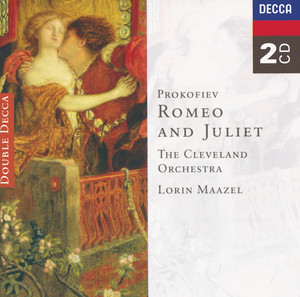 | Romeo and Juliet, Op. 64: Introduction | Sergei Prokofiev, The Cleveland Orchestra, Lorin Maazel | E Major | 1 | 12B | 112 BPM | |
 | Lutosławski: Concerto for Orchestra: I. Intrada. Allegro maestoso | Witold Lutosławski, Daniel Barenboim, Chicago Symphony Orchestra | F♯ Minor | 1 | 11A | 128 BPM | |
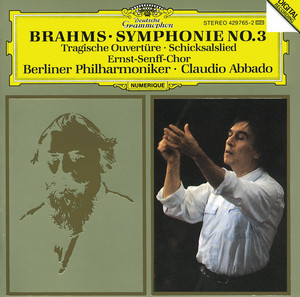 | Symphony No. 3 in F Major, Op. 90: IV. Allegro | Johannes Brahms, Berliner Philharmoniker, Claudio Abbado | C Major | 1 | 8B | 79 BPM | |
 | Verklärte Nacht, Op. 4 (Version for String Orchestra): I. Grave | Arnold Schoenberg, Danish National Symphony Orchestra, Fabio Luisi | D Minor | 2 | 7A | 79 BPM | |
 | Symphony No. 8 in C Minor, WAB 108: II. Scherzo: Allegro moderato - Trio. Langsam | Anton Bruckner, Wiener Philharmoniker, Pierre Boulez | D♭ Major | 1 | 3B | 125 BPM | |
 | Nocturnes, CD 98: I. Nuages | Claude Debussy, Orchestre Symphonique de Montréal, Charles Dutoit | C Major | 0 | 8B | 77 BPM | |
 | Music for Strings, Percussion & Celesta, Sz. 106: II. Allegro | Béla Bartók, Chicago Symphony Orchestra, Sir Georg Solti | D♭ Major | 2 | 3B | 142 BPM | |
 | The Rite of Spring, K15, Pt. 1: V. Games of the Rival Tribes | Igor Stravinsky, Berliner Philharmoniker, Herbert von Karajan | C Major | 2 | 8B | 86 BPM | |
 | Nocturnes, CD 98: II. Fêtes | Claude Debussy, Berliner Philharmoniker, Claudio Abbado | A Major | 2 | 11B | 79 BPM | |
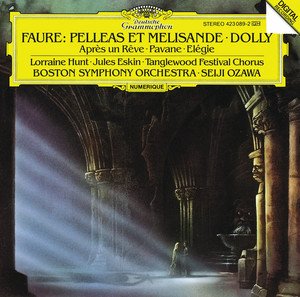 | Pelléas et Mélisande, Op. 80: 1. Prélude. Quasi Adagio | Gabriel Fauré, Boston Symphony Orchestra, Seiji Ozawa | F Major | 2 | 7B | 98 BPM | |
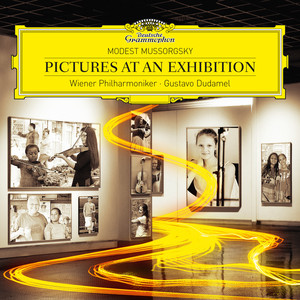 | Pictures at an Exhibition (Orch. Ravel): VIIIb. Cum mortuis in lingua mortua | Modest Mussorgsky, Wiener Philharmoniker, Gustavo Dudamel | F♯ Major | 0 | 2B | 69 BPM | |
 | Eine Alpensinfonie: III. Wanderung neben dem Bache - Am Wasserfall - Erscheinung - Auf blumigen Wiesen | Richard Strauss, Bernard Haitink, London Symphony Orchestra | G Minor | 1 | 6A | 105 BPM | |
 | Spartacus: Variations of Aegina and Bacchanalia | Aram Khachaturian, Wiener Philharmoniker | C Major | 5 | 8B | 74 BPM | |
| Pelléas et Mélisande, Op.80: 2. Fileuse. Andantino quasi Allegretto | Gabriel Fauré, Boston Symphony Orchestra, Seiji Ozawa | G Major | 1 | 9B | 88 BPM | |
 | Daphnis et Chloé, M. 57, Pt. 3: XIa-b. Pantomime. Daphnis et Chloé miment l'aventure de Pan et de Syrinx | Maurice Ravel, Berliner Philharmoniker, Pierre Boulez | F♯ Minor | 0 | 11A | 169 BPM | |
 | Symphony No. 5 in B-Flat Major, Op. 100: II. Allegro marcato | Sergei Prokofiev, The Cleveland Orchestra, Franz Welser-Möst | C Major | 0 | 8B | 105 BPM | |
| The Rite of Spring, K15, Pt. 2: XIV. Sacrificial Dance | Igor Stravinsky, Berliner Philharmoniker, Herbert von Karajan | C Major | 2 | 8B | 86 BPM | |
 | Overture: Overture | Grażyna Bacewicz, BBC Symphony Orchestra, Sakari Oramo | B Major | 0 | 1B | 112 BPM | |
 | Symphony in D Minor, FWV 48 (Remastered): II. Allegretto | César Franck, Pierre Monteux, Chicago Symphony Orchestra | E♭ Minor | 0 | 2A | 72 BPM | |
 | Symphonie fantastique, H. 48: IV. Marche au supplice | Hector Berlioz, Chicago Symphony Orchestra, Claudio Abbado | G Minor | 2 | 6A | 166 BPM | |
 | Chamber Symphony No. 5 in A-Flat Major, Op. 118a: I. Andante | Dmitri Shostakovich, Yuli Turovsky, I Musici de Montréal | D♭ Major | 0 | 3B | 106 BPM | |
 | Scheherazade: Storm at Sea | Nikolai Rimsky-Korsakov, Lars Hjalmar Joakim | C Major | 4 | 8B | 91 BPM | |
| Symphony in D Minor, FWV 48 (Remastered): III. Finale - Allegro non troppo | César Franck, Pierre Monteux, Chicago Symphony Orchestra | D Major | 2 | 10B | 84 BPM | |
 | Ancient Airs & Dances, Suite III, P. 172: IV. Passacaglia (Roncalli) | Ottorino Respighi, Boston Symphony Orchestra, Seiji Ozawa | G Minor | 3 | 6A | 116 BPM | |
 | Die Walküre: Magic Fire Music | Richard Wagner, George Szell, Cleveland Orchestra | G Major | 2 | 9B | 80 BPM |
- ISRC
- CZA166802348
- Label
- L-M Records/RCA Records