- BPM
- 139
- Key
- G Major
- Camelot
- 9B
Symphonic Miniatures, Op. 54: Elegie - Live by Helmut Rogl, Sinfonia Christkönig, Eduard Matscheko, Robert Nagy Song Details
"Symphonic Miniatures, Op. 54: Elegie - Live" by Helmut Rogl, Sinfonia Christkönig, Eduard Matscheko, Robert Nagy had its release date on March 15, 2022. Since This song is still less than 10 minute long, it is still considered a pretty long duration song compared to the average song length. This song does not appear to be explicit due to the lack of the "E" tag. The track order of this song in Helmut Rogl, Various Artists's "Helmut Rogl: Orchestral Works" album is number 3 out of 14. On top of that, Austria appears to be the country where this track was created. Based on our statistics, Symphonic Miniatures, Op. 54: Elegie - Live's popularity is unknown right now. In our opinion, the overall tone is not very danceable and projects negative sounds, such as being sad, depressed, or angry.
BPM and Tempo
We consider the tempo marking of Symphonic Miniatures, Op. 54: Elegie - Live by Helmut Rogl, Sinfonia Christkönig, Eduard Matscheko, Robert Nagy to be Allegro (fast, quick, and bright) because the track has a tempo of 139 BPM, a half-time of 70BPM, and a double-time of 278 BPM. Based on that, the speed of the song's tempo is fast. Activities such as, walking, can go well with this song. The time signature for this track is 4/4.
Music Key
This song is in the music key of G Major. This also means that this song has a camelot key of 9B. So, the perfect camelot match for 9B would be either 9B or 10A. While, 10B can give you a low energy boost. For moderate energy boost, you would use 6B and a high energy boost can either be 11B or 4B. Though, if you want a low energy drop, you should looking for songs with either a camelot key of 9A or 8B will give you a low energy drop, 12B would be a moderate one, and 7B or 2B would be a high energy drop. Lastly, 6A allows you to change the mood.
Want to find the BPM and music key for other songs? Check out our BPM and Key Finder page!
- Popularity
- 0%
- Loudness
- -19.421 dB
- Acousticness
- 93%
- Danceability
- 26%
- Energy
- 15%
- Instrumentalness
- 64%
- Liveness
- 72%
- Loudness
- 68%
- Speechiness
- 5%
- Valence
- 6%
Recommendations
| Track | Artist | Key | Energy | Camelot | BPM | ||
|---|---|---|---|---|---|---|---|
 | Fear | Toshifumi Hinata | D Minor | 1 | 7A | 145 BPM | |
 | Handel / Orch. Hale: Keyboard Suite No. 4 in D Minor, HWV 437: III. Sarabande | George Frideric Handel, Alexander Briger, Academy of St. Martin in the Fields | D Minor | 0 | 7A | 116 BPM | |
 | Souvenir de Florence, Op. 70, TH 118: III. Allegro moderato - Live from Verbier Festival / 2013 | Pyotr Ilyich Tchaikovsky, Leonidas Kavakos, Lisa Batiashvili, Antoine Tamestit, Blythe Teh Engstroem, Gautier Capuçon, Stephan Koncz | A Minor | 2 | 8A | 87 BPM | |
 | Clarinet Quintet No. 3, Op. 23: Adagio | Carl Baermann, Michael Collins, Michael McHale | D♭ Major | 0 | 3B | 128 BPM | |
 | I. Prayer (Arr. C. Palmer) | Ernest Bloch, Steven Isserlis, Tapiola Sinfonietta, Gábor Takács-Nagy | F Minor | 0 | 4A | 103 BPM | |
 | CRADLE SONG | Yoko Kanno | B♭ Minor | 1 | 3A | 104 BPM | |
 | Dance of the Knights (From "Romeo and Juliet", Op. 64) | Sergei Prokofiev, Gautier Capuçon, Jerome Ducros, Johanna Malangré, Orchestre national de Bretagne | A♭ Minor | 2 | 1A | 113 BPM | |
 | String Quartet No. 4 in D Major, Op. 83: III. Allegretto | Dmitri Shostakovich, Eder Quartet | F Minor | 1 | 4A | 83 BPM | |
 | Main Titles - From "Marco Polo" | The City of Prague Philharmonic Orchestra | G Major | 2 | 9B | 123 BPM | |
 | I. Cremona, The Red Violin | John Corigliano, Esa-Pekka Salonen, Joshua Bell, Philharmonia Orchestra | B Major | 1 | 1B | 93 BPM | |
 | Schubert: String Quartet No. 14 in D Minor, D. 810, "Death and the Maiden": II. Andante con moto. Theme | Franz Schubert, Quatuor Arod | D Minor | 2 | 7A | 84 BPM | |
 | The Swan of Tuonela, Op. 22 No. 2 | Jean Sibelius, Thomas Søndergård, BBC National Orchestra Of Wales | A Minor | 2 | 8A | 143 BPM | |
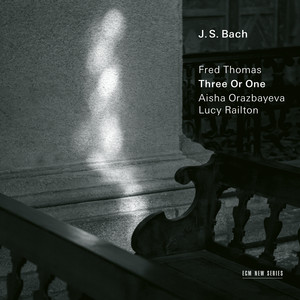 | Orgelbüchlein, BWV 599-644: Ich ruf zu dir, Herr Jesu Christ, BWV 639 (Arr. Thomas for Piano Trio) | Johann Sebastian Bach, Fred Thomas, Aisha Orazbayeva, Lucy Railton | F Minor | 0 | 4A | 132 BPM | |
 | Cello Concerto, Op. 24, "Violonchallenges": III. Vivace | Helmut Rogl, Martin Rummel, Ensemble Rara, Erland Maria Freudenthaler | A Major | 2 | 11B | 140 BPM | |
 | Beethoven: Notturno in D Major, Op. 42: IV. Adagio | Ludwig van Beethoven, Gérard Caussé, François-René Duchâble | E Major | 0 | 12B | 91 BPM | |
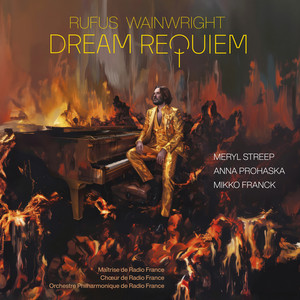 | Wainwright: Dream Requiem: Offertorium | Rufus Wainwright, Mikko Franck, Marc Desmons, Orchestre Philharmonique de Radio France | A♭ Major | 10 | 4B | 167 BPM | |
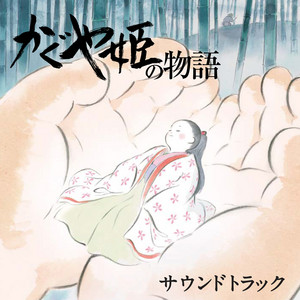 | Li'l Bamboo | Joe Hisaishi | D♭ Major | 0 | 3B | 123 BPM | |
 | Ab Ovo (Arr. by Knoth) | Signum Saxophone Quartet | A Minor | 0 | 8A | 67 BPM | |
 | Little Serenade | Peter Sculthorpe, Adelaide Symphony Orchestra, Ron Spigelman | F Major | 0 | 7B | 70 BPM | |
 | Hibernacle | Viviane Audet, Robin-Joël Cool, Alexis Martin | C Minor | 1 | 5A | 80 BPM | |
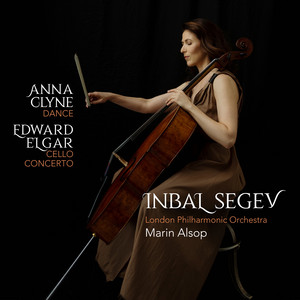 | DANCE: III. in the middle of the fighting | Anna Clyne, Inbal Segev, London Philharmonic Orchestra, Marin Alsop | A Minor | 1 | 8A | 82 BPM | |
 | Contrastes: VI. Fugue/Tango | Richard Galliano, South Czech Philharmonic, Miran Vaupotic, Sebastien Giniaux | D♭ Major | 0 | 3B | 146 BPM | |
 | Cello Sonata in E Major, Op. 121: I. Allegro espressivo e appassionato | Ignaz Moscheles, Steven Isserlis, Connie Shih | E Major | 3 | 12B | 104 BPM | |
 | Stav Ya Pitu (Arr. for String Quartet) | Israel Edelson | A Minor | 1 | 8A | 100 BPM | |
| 3 Miniatures, Op. 5: No. 2. Mäßig Bewegt | Helmut Rogl, Martin Rummel | A Major | 2 | 11B | 140 BPM |
- ISRC
- ATTE42011103
- Label
- L-M Records/RCA Records