- BPM
- 78
- Key
- F♯ Minor
- Camelot
- 11A
Variations on a Rococo Theme, Op. 33, TH 57: Variazione VII e Coda: Allegro vivo by Pyotr Ilyich Tchaikovsky, Mischa Maisky, Orpheus Chamber Orchestra Song Details
"Variations on a Rococo Theme, Op. 33, TH 57: Variazione VII e Coda: Allegro vivo" by Pyotr Ilyich Tchaikovsky, Mischa Maisky, Orpheus Chamber Orchestra had its release date on January 1, 1997. With This song being less than two minutes long, at 1:57, we are fairly confident that this song is not explicit and is safe for all ages. Based on the duration of this song, this song duration is much smaller than the average song duration. There are a total of 17 in the song's album "Tchaikovsky: Rococo Variations; Souvenir de Florence; Lensky's Aria From "Eugen Onegin"; Nocturne In D Minor (From Op. 19, No. 4); Andante Cantabile, Op. 11". In this album, this song's track order is #10. Furthermore, we believe that the track originated from Germany. Variations on a Rococo Theme, Op. 33, TH 57: Variazione VII e Coda: Allegro vivo is not that popular right now. In our opinion, the overall tone is not very danceable and projects negative sounds, such as being sad, depressed, or angry.
BPM and Tempo
With Variations on a Rococo Theme, Op. 33, TH 57: Variazione VII e Coda: Allegro vivo by Pyotr Ilyich Tchaikovsky, Mischa Maisky, Orpheus Chamber Orchestra having a BPM of 78 with a half-time of 39 BPM and a double-time of 156 BPM, we would consider this track to have a Andante (at a walking pace) tempo marking. Because of this, we believe that the song has an overall slow tempo. The time signature for this track is 3/4.
Music Key
This song has a musical key of F♯ Minor. Or for those who are familiar with the camelot wheel, this song has a camelot key of 11A. So, the perfect camelot match for 11A would be either 11A or 10B. While, a low energy boost can consist of either 11B or 12A. For moderate energy boost, you would use 8A and a high energy boost can either be 1A or 6A. However, if you are looking for a low energy drop, finding a song with a camelot key of 10A would be a great choice. Where 2A would give you a moderate drop, and 9A or 4A would be a high energy drop. Lastly, 2B allows you to change the mood.
Want to find the BPM and music key for other songs? Check out our BPM and Key Finder page!
- Popularity
- 7%
- Loudness
- -37.26 dB
- Acousticness
- 97%
- Danceability
- 8%
- Energy
- 0%
- Instrumentalness
- 30%
- Liveness
- 7%
- Loudness
- 38%
- Speechiness
- 4%
- Valence
- 4%
Recommendations
| Track | Artist | Key | Energy | Camelot | BPM | ||
|---|---|---|---|---|---|---|---|
 | L’arlésienne Suite No. 1, Op. 23bis, WD 40: I. Prélude | Georges Bizet, Orquestra Simfònica de Barcelona i Nacional de Catalunya, Pablo González | C Minor | 0 | 5A | 85 BPM | |
 | Peer Gynt, Op. 23, Act IV: No. 13, Prelude. Morning Mood | Edvard Grieg, San Francisco Symphony, Herbert Blomstedt | E Major | 0 | 12B | 66 BPM | |
 | Pelléas et Mélisande Suite, Op. 80: III. Sicilienne. Allegretto molto moderato | Gabriel Fauré, Berliner Philharmoniker, Daniel Barenboim | E♭ Major | 0 | 5B | 56 BPM | |
 | Zapateado Op. 23 | Pablo de Sarasate, Sarah Chang, Charles Abramovic | A Major | 3 | 11B | 113 BPM | |
 | Symphony No. 25 in G Minor, K. 183: I. Allegro con brio | Wolfgang Amadeus Mozart, Academy of St. Martin in the Fields, Sir Neville Marriner | G Minor | 2 | 6A | 80 BPM | |
 | Symphony No. 7 in A Major, Op. 92: II. Allegretto | Ludwig van Beethoven, Berliner Philharmoniker, Kirill Petrenko | E Minor | 0 | 9A | 68 BPM | |
 | Nocturne No. 1 in B-Flat Minor, Op. 9 No. 1 | Frédéric Chopin, Maurizio Pollini | D♭ Major | 0 | 3B | 75 BPM | |
 | Requiem: IIa. Dies irae | Giuseppe Verdi, Mariinsky Chorus, Mariinsky Orchestra, Valery Gergiev | C Minor | 4 | 5A | 88 BPM | |
 | The Blue Danube | Johann Strauss II, Eugene Ormandy | D Major | 1 | 10B | 176 BPM | |
 | Giselle: Act I: Retour de la vendange et valse (The Grape-Pickers Return) | Adolphe Adam, Slovak Radio Symphony Orchestra, Andrew Mogrelia | D Major | 0 | 10B | 134 BPM | |
 | Mendelssohn: Violin Concerto in E Minor Op. 64: I. Allegro molto appassionato | Felix Mendelssohn, Maxim Vengerov, Kurt Masur, Gewandhausorchester Leipzig | E Minor | 2 | 9A | 101 BPM | |
 | Symphony No. 10 in E Minor, Op. 93: II. Allegro | Dmitri Shostakovich, Royal Liverpool Philharmonic Orchestra, Vasily Petrenko | B♭ Minor | 6 | 3A | 89 BPM | |
 | Faust, CG 4, Ballet Music: VI. Variations du miroir. Allegretto | Charles Gounod, Berliner Philharmoniker, Herbert von Karajan | E Major | 1 | 12B | 90 BPM | |
 | Humoresque No. 7 in G-flat Major, Op. 101 | Boston Symphony Orchestra, Yo-Yo Ma, Seiji Ozawa, Itzhak Perlman | F♯ Major | 1 | 2B | 83 BPM | |
 | Boccherini: String Quintet in E Major, Op. 11 No. 5, G. 275: III. Minuetto - Trio (Arr. Woodhouse for String Orchestra) | Luigi Boccherini, Sir Neville Marriner, Academy of St. Martin in the Fields | A Major | 0 | 11B | 85 BPM | |
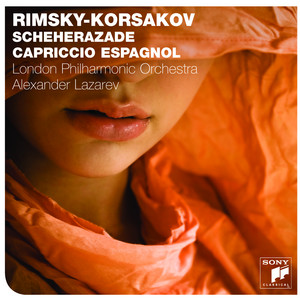 | Scheherazade: The princess in a palanquin | Nikolai Rimsky-Korsakov, Lars Hjalmar Joakim | G Major | 1 | 9B | 166 BPM | |
 | Symphony No. 6 in B Minor, Op. 74 "Pathétique": III. Allegro molto vivace | Pyotr Ilyich Tchaikovsky, Berliner Philharmoniker, Kirill Petrenko | G Major | 3 | 9B | 81 BPM | |
 | Die Worte des Erlösers am Kreuze, Hob. XX:1: IX. Il Terremoto | Joseph Haydn, Metamorphose String Orchestra, Pavel Lyubomudrov | G Major | 5 | 9B | 155 BPM | |
 | Concerto in D Minor for Two Violins, BWV 1043: Vivace | Johann Sebastian Bach, Jascha Heifetz, Erick Friedman, Thornton Lofthouse, The New Symphony Orchestra Of London, Sir Malcolm Sargent | A Minor | 2 | 8A | 94 BPM | |
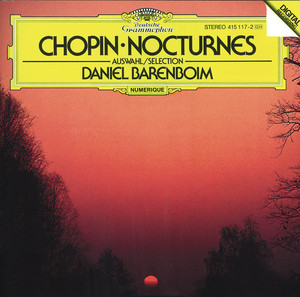 | Nocturne No. 2 in E-Flat Major, Op. 9 No. 2 | Frédéric Chopin, Daniel Barenboim | E♭ Major | 0 | 5B | 79 BPM | |
| Carmen Suite No. 1 (Arr. E. Guiraud): III. Intermezzo | Georges Bizet, Orquestra Simfònica de Barcelona i Nacional de Catalunya, Pablo González | E♭ Major | 0 | 5B | 81 BPM | |
 | Orpheus in the Underworld: Cancan | Jacques Offenbach, Semyon Bychkov, Wiener Philharmoniker | D Major | 6 | 10B | 152 BPM | |
 | Sorochintsi Fair, Act I: Gopak (Hopak) | Modest Mussorgsky, Slovak Philharmonic, Kenneth Jean | G Major | 2 | 9B | 127 BPM | |
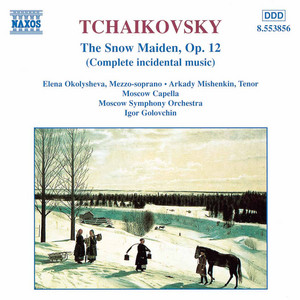 | The Snow Maiden, Op. 12: XIII. Dance Of The Tumblers | Moscow Symphony Orchestra, Elena Okolysheva, Arkady Mishenkin, Moscow Capella, Pyotr Ilyich Tchaikovsky | A Major | 3 | 11B | 176 BPM | |
 | The Rite of Spring: Part Two: The Sacrifice: Sacrificial Dance (The Chosen One) | Igor Stravinsky, Teodor Currentzis, musicAeterna | D Minor | 5 | 7A | 136 BPM |
- ISRC
- DEF059630010
- Label
- L-M Records/RCA Records