- BPM
- 67
- Key
- F Minor
- Camelot
- 4A
Der Sieg des Glaubens, Op. 157, Pt. 1: Introduktion by Ferdinand Ries, Das Kleine Konzert, Hermann Max Song Details
"Der Sieg des Glaubens, Op. 157, Pt. 1: Introduktion" by Ferdinand Ries, Das Kleine Konzert, Hermann Max had its release date on March 22, 2013. The duration of This song is about 3 minutes long, at 3:04. Based on our data, This song appears to be safe for all ages and is not considered explicit. This track is about the average length of a typical track. There are a total of 23 in the song's album "Ries: Der Sieg des Glaubens, Op. 157". In this album, this song's track order is #1. Furthermore, we believe that the track originated from Germany. Der Sieg des Glaubens, Op. 157, Pt. 1: Introduktion is unknown right now. In our opinion, the overall tone is not very danceable and projects negative sounds, such as being sad, depressed, or angry.
BPM and Tempo
With Der Sieg des Glaubens, Op. 157, Pt. 1: Introduktion by Ferdinand Ries, Das Kleine Konzert, Hermann Max having a BPM of 67 with a half-time of 34 BPM and a double-time of 134 BPM, we would consider this track to have a Adagio (slowly with great expression) tempo marking. Because of this, we believe that the song has an overall slow tempo. The time signature for this track is 4/4.
Music Key
F Minor is the music key of this track. Which also means that the camelot key for this song is 4A. So, the perfect camelot match for 4A would be either 4A or 3B. While, a low energy boost can consist of either 4B or 5A. For moderate energy boost, you would use 1A and a high energy boost can either be 6A or 11A. However, if you are looking for a low energy drop, finding a song with a camelot key of 3A would be a great choice. Where 7A would give you a moderate drop, and 2A or 9A would be a high energy drop. Lastly, 7B allows you to change the mood.
Want to find the BPM and music key for other songs? Check out our BPM and Key Finder page!
- Popularity
- 0%
- Loudness
- -19.798 dB
- Acousticness
- 83%
- Danceability
- 17%
- Energy
- 9%
- Instrumentalness
- 91%
- Liveness
- 15%
- Loudness
- 67%
- Speechiness
- 4%
- Valence
- 4%
Recommendations
| Track | Artist | Key | Energy | Camelot | BPM | ||
|---|---|---|---|---|---|---|---|
 | Ries: La capricciosa | Ferdinand Ries, Vilde Frang | E Major | 2 | 12B | 113 BPM | |
 | Symphony No. 4 in E minor, Op. 98: 3. Allegro giocoso | Classic FM Orchestra | E♭ Major | 4 | 5B | 124 BPM | |
 | Duerme duelo perpetuo | Juan Pablo Fernández Ramos | E♭ Major | 2 | 5B | 111 BPM | |
 | Fantasia & Fugue in C Minor, Op. 86 (After J.S. Bach's BWV 537): Fugue | Edward Elgar, Seattle Symphony Orchestra, Gerard Schwarz | C Minor | 2 | 5A | 80 BPM | |
 | Symphony No. 3 in G Minor, Op. 36: III. Scherzo (Vivace) | Louise Farrenc, North German Radio Symphony, Hannover, Johannes Goritzki | D Major | 1 | 10B | 83 BPM | |
 | Cello Concerto in C, H.VIIb, No.1: 1. Moderato | Joseph Haydn, Jian Wang, The Gulbenkian Orchestra, Muhai Tang | C Major | 1 | 8B | 131 BPM | |
 | Piano Concerto No.1 In G Minor, Op.25, MWV O7: 2. Andante | Felix Mendelssohn, Jean-Yves Thibaudet, Gewandhausorchester, Herbert Blomstedt | A Major | 2 | 11B | 103 BPM | |
 | Serenade for Strings in C Major, Op. 48: II. Valse. Moderato, tempo di Valse | Pyotr Ilyich Tchaikovsky, Dennis Russell Davies, Stuttgart Chamber Orchestra | E♭ Major | 2 | 5B | 111 BPM | |
 | Bizet: Symphony in C Major, WD 33: II. Adagio | Georges Bizet, John Eliot Gardiner, Orchestre de l'Opéra de Lyon | E♭ Major | 2 | 5B | 111 BPM | |
 | Piano Concerto No. 5, F major Op. 103: Andante – Allegretto tranquillo quasi andantino | Camille Saint-Saëns, Anna Malikova, WDR Sinfonieorchester Köln, Thomas Sanderling | D Major | 0 | 10B | 127 BPM | |
 | Sonata in D Minor, Kk. 9 | Domenico Scarlatti, Daniel Barenboim | A Major | 2 | 11B | 88 BPM | |
 | Piano Concerto No. 1 in D Minor, Op. 61: III. Rondo. Vivace | Friedrich Kalkbrenner, Hans Kann, Hamburg Symphony Orchestra, Heribert Beissel | D Minor | 1 | 7A | 131 BPM | |
 | II. Andantino | Ferdinand Ries, Christopher Hinterhuber, Bournemouth Symphony Orchestra, Uwe Grodd | B♭ Major | 0 | 6B | 107 BPM | |
 | Roland Furieux: II. Andante tranquillo | Augusta Holmès, Michael Francis, Deutsche Staatsphilharmonie Rheinland-Pfalz | E♭ Major | 1 | 5B | 88 BPM | |
 | Rêverie au bord de la mer, WoO | Jacques Offenbach, Raphaela Gromes, Julian Riem | G Major | 1 | 9B | 73 BPM | |
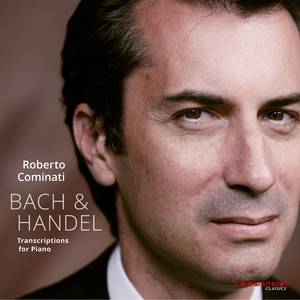 | Sarabande und Chaconne aus dem Singspiel Almira von Händel, S. 181: Sarabande | George Frideric Handel, Roberto Cominati | C Minor | 0 | 5A | 66 BPM | |
| Violin Sonata in E Minor, P. 85: IV. Giga. Vivace assai (After J.S. Bach's BWV 1023) | Ottorino Respighi, Ilkka Talvi, Seattle Symphony Orchestra, Gerard Schwarz | E Minor | 0 | 9A | 121 BPM | |
 | Holberg Suite, Op. 40: IV. Air. Andante religioso | Edvard Grieg, Aristo Sham | G Major | 2 | 9B | 148 BPM | |
 | Piano Concerto No. 3 in E-Flat Major, Op. 29: III. Allegro non troppo | Camille Saint-Saëns, Pascal Rogé, London Philharmonic Orchestra, Charles Dutoit | A♭ Major | 0 | 4B | 72 BPM | |
 | Liszt: Grandes études de Paganini, S. 141: No. 4 in E Major | Franz Liszt, Mariam Batsashvili | E Major | 3 | 12B | 83 BPM | |
 | Legende, Op. 17: Andante - Allegro moderato - Tempo I | Henryk Wieniawski, Gil Shaham, London Symphony Orchestra, Lawrence Foster | G Minor | 1 | 6A | 75 BPM | |
 | Masques et bergamasques Suite, Op. 112: III. Gavotte. Allegro vivo | Gabriel Fauré, Seattle Symphony Orchestra, Ludovic Morlot | F♯ Minor | 0 | 11A | 80 BPM | |
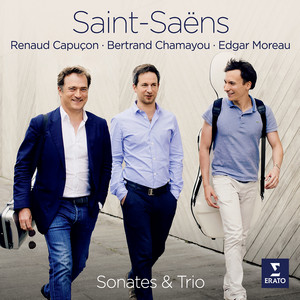 | Saint-Saëns: Violin Sonata No. 1 in D Minor, Op. 75: II. Allegro moderato | Camille Saint-Saëns, Renaud Capuçon, Bertrand Chamayou | D Major | 0 | 10B | 73 BPM | |
 | Symphony in C Major, GB 115: I. Allegro vivo | Georges Bizet, Marc Soustrot, Aarhus Symphony Orchestra | G Major | 1 | 9B | 80 BPM | |
 | Sextet in G Minor, Op. 142: II. Adagio con moto | Ferdinand Ries, Franz Ensemble, Maximilian Krome, Rie Koyama, Sarah Christian, Yuko Hara, Tristan Cornut, Juliane Bruckmann, Kiveli Doerken, Jonathan Wegloop, Emily Hoile | E♭ Major | 0 | 5B | 133 BPM |
- ISRC
- DEB200973801
- Label
- L-M Records/RCA Records