- BPM
- 125
- Key
- B♭ Major
- Camelot
- 6B
Symphony No. 5 in D Minor, Op. 47: II. Allegretto by Dmitri Shostakovich, Frankfurt Radio Symphony Orchestra, Alain Altinoglu Song Details
"Symphony No. 5 in D Minor, Op. 47: II. Allegretto" by Dmitri Shostakovich, Frankfurt Radio Symphony Orchestra, Alain Altinoglu had its release date on October 10, 2025. With this song being about 5 minutes long, at This song is fairly a long song compared to the average song length. This song does not have an "Explicit" tag, making it safe for all ages. There are a total of 9 in the song's album "Shostakovich: Symphonies Nos. 4 & 5 (Complete Symphonies, Vol. 1)". In this album, this song's track order is #2. Furthermore, we believe that the track originated from France. Based on our statistics, Symphony No. 5 in D Minor, Op. 47: II. Allegretto's popularity is not that popular right now. In our opinion, the overall tone is not very danceable and projects negative sounds, such as being sad, depressed, or angry.
BPM and Tempo
With Symphony No. 5 in D Minor, Op. 47: II. Allegretto by Dmitri Shostakovich, Frankfurt Radio Symphony Orchestra, Alain Altinoglu having a BPM of 125 with a half-time of 62 BPM and a double-time of 250 BPM, we would consider this track to have a Allegro (fast, quick, and bright) tempo marking. Because of this, we believe that the song has an overall fast tempo. Looking at the BPM of this song, this song might go great with walking. The time signature for this track is 4/4.
Music Key
B♭ Major is the music key of this track. Or for those who are familiar with the camelot wheel, this song has a camelot key of 6B. So, the perfect camelot match for 6B would be either 6B or 7A. While, 7B can give you a low energy boost. For moderate energy boost, you would use 3B and a high energy boost can either be 8B or 1B. Though, if you want a low energy drop, you should looking for songs with either a camelot key of 6A or 5B will give you a low energy drop, 9B would be a moderate one, and 4B or 11B would be a high energy drop. Lastly, 3A allows you to change the mood.
Want to find the BPM and music key for other songs? Check out our BPM and Key Finder page!
- Popularity
- 11%
- Loudness
- -15.401 dB
- Acousticness
- 94%
- Danceability
- 26%
- Energy
- 20%
- Instrumentalness
- 94%
- Liveness
- 8%
- Loudness
- 74%
- Speechiness
- 4%
- Valence
- 5%
Recommendations
| Track | Artist | Key | Energy | Camelot | BPM | ||
|---|---|---|---|---|---|---|---|
 | Carmen Fantasy, Op. 25: IV. Moderato | Pablo de Sarasate, Hilary Hahn, Frankfurt Radio Symphony Orchestra, Andrés Orozco-Estrada | F Minor | 2 | 4A | 84 BPM | |
 | Ballabile | Blagoje Bersa, Goran Filipec | N/A | N/A | N/A | 0 BPM | |
 | The Rite of Spring: Part One: Adoration of the Earth: The Augurs of Spring - Dance of the Young Girls | Igor Stravinsky, Teodor Currentzis, musicAeterna | B♭ Major | 3 | 6B | 120 BPM | |
 | Wagner: Albumblatt, WWV 94 | Richard Wagner, Renaud Capuçon | A Major | 2 | 11B | 87 BPM | |
 | Die Worte des Erlösers am Kreuze, Hob. XX:1: IX. Il Terremoto | Joseph Haydn, Metamorphose String Orchestra, Pavel Lyubomudrov | G Major | 5 | 9B | 155 BPM | |
 | Piano Concerto "The World of Yesterday": II. Waltz Variations – | Stephen Hough, Hallé, Sir Mark Elder | D Major | 1 | 10B | 140 BPM | |
 | L'Arlésienne Suite No. 1, WD 40: I. Prelude "La marche des Rois" | Georges Bizet, Daniel Deffayet, Berliner Philharmoniker, Herbert von Karajan | C Minor | 0 | 5A | 114 BPM | |
 | An der schönen blauen Donau, Waltz, Op. 314 | Johann Strauss II, Berliner Philharmoniker, Herbert von Karajan | D Major | 0 | 10B | 95 BPM | |
 | Orfeo ed Euridice, Wq. 30: Dance of the Blessed Spirits "Melody" (Arr. Sgambati for Piano) | Christoph Willibald Gluck, Yuja Wang | D Minor | 0 | 7A | 70 BPM | |
 | Waltz in C-sharp minor, Op. 64 No. 2 | Frédéric Chopin, Khatia Buniatishvili | D♭ Minor | 0 | 12A | 96 BPM | |
 | Symphony No. 8 in C Minor, Op. 65: III. Allegro non troppo | Dmitri Shostakovich, Royal Liverpool Philharmonic Orchestra, Vasily Petrenko | F Major | 5 | 7B | 167 BPM | |
| L'Arlésienne Suite No. 1, WD 40: II. Minuetto | Georges Bizet, Daniel Deffayet, Berliner Philharmoniker, Herbert von Karajan | A♭ Major | 0 | 4B | 175 BPM | |
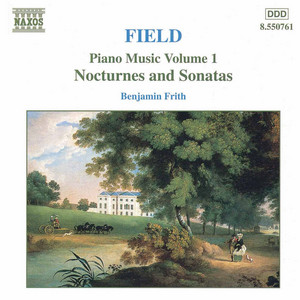 | Nocturne No. 2 in C Minor, H. 25 | John Field, Benjamin Frith | C Minor | 0 | 5A | 98 BPM | |
 | Tambourin chinois, Op. 3 (Arr. for Violin and Orchestra by McAlister) | Fritz Kreisler, Maxim Vengerov, Shanghai Symphony Orchestra, Long Yu | G Minor | 1 | 6A | 157 BPM | |
 | Dance of the goblins | Razvan Stoica | C Major | 4 | 8B | 177 BPM | |
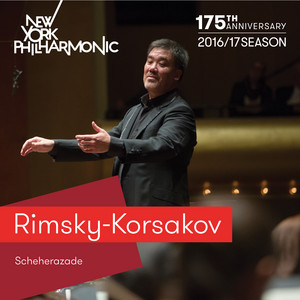 | Scheherazade, Op. 35: III. Andantino quasi allegretto "The Young Prince and The Young Princess" | Nikolai Rimsky-Korsakov, New York Philharmonic, Alan Gilbert, Lawrence Rock | G Major | 1 | 9B | 97 BPM | |
 | Carmen (Bizet) - Fantasie brillante | Jenő Hubay, Gil Shaham, Akira Eguchi | D Major | 2 | 10B | 114 BPM | |
 | Boccherini: String Quintet in E Major, Op. 11 No. 5, G. 275: III. Minuetto - Trio (Arr. Woodhouse for String Orchestra) | Luigi Boccherini, Sir Neville Marriner, Academy of St. Martin in the Fields | A Major | 0 | 11B | 85 BPM | |
 | Suite for Variety Orchestra: Waltz 2 (Arr. for 12 Cellos) | Dmitri Shostakovich, Die 12 Cellisten der Berliner Philharmoniker | C Minor | 1 | 5A | 181 BPM | |
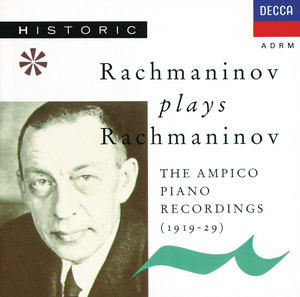 | Prélude in C-Sharp Minor, Op. 3, No. 2 | Sergei Rachmaninoff | F♯ Minor | 1 | 11A | 115 BPM | |
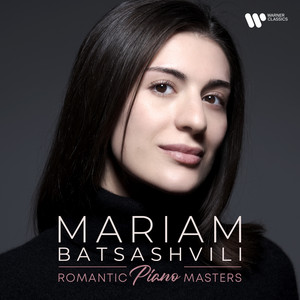 | Liszt: Lieder aus Franz Schubert's "Schwanengesang", S. 560: No. 7 Ständchen | Franz Liszt, Mariam Batsashvili | A Minor | 1 | 8A | 120 BPM | |
 | Peer Gynt Suite No. 1, Op. 46: III. Anitra's Dance | Edvard Grieg, Berliner Philharmoniker, Herbert von Karajan | D Minor | 0 | 7A | 84 BPM | |
 | Violin Concerto No. 3 in G Major, K. 216: I. Allegro | Wolfgang Amadeus Mozart, Arabella Steinbacher, Festival Strings Lucerne (musical direction), Lucerne Festival Strings, Daniel Dodds | G Major | 1 | 9B | 119 BPM | |
 | 3 Old Viennese Dances: No. 2, Liebesleid (Transcr. for Violin and Orchestra) | Fritz Kreisler, María Dueñas, Wiener Symphoniker, Manfred Honeck | G Major | 0 | 9B | 103 BPM | |
 | Die Fledermaus: Overture | Johann Strauss II, Bavarian State Orchestra, Carlos Kleiber | G Major | 1 | 9B | 100 BPM |
- ISRC
- FR50X2517307
- Label
- L-M Records/RCA Records