- BPM
- 84
- Key
- D Major
- Camelot
- 10B
Strauss, R: Don Quixote, Op. 35: Variation III. Dialogue Between Knight and Squire by Richard Strauss, Steven Isserlis, Cynthia Phelps, Minnesota Orchestra, Edo de Waart Song Details
"Strauss, R: Don Quixote, Op. 35: Variation III. Dialogue Between Knight and Squire" by Richard Strauss, Steven Isserlis, Cynthia Phelps, Minnesota Orchestra, Edo de Waart had its release date on September 15, 1998. Since This song is still less than 10 minute long, it is still considered a pretty long duration song compared to the average song length. This song does not appear to be explicit due to the lack of the "E" tag. The song is number 18 out of 34 in Cello Concertos by Steven Isserlis. Going off of the ISRC code of this track, we detected that the origin of this track is from United Kingdom. Strauss, R: Don Quixote, Op. 35: Variation III. Dialogue Between Knight and Squire is unknown right now. In our opinion, the overall tone is not very danceable and projects negative sounds, such as being sad, depressed, or angry.
BPM and Tempo
The tempo marking of Strauss, R: Don Quixote, Op. 35: Variation III. Dialogue Between Knight and Squire by Richard Strauss, Steven Isserlis, Cynthia Phelps, Minnesota Orchestra, Edo de Waart is Andante (at a walking pace), since this song has a tempo of 84 BPM. With that information, we can conclude that the song has a slow tempo. The time signature for this track is 4/4.
Music Key
This song has a musical key of D Major. This also means that this song has a camelot key of 10B. So, the perfect camelot match for 10B would be either 10B or 11A. While, 11B can give you a low energy boost. For moderate energy boost, you would use 7B and a high energy boost can either be 12B or 5B. Though, if you want a low energy drop, you should looking for songs with either a camelot key of 10A or 9B will give you a low energy drop, 1B would be a moderate one, and 8B or 3B would be a high energy drop. Lastly, 7A allows you to change the mood.
Want to find the BPM and music key for other songs? Check out our BPM and Key Finder page!
- Popularity
- 0%
- Loudness
- -34.007 dB
- Acousticness
- 97%
- Danceability
- 8%
- Energy
- 1%
- Instrumentalness
- 9%
- Liveness
- 14%
- Loudness
- 43%
- Speechiness
- 4%
- Valence
- 4%
Recommendations
| Track | Artist | Key | Energy | Camelot | BPM | ||
|---|---|---|---|---|---|---|---|
 | Piano Concerto in C-Sharp Minor, FP 146: I. Allegretto commodo - Live | Francis Poulenc, Yannick Nézet-Séguin, London Philharmonic Orchestra, Alexandre Tharaud | A♭ Major | 1 | 4B | 86 BPM | |
 | Poulenc: Concerto for Two Pianos in D Minor, FP 61: I. Allegro ma non troppo | Francis Poulenc, James Conlon, Rotterdam Philharmonic Orchestra | E♭ Major | 1 | 5B | 103 BPM | |
 | Vier letzte Lieder, TrV 296: 3. Beim Schlafengehen | Richard Strauss, Renée Fleming, Munich Philharmonic Orchestra, Christian Thielemann | D♭ Major | 1 | 3B | 66 BPM | |
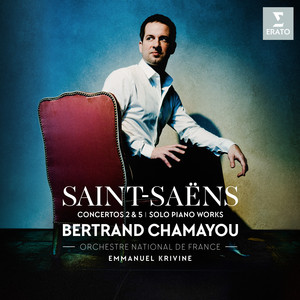 | Saint-Saëns: Piano Concerto No. 2 in G Minor, Op. 22: I. Andante sostenuto | Camille Saint-Saëns, Bertrand Chamayou, Emmanuel Krivine, Orchestre National De France | G Minor | 2 | 6A | 94 BPM | |
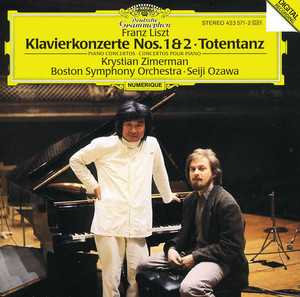 | Piano Concerto No. 1 in E-Flat Major, S. 124: 1. Allegro maestoso | Franz Liszt, Krystian Zimerman, Boston Symphony Orchestra, Seiji Ozawa | A♭ Minor | 1 | 1A | 120 BPM | |
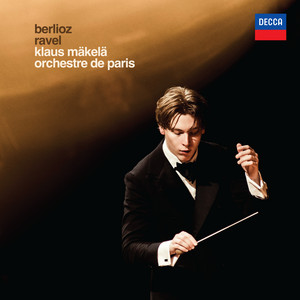 | Symphonie fantastique, H. 48: II. Un bal. Valse | Hector Berlioz, Orchestre de Paris, Klaus Mäkelä | A Major | 1 | 11B | 100 BPM | |
 | Violin Concerto in D Minor, Op. 47: III. Allegro, ma non tanto | Jean Sibelius, Anne-Sophie Mutter, Staatskapelle Dresden, André Previn | D Major | 2 | 10B | 112 BPM | |
 | I. Prélude. Andantino | César Franck, Jean-Pierre Armengaud | D Major | 0 | 10B | 66 BPM | |
 | Carmen Suite No. 1 (Arr. E. Guiraud): III. Intermezzo | Georges Bizet, Orquestra Simfònica de Barcelona i Nacional de Catalunya, Pablo González | E♭ Major | 0 | 5B | 81 BPM | |
 | Miroirs, M. 43: No. 3, Une barque sur l'ocean (Version for Orchestra) | Maurice Ravel, Orchestre Philharmonique Du Luxembourg, Gustavo Gimeno | A Major | 0 | 11B | 134 BPM | |
 | Symphony No. 1 in D Major: 2. Kräftig bewegt - Live | Gustav Mahler, Berliner Philharmoniker, Claudio Abbado | A Major | 1 | 11B | 96 BPM | |
 | Symphony No. 1, Op. 25 in D "Classical": Allegro con brio | Sergei Prokofiev, Yuri Temirkanov | E Minor | 0 | 9A | 99 BPM | |
 | Sonata In G Minor For Cello & Piano, Op. 19: 3. Andante | Sergei Rachmaninoff, Alisa Weilerstein, Inon Barnatan | F Major | 2 | 7B | 82 BPM | |
 | Symphony No. 1 in D Major: III. Feierlich und gemessen, ohne zu schleppen | Gustav Mahler, Berliner Philharmoniker, Daniel Harding | G Minor | 0 | 6A | 107 BPM | |
 | Glazunov: Suite from Raymonda, Op. 57a: XI. Grand pas d'action. Grand adagio | Alexander Glazunov, José Serebrier, Royal Scottish National Orchestra | A Major | 2 | 11B | 90 BPM | |
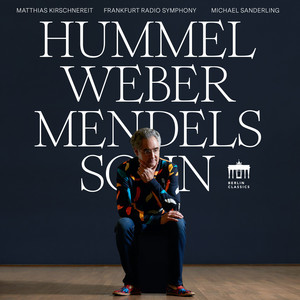 | Capriccio brillant, Op. 22: Andante | Felix Mendelssohn, Matthias Kirschnereit, Michael Sanderling, Frankfurt Radio Symphony Orchestra | B Major | 0 | 1B | 91 BPM | |
 | Valse de Concert Nr. 1 in D Major, Op. 47: Allegro | Alexander Glazunov, Beethoven Orchester Bonn, Stefan Blunier | G Minor | 2 | 6A | 174 BPM | |
 | Symphony No. 8 in C Minor, Op. 65: IV. Largo | Dmitri Shostakovich, Berliner Philharmoniker, Kirill Petrenko | A♭ Major | 0 | 4B | 72 BPM | |
 | Symphony No. 6 in B Minor, Op. 74 "Pathétique": IV. Finale. Adagio lamentoso | Pyotr Ilyich Tchaikovsky, Teodor Currentzis, musicAeterna | B Minor | 1 | 10A | 100 BPM | |
 | Symphony No. 5 in E Minor, Op. 64: II. Andante cantabile, con alcuna licenza | Pyotr Ilyich Tchaikovsky, Boston Symphony Orchestra, Seiji Ozawa | D Major | 1 | 10B | 72 BPM | |
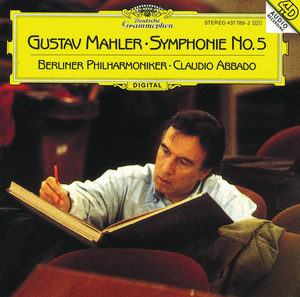 | Symphony No. 5: I. Trauermarsch | Gustav Mahler, Berliner Philharmoniker, Claudio Abbado | D♭ Minor | 1 | 12A | 85 BPM | |
 | Kinderszenen | Robert Schumann, Ivan Moravec | F Major | 0 | 7B | 131 BPM | |
 | Piano Concerto No. 3, Sz. 119: II. Adagio religioso | Béla Bartók, Géza Anda, Deutsches Symphonie-Orchester Berlin, Ferenc Fricsay | B Major | 2 | 1B | 150 BPM | |
 | Scheherazade: Calm at Sea | Nikolai Rimsky-Korsakov, Lars Hjalmar Joakim | E Major | 2 | 12B | 84 BPM | |
 | Wieniawski: Violin Concerto No. 1 in F-Sharp Minor, Op. 14: II. Preghiera | Henryk Wieniawski, Itzhak Perlman, London Philharmonic Orchestra, Seiji Ozawa | A Major | 0 | 11B | 65 BPM |
- ISRC
- GBAYC9100314
- Label
- L-M Records/RCA Records