- BPM
- 132
- Key
- B Major
- Camelot
- 1B
Tchaikovsky: Swan Lake, Op. 20, Act I: No. 5d, Pas de deux for Two Merry-Makers. Coda by Pyotr Ilyich Tchaikovsky, David Lloyd-Jones, The New London Orchestra Song Details
"Tchaikovsky: Swan Lake, Op. 20, Act I: No. 5d, Pas de deux for Two Merry-Makers. Coda" by Pyotr Ilyich Tchaikovsky, David Lloyd-Jones, The New London Orchestra had its release date on March 29, 2011. With This song being less than two minutes long, at 1:54, we are fairly confident that this song is not explicit and is safe for all ages. Based on the duration of this song, this song duration is much smaller than the average song duration. There are a total of 39 in the song's album "Swan Lake [Matthew Bourne version]". In this album, this song's track order is #33. Furthermore, we believe that the track originated from Germany. Based on our statistics, Tchaikovsky: Swan Lake, Op. 20, Act I: No. 5d, Pas de deux for Two Merry-Makers. Coda's popularity is not that popular right now. In our opinion, the overall tone is not very danceable and projects negative sounds, such as being sad, depressed, or angry.
BPM and Tempo
With Tchaikovsky: Swan Lake, Op. 20, Act I: No. 5d, Pas de deux for Two Merry-Makers. Coda by Pyotr Ilyich Tchaikovsky, David Lloyd-Jones, The New London Orchestra having a BPM of 132 with a half-time of 66 BPM and a double-time of 264 BPM, we would consider this track to have a Allegro (fast, quick, and bright) tempo marking. Because of this, we believe that the song has an overall fast tempo. Looking at the BPM of this song, this song might go great with walking. The time signature for this track is 4/4.
Music Key
This song has a musical key of B Major. Or for those who are familiar with the camelot wheel, this song has a camelot key of 1B. So, the perfect camelot match for 1B would be either 1B or 2A. While, 2B can give you a low energy boost. For moderate energy boost, you would use 10B and a high energy boost can either be 3B or 8B. Though, if you want a low energy drop, you should looking for songs with either a camelot key of 1A or 12B will give you a low energy drop, 4B would be a moderate one, and 11B or 6B would be a high energy drop. Lastly, 10A allows you to change the mood.
Want to find the BPM and music key for other songs? Check out our BPM and Key Finder page!
- Popularity
- 9%
- Loudness
- -13.522 dB
- Acousticness
- 92%
- Danceability
- 25%
- Energy
- 31%
- Instrumentalness
- 86%
- Liveness
- 35%
- Loudness
- 77%
- Speechiness
- 4%
- Valence
- 7%
Recommendations
| Track | Artist | Key | Energy | Camelot | BPM | ||
|---|---|---|---|---|---|---|---|
 | Sicilienne, Op. 78 | Gabriel Fauré, Harriet Krijgh, Kamilla Isanbaeva | G Minor | 1 | 6A | 123 BPM | |
 | Spartacus: Adagio of Spartacus and Phrygia | Aram Khachaturian, Wiener Philharmoniker | A♭ Major | 1 | 4B | 129 BPM | |
 | Carmen Ballet Suite (after Bizet): IX. Torero | Rodion Shchedrin, Slovenian Symphony Orchestra, Anton Nanut | F Major | 5 | 7B | 115 BPM | |
 | The Sleeping Beauty, Op. 66, Prologue: Introduction. The Lilac Fairy | Pyotr Ilyich Tchaikovsky, Royal Concertgebouw Orchestra, Antal Doráti | E Major | 2 | 12B | 139 BPM | |
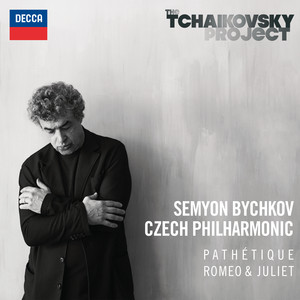 | Symphony No. 6 in B Minor, Op. 74, TH 30 "Pathétique": IV. Finale. Adagio lamentoso - Andante | Pyotr Ilyich Tchaikovsky, Czech Philharmonic, Semyon Bychkov | B Minor | 1 | 10A | 106 BPM | |
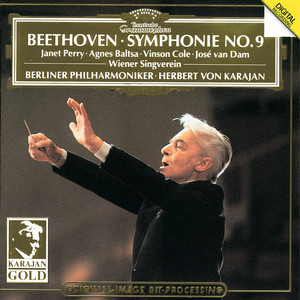 | Symphony No.9 In D Minor, Op.125 - "Choral" - Excerpt From 4th Movement: 4. Presto | Ludwig van Beethoven, Berliner Philharmoniker, Herbert von Karajan | D Major | 1 | 10B | 74 BPM | |
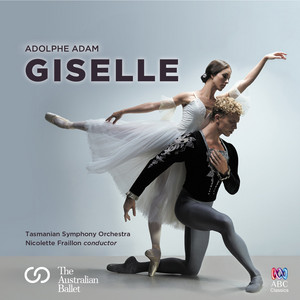 | Giselle, Act 1: No. 3 Giselle’s Entrance, Giselle and Albrecht first meet and are discovered by Hilarion | Adolphe Adam, Tasmanian Symphony Orchestra, Nicolette Fraillon | E♭ Major | 1 | 5B | 88 BPM | |
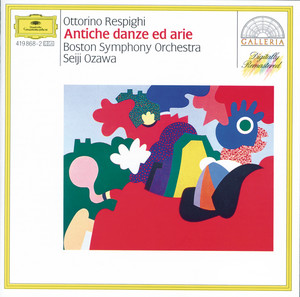 | Ancient Airs & Dances, Suite III, P. 172: IV. Passacaglia (Roncalli) | Ottorino Respighi, Boston Symphony Orchestra, Seiji Ozawa | G Minor | 3 | 6A | 116 BPM | |
 | 3 Études de Concert, S. 144: No. 3 in D-Flat Major "Un sospiro" | Franz Liszt, Daniil Trifonov | D♭ Major | 1 | 3B | 76 BPM | |
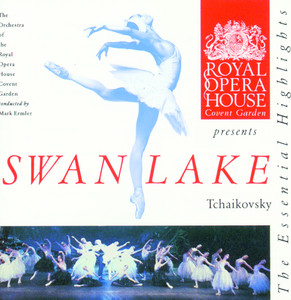 | Swan Lake, Op. 20: Op. 20: Act IV No. 29, Scène Finale | Pyotr Ilyich Tchaikovsky, Orchestra of the Royal Opera House, Covent Garden, Mark Ermler | B Major | 4 | 1B | 113 BPM | |
 | Eugene Onegin, Op. 24: Act III Scene 1: Polonaise | Pyotr Ilyich Tchaikovsky, Slovak Radio Symphony Orchestra, Ondrej Lenard | F Major | 3 | 7B | 88 BPM | |
 | The Sorcerer's Apprentice | Philharmonia Orchestra | D♭ Major | 2 | 3B | 130 BPM | |
 | Dance of the goblins | Razvan Stoica | C Major | 4 | 8B | 177 BPM | |
 | Cello Concerto No. 1 in A Minor, Op. 33: I. Allegro non troppo | Camille Saint-Saëns, Mischa Maisky, Orpheus Chamber Orchestra | F Major | 2 | 7B | 131 BPM | |
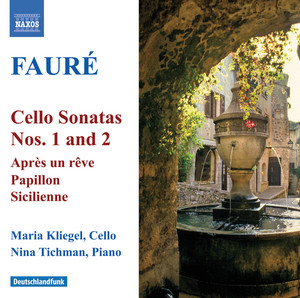 | Elegie, Op. 24 | Gabriel Fauré, Maria Kliegel, Nina Tichman | A♭ Major | 0 | 4B | 72 BPM | |
 | Peer Gynt Suite No. 1, Op. 46: I. Morning Mood | Edvard Grieg, Berliner Philharmoniker, Herbert von Karajan | E Major | 0 | 12B | 141 BPM | |
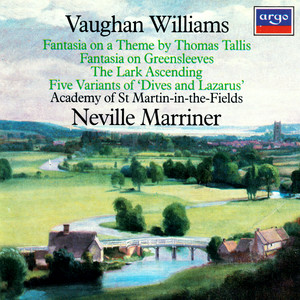 | Fantasia on Greensleeves | Ralph Vaughan Williams, Academy of St. Martin in the Fields, Sir Neville Marriner | C Minor | 1 | 5A | 89 BPM | |
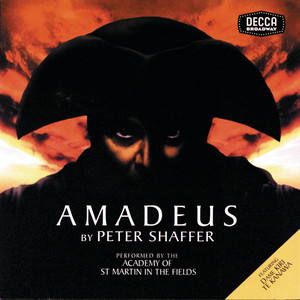 | Symphony No. 25 in G Minor, K. 183: I. Allegro con brio | Wolfgang Amadeus Mozart, Academy of St. Martin in the Fields, Sir Neville Marriner | G Minor | 2 | 6A | 80 BPM | |
| Ancient Airs & Dances, Suite III, P. 172: III. Siciliana (Anonymous) | Ottorino Respighi, Boston Symphony Orchestra, Seiji Ozawa | C Minor | 2 | 5A | 109 BPM | |
 | Vremena Goda (The Seasons), Op. 67: Summer: Waltz of the Cornflowers and the Poppies | Alexander Glazunov, Slovak Radio Symphony Orchestra | D Major | 1 | 10B | 100 BPM | |
 | Polovetsian Dances from Prince Igor: Moderato alla breve | Alexander Borodin, George Szell, The Cleveland Orchestra | A Major | 2 | 11B | 108 BPM | |
 | Brook Green Suite: II. Air | Gustav Holst, English Sinfonia, Howard Griffiths | E♭ Major | 0 | 5B | 128 BPM | |
 | Scheherazade: The Sea & Sinbad's Ship | Nikolai Rimsky-Korsakov, Lars Hjalmar Joakim | E Major | 1 | 12B | 82 BPM | |
 | Carmen Suite No. 2 (Arr. E. Guiraud): V. La garde montante | Georges Bizet, Orquestra Simfònica de Barcelona i Nacional de Catalunya, Pablo González | D Minor | 0 | 7A | 117 BPM | |
 | Preghiera (Arr. by Fritz Kreisler from Piano Concerto No. 2 in C Minor, Op. 18, 2nd Movement) | Sergei Rachmaninoff, Gidon Kremer, Daniil Trifonov | C Major | 1 | 8B | 104 BPM |
- ISRC
- DEA809611433
- Label
- L-M Records/RCA Records