- BPM
- 129
- Key
- B Major
- Camelot
- 1B
Rodelinda / Overture: Overture by George Frideric Handel, Il Complesso Barocco, Alan Curtis Song Details
George Frideric Handel, Il Complesso Barocco, Alan Curtis's ' "Rodelinda / Overture: Overture" was released on its scheduled release date, January 1, 2005. With this song being around four minutes long, at 4:03, the duration of this song is pretty average compared to other songs. This track is safe for children and doesn't appear to contain any foul language, since the "Explicit" tag was not present in this track. The track order of this song in George Frideric Handel, Simone Kermes, Marijana Mijanovic, Steve Davislim, Marie-Nicole Lemieux, Il Complesso Barocco, Alan Curtis's "Handel: Rodelinda" album is number 1 out of 64. On top of that, Germany appears to be the country where this track was created. Based on our statistics, Rodelinda / Overture: Overture's popularity is not that popular right now. The overall mood can be danceable to some, especially with it's high amount of postive energy.
BPM and Tempo
We consider the tempo marking of Rodelinda / Overture: Overture by George Frideric Handel, Il Complesso Barocco, Alan Curtis to be Allegro (fast, quick, and bright) because the track has a tempo of 129 BPM, a half-time of 64BPM, and a double-time of 258 BPM. Based on that, the speed of the song's tempo is fast. Activities such as, walking, can go well with this song. The time signature for this track is 3/4.
Music Key
This song is in the music key of B Major. This also means that this song has a camelot key of 1B. So, the perfect camelot match for 1B would be either 1B or 2A. While, 2B can give you a low energy boost. For moderate energy boost, you would use 10B and a high energy boost can either be 3B or 8B. Though, if you want a low energy drop, you should looking for songs with either a camelot key of 1A or 12B will give you a low energy drop, 4B would be a moderate one, and 11B or 6B would be a high energy drop. Lastly, 10A allows you to change the mood.
Want to find the BPM and music key for other songs? Check out our BPM and Key Finder page!
- Popularity
- 10%
- Loudness
- -17.185 dB
- Acousticness
- 95%
- Danceability
- 46%
- Energy
- 31%
- Instrumentalness
- 86%
- Liveness
- 28%
- Loudness
- 71%
- Speechiness
- 4%
- Valence
- 62%
Recommendations
| Track | Artist | Key | Energy | Camelot | BPM | ||
|---|---|---|---|---|---|---|---|
 | Overture (Suite) In G Minor, TWV 55: G4: III. Les Irresoluts | Cologne Chamber Orchestra, Georg Philipp Telemann | G Minor | 1 | 6A | 82 BPM | |
 | Le Messie, symphony: Grave Allegro Moderato | George Frideric Handel, Orchestre & Chorale Paul Kuentz, Barbara Schlick, Jean Nirouet, Alexander Stevenson, Philip Langshaw | D Major | 3 | 10B | 107 BPM | |
 | Concerto Grosso in D Major, Op. 6 No. 4: II. Allegro | Arcangelo Corelli, Jordi Savall, Le Concert Des Nations | D♭ Major | 3 | 3B | 133 BPM | |
 | Zoroastre, RCT 62, Acte III, Scène VII: Gavotte en rondeau | Jean-Philippe Rameau, Teodor Currentzis | A♭ Minor | 1 | 1A | 116 BPM | |
 | Concerto Grosso in D Major, Op. 1, No. 5: I. Largo | Pietro Locatelli, Capella Istropolitana, Jaroslav Krcek | F Major | 1 | 7B | 71 BPM | |
| Les Indes galantes, RCT 44, Nouvelle entrée, Les sauvages, Scène VI: Rondeau - Duo et choeur "Forêts paisibles" | Jean-Philippe Rameau, Teodor Currentzis | F♯ Minor | 3 | 11A | 98 BPM | |
 | Adagio in F, H.XVII No. 9 | Joseph Haydn, Alfred Brendel | F Major | 0 | 7B | 71 BPM | |
 | Sonata Op. 5, No. 10: Sarabanda | Arcangelo Corelli, Stephen Stubbs, Maxine Eilander, Erin Headley, Milos Valent | D♭ Minor | 0 | 12A | 86 BPM | |
 | Water Music, Suite No. 2, HWV 349: No. 12, Alla Hornpipe | George Frideric Handel, Akademie für Alte Musik Berlin | D♭ Major | 2 | 3B | 132 BPM | |
 | Polifemo: Alto giove (Air d'Acio) - Instrumental Version | Christophe Rousset, Les Talens Lyriques, Ewa Mallas-godlewska, Derek Lee Ragin | E♭ Minor | 0 | 2A | 141 BPM | |
 | 3 Chorales, P. 167: No. 3, Andante (After J.S. Bach's BWV 645) | Ottorino Respighi, Seattle Symphony Orchestra, Gerard Schwarz | E♭ Major | 0 | 5B | 84 BPM | |
| Overture (Suite) In C Major, TWV 55: C6: I. Ouverture: Grave. Allegro. Grave | Cologne Chamber Orchestra, Georg Philipp Telemann | G Major | 3 | 9B | 116 BPM | |
 | Sonata in D Major, No. 1: IV. Adagio | Arcangelo Corelli, Lucy van Dael, Bob van Asperen | B♭ Minor | 1 | 3A | 96 BPM | |
 | Atys, LWV 53: Ouverture | Jean-Baptiste Lully, Leonardo García-Alarcón, Cappella Mediterranea | F Minor | 3 | 4A | 131 BPM | |
 | Concerto a cinque No. 2, Op. 9: I. Allegro e no presto | Tomaso Albinoni, Paul Dombrecht, Il Fondamento | D♭ Minor | 3 | 12A | 169 BPM | |
| Les Boréades, RCT 31, Acte IV, Scène IV: Entrée pour les Muses, les Zéphyres, les Saisons, les Heures et les Arts | Jean-Philippe Rameau, Teodor Currentzis | D♭ Major | 1 | 3B | 130 BPM | |
 | 12 Concerti Grossi, Op. 6, No. 8 in G Minor "Fatto per la notte di Natale": V. Allegro & VI. Largo. Pastorale ad libitum | Arcangelo Corelli, Karol Teutsch, Orchestre Leopoldinum-wroclaw | G Major | 1 | 9B | 117 BPM | |
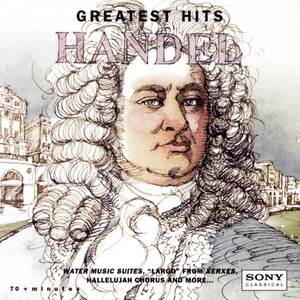 | Serse, HWV 40: Largo "Ombra mai fu" | George Frideric Handel, Eugene Ormandy, Philadelphia Orchestra | G Major | 1 | 9B | 82 BPM | |
 | Concerto Grosso in F Major, Op. 3, No. 1: I. Allegro assai: Adagio | Francesco Onofrio Manfredini, Capella Istropolitana, Jaroslav Krcek | C Major | 3 | 8B | 114 BPM | |
 | Sinfonia In D Major, Wq. 183/1, H. 663 : II. Largo | Carl Philipp Emanuel Bach, Salzburg Chamber Philharmonic Orchestra | F Major | 0 | 7B | 133 BPM | |
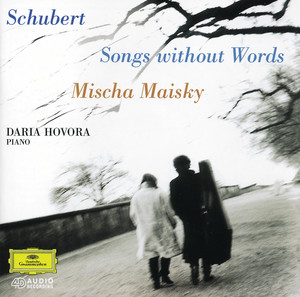 | Die schöne Müllerin, D. 795: No. 19, Der Müller und der Bach - Performed on Cello & Piano | Franz Schubert, Mischa Maisky, Daria Hovora | G Major | 0 | 9B | 96 BPM | |
 | Adagio En Sol Mineur | Academy of St. Martin in the Fields, Iona Brown | C Minor | 2 | 5A | 74 BPM | |
 | Concerto a 5 in D minor, Op.9, No.2 for Oboe, Strings, and Continuo: 2. Adagio | Tomaso Albinoni, Frank de Bruine, Academy of Ancient Music, Christopher Hogwood | D♭ Major | 2 | 3B | 108 BPM | |
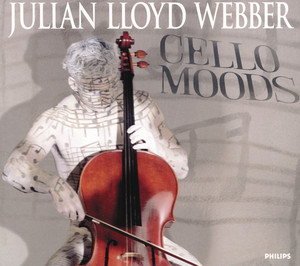 | Salut d'amour, Op. 12 (Arr. Cullen for Cello and Orchestra) | Edward Elgar, Julian Lloyd Webber, Royal Philharmonic Orchestra, James Judd | D Major | 1 | 10B | 80 BPM | |
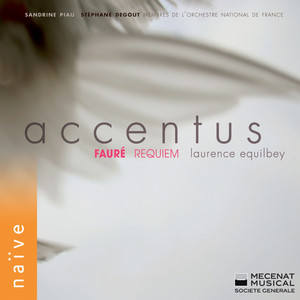 | Cantique de Jean Racine, Op. 11 | Gabriel Fauré, Laurence Equilbey, Accentus, Orchestre National De France | D♭ Major | 2 | 3B | 73 BPM |
- ISRC
- DEN960431901
- Label
- L-M Records/RCA Records