- BPM
- 83
- Key
- A Minor
- Camelot
- 8A
Capriccio espagnol, Op. 34: I. Alborada. Vivo e strepitoso by Nikolai Rimsky-Korsakov, New York Philharmonic, Zubin Mehta Song Details
"Capriccio espagnol, Op. 34: I. Alborada. Vivo e strepitoso" by Nikolai Rimsky-Korsakov, New York Philharmonic, Zubin Mehta had its release date on 1961. With This song being less than two minutes long, at 1:15, we are fairly confident that this song is not explicit and is safe for all ages. Based on the duration of this song, this song duration is much smaller than the average song duration. The track order of this song in Nikolai Rimsky-Korsakov, New York Philharmonic, London Symphony Orchestra's "Greatest Hits: Rimsky- Korsakov" album is number 2 out of 14. On top of that, United States appears to be the country where this track was created. Capriccio espagnol, Op. 34: I. Alborada. Vivo e strepitoso is unknown right now. In our opinion, the overall tone is not very danceable and projects negative sounds, such as being sad, depressed, or angry.
BPM and Tempo
We consider the tempo marking of Capriccio espagnol, Op. 34: I. Alborada. Vivo e strepitoso by Nikolai Rimsky-Korsakov, New York Philharmonic, Zubin Mehta to be Andante (at a walking pace) because the track has a tempo of 83 BPM, a half-time of 42BPM, and a double-time of 166 BPM. Based on that, the speed of the song's tempo is slow. The time signature for this track is 3/4.
Music Key
This song has a musical key of A Minor. Because this track belongs in the A Minor key, the camelot key is 8A. So, the perfect camelot match for 8A would be either 8A or 7B. While, a low energy boost can consist of either 8B or 9A. For moderate energy boost, you would use 5A and a high energy boost can either be 10A or 3A. However, if you are looking for a low energy drop, finding a song with a camelot key of 7A would be a great choice. Where 11A would give you a moderate drop, and 6A or 1A would be a high energy drop. Lastly, 11B allows you to change the mood.
Want to find the BPM and music key for other songs? Check out our BPM and Key Finder page!
- Popularity
- 0%
- Loudness
- -16.808 dB
- Acousticness
- 89%
- Danceability
- 20%
- Energy
- 21%
- Instrumentalness
- 56%
- Liveness
- 16%
- Loudness
- 72%
- Speechiness
- 4%
- Valence
- 6%
Recommendations
| Track | Artist | Key | Energy | Camelot | BPM | ||
|---|---|---|---|---|---|---|---|
 | Ruslan and Lyudmila, Op. 5, Overture | Mikhail Glinka, Alexander Vedernikov, Bolshoi Theatre Orchestra | E Minor | 1 | 9A | 151 BPM | |
 | Emperor Waltz, Op. 437 | Johann Strauss II, Eugene Ormandy | C Major | 1 | 8B | 92 BPM | |
 | Ständchen, S. 560 (Trans. from Schwanengesang No. 4, D. 957) | Franz Schubert, Franz Liszt, Khatia Buniatishvili | D Major | 0 | 10B | 67 BPM | |
 | Skazaniye o nevidimom grade Kitezhe i deve Fevronii (Legend of the Invisible City of Kitezh and the Maiden Fevroniya): Prelude. In praise of the wilderness | Nikolai Rimsky-Korsakov, Mikhail Kazakov, Vitaly Panfilov, Tatiana Monogarova, Mikhail Gubsky, Gevorg Hakobyan, Marika Gulordava, Riccardo Ferrari, Stefano Consolini, Valery Gilmanov, Alexander Naumenko, Rosanna Savoia, Elena Manistina, Cagliari Theatre C | B Minor | 0 | 10A | 102 BPM | |
 | Scheherazade: Sinbad's mighty bird, the Roc | Nikolai Rimsky-Korsakov, Lars Hjalmar Joakim | G Major | 3 | 9B | 143 BPM | |
 | Don Quixote: Act I: Quiteria and Basilio | Ludwig Minkus, Sofia National Opera Orchestra, Nayden Todorov | E Minor | 0 | 9A | 178 BPM | |
 | Prince Igor (Knyaz Igor), Act II: Dance of the Polovtsian Maidens | Alexander Borodin, Angelina Shvachka, Dmytro Popov, Mykola Koval, Taras Shtonda, Kiev Chamber Choir, Ukraine National Radio Symphony Orchestra, Theodore Kuchar | F Major | 2 | 7B | 95 BPM | |
 | Peer Gynt, Op. 23: Act II, 7, In the Hall of the Mountain King | Edvard Grieg, Esa-Pekka Salonen | B Minor | 2 | 10A | 104 BPM | |
 | Piano Concerto No. 2 in C Minor, Op. 18: I. Moderato | Sergei Rachmaninoff, Yevgeny Sudbin, BBC Symphony Orchestra, Sakari Oramo | C Minor | 1 | 5A | 82 BPM | |
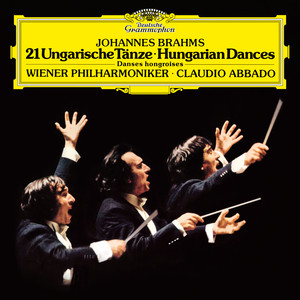 | 21 Hungarian Dances, WoO 1: No. 1 in G Minor. Allegro molto (Version for Orchestra) | Johannes Brahms, Wiener Philharmoniker, Claudio Abbado | G Minor | 2 | 6A | 142 BPM | |
 | Brook Green Suite: II. Air | Gustav Holst, English Sinfonia, Howard Griffiths | E♭ Major | 0 | 5B | 128 BPM | |
 | Kaiser (Emperor), Op. 437 : Kaiser Walzer (Emperor Waltz), Op. 437 | Strauss Festival Orchestra, Johann Strauss II | C Major | 0 | 8B | 181 BPM | |
 | Gayane Suite No. 2: VI. Sabre Dance | Aram Khachaturian, St. Petersburg State Symphony Orchestra, Andre Anichanov | E♭ Major | 8 | 5B | 91 BPM | |
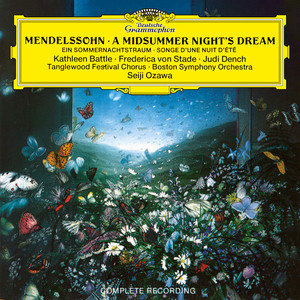 | Overture "A Midsummer Night's Dream", Op. 21 | Felix Mendelssohn, Boston Symphony Orchestra, Seiji Ozawa | E Major | 1 | 12B | 139 BPM | |
 | Peer Gynt Suite No.2 op. 55 Abduction and Ingrid's Lament Allegro furioso-Andante doloroso) | Academy of St. Martin in the Fields | G Minor | 0 | 6A | 133 BPM | |
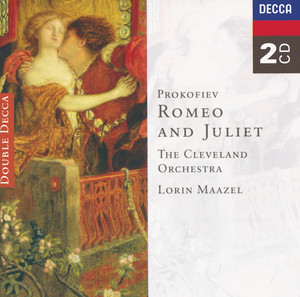 | Romeo and Juliet, Op. 64: Introduction | Sergei Prokofiev, The Cleveland Orchestra, Lorin Maazel | E Major | 1 | 12B | 112 BPM | |
 | Symphony No. 6: VI. Allegro | Howard Hanson, Helsinki Philharmonic Orchestra, Leif Segerstam | B♭ Minor | 3 | 3A | 66 BPM | |
 | Orpheo ed Euridice, Wq. 30, Act II: Dance of the Blessed Spirits | Christoph Willibald Gluck, Eugene Ormandy, Philadelphia Orchestra | D Minor | 1 | 7A | 67 BPM | |
 | Caucasian Sketches: Suite No. 1, Op. 10: IV. Procession of the Sardar | Mikhail Ippolitov-Ivanov, Ukraine National Symphony Orchestra, Arthur Fagen | A Major | 1 | 11B | 81 BPM | |
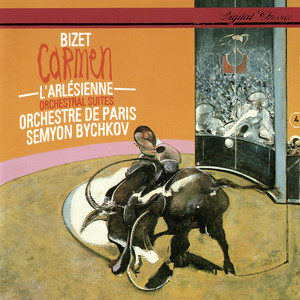 | Carmen Suite No. 1: 1. Prélude | Georges Bizet, Orchestre de Paris, Semyon Bychkov | A Minor | 1 | 8A | 96 BPM | |
 | Rachmaninov: Symphony No. 3 in A Minor, Op. 44: II. Adagio ma non troppo - Allegro vivace | Sergei Rachmaninoff, Mariss Jansons, St. Petersburg Philharmonic Orchestra | E♭ Minor | 0 | 2A | 117 BPM | |
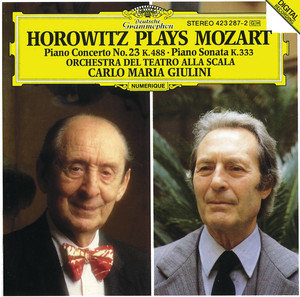 | Piano Concerto No. 23 in A Major, K. 488: II. Adagio | Wolfgang Amadeus Mozart, Vladimir Horowitz, Orchestra Del Teatro Alla Scala, Milano, Carlo Maria Giulini | F♯ Minor | 0 | 11A | 108 BPM | |
 | Pictures At An Exhibition: Promenade I | Modest Mussorgsky, Chicago Symphony Orchestra, Carlo Maria Giulini | F Major | 1 | 7B | 79 BPM | |
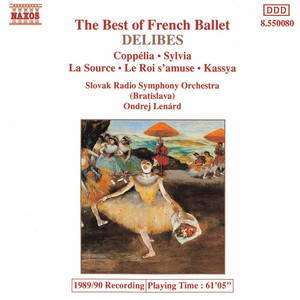 | Le roi s'amuse: Scene du bouquet | Léo Delibes, Slovak Philharmonic, Ondrej Lenard | F♯ Minor | 0 | 11A | 136 BPM | |
 | Symphony No. 40 in G Minor, K. 550: I. Molto allegro | Wolfgang Amadeus Mozart, Riccardo Minasi, Ensemble Resonanz | G Minor | 3 | 6A | 119 BPM |
- ISRC
- USSM10408899
- Label
- L-M Records/RCA Records