- BPM
- 105
- Key
- E♭ Major
- Camelot
- 5B
Messiah, HWV 56, Part II: No. 41, Let Us Break Their Bonds Asunder by George Frideric Handel, London Symphony Orchestra, Sir Colin Davis, Tenebrae Song Details
George Frideric Handel, London Symphony Orchestra, Sir Colin Davis, Tenebrae's ' "Messiah, HWV 56, Part II: No. 41, Let Us Break Their Bonds Asunder" was released on its scheduled release date, October 9, 2007. With This song being less than two minutes long, at 1:43, we are fairly confident that this song is not explicit and is safe for all ages. Based on the duration of this song, this song duration is much smaller than the average song duration. The track order of this song in George Frideric Handel, London Symphony Orchestra, Sir Colin Davis, Susan Gritton, Sara Mingardo, Mark Padmore, Alastair Miles, Tenebrae's "Handel: Messiah" album is number 15 out of 53. On top of that, United Kingdom appears to be the country where this track was created. In terms of popularity, Messiah, HWV 56, Part II: No. 41, Let Us Break Their Bonds Asunder is currently not that popular. Since there is more of a neutral sound being played, this makes the track somewhat danceable.
BPM and Tempo
We consider the tempo marking of Messiah, HWV 56, Part II: No. 41, Let Us Break Their Bonds Asunder by George Frideric Handel, London Symphony Orchestra, Sir Colin Davis, Tenebrae to be Andante (at a walking pace) because the track has a tempo of 105 BPM, a half-time of 52BPM, and a double-time of 210 BPM. Based on that, the speed of the song's tempo is slow. The time signature for this track is 4/4.
Music Key
This song is in the music key of E♭ Major. This also means that this song has a camelot key of 5B. So, the perfect camelot match for 5B would be either 5B or 6A. While, 6B can give you a low energy boost. For moderate energy boost, you would use 2B and a high energy boost can either be 7B or 12B. Though, if you want a low energy drop, you should looking for songs with either a camelot key of 5A or 4B will give you a low energy drop, 8B would be a moderate one, and 3B or 10B would be a high energy drop. Lastly, 2A allows you to change the mood.
Want to find the BPM and music key for other songs? Check out our BPM and Key Finder page!
- Popularity
- 7%
- Loudness
- -21.81 dB
- Acousticness
- 96%
- Danceability
- 42%
- Energy
- 13%
- Instrumentalness
- 0%
- Liveness
- 7%
- Loudness
- 64%
- Speechiness
- 3%
- Valence
- 58%
Recommendations
| Track | Artist | Key | Energy | Camelot | BPM | ||
|---|---|---|---|---|---|---|---|
 | Purcell: Chacony in G Minor, Z. 730 | Henry Purcell, Sir Neville Marriner, Academy of St. Martin in the Fields | B♭ Major | 4 | 6B | 113 BPM | |
 | Suite Les Indes Galantes / Les Sauvages: 21. Air pour les sauvages | Jean-Philippe Rameau, Orchestra Of The 18th Century, Frans Brüggen | F Minor | 4 | 4A | 102 BPM | |
 | Gluck: Orphée et Eurydice, Wq. 41, Act 2: Danse des ombres heureuses | Christoph Willibald Gluck, Sir Neville Marriner, Academy of St. Martin in the Fields, Paul Davies | F Major | 0 | 7B | 76 BPM | |
 | Handel: Water Music, Suite No. 2 in D Major, HWV 349: III. Gigue | George Frideric Handel, Yehudi Menuhin, Bath Festival Orchestra | D Major | 1 | 10B | 118 BPM | |
 | Orfeo Ed Euridice: Dance of the Blessed Spirits (Act II) | Christoph Willibald Gluck, Karlheinz Zoeller, Berliner Philharmoniker, Herbert von Karajan | C Major | 1 | 8B | 75 BPM | |
 | Concerto For Oboe In D Minor - Adagio | Tafelmusik Baroque Orchestra | D♭ Minor | 1 | 12A | 72 BPM | |
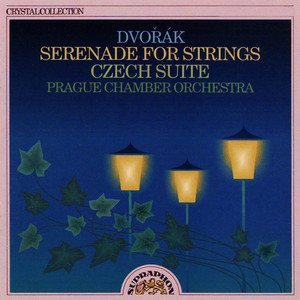 | Serenade for Strings in E Major, Op. 22, B. 52: II. Tempo di valse | Antonín Dvořák, Prague Chamber Orchestra, Petr Skvor | A Major | 1 | 11B | 0 BPM | |
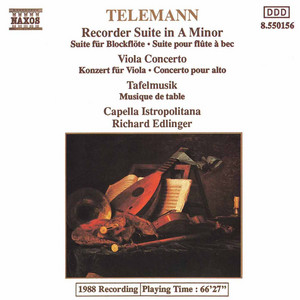 | Viola Concerto In G Major, TWV 51:g9: I. Largo | Ladislav Kyselák, Capella Istropolitana, Georg Philipp Telemann | G Major | 1 | 9B | 144 BPM | |
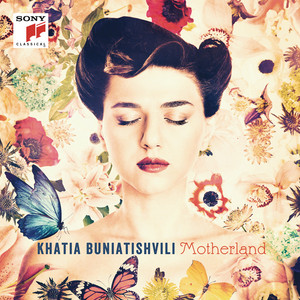 | Suite in B-Flat Major, HWV 434: IV. Menuet | George Frideric Handel, Khatia Buniatishvili | G Minor | 0 | 6A | 59 BPM | |
 | Suite in D Minor: 2. Sarabande | Louis Couperin, Christopher Hogwood | D♭ Minor | 1 | 12A | 140 BPM | |
 | Armide: Passacaille | Jean-Baptiste Lully, Véronique Gens/Les Talens Lyriques/Christophe Rousset, Christophe Rousset, Les Talens Lyriques | F Minor | 1 | 4A | 122 BPM | |
 | Aria IV: Sarabande | Georg Philipp Telemann, La Stagione Frankfurt, Michael Schneider | D♭ Minor | 2 | 12A | 75 BPM | |
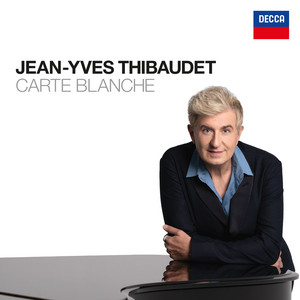 | Consolations, S. 172: No. 3 in D-Flat Major. Lento placido | Franz Liszt, Jean-Yves Thibaudet | D♭ Major | 0 | 3B | 134 BPM | |
 | Capriol Suite: 5. Pied-en- l'air | Peter Warlock, Academy of St. Martin in the Fields, Nicholas Kraemer, Sir Neville Marriner | G Major | 1 | 9B | 113 BPM | |
 | Adagio in F, H.XVII No. 9 | Joseph Haydn, Alfred Brendel | F Major | 0 | 7B | 71 BPM | |
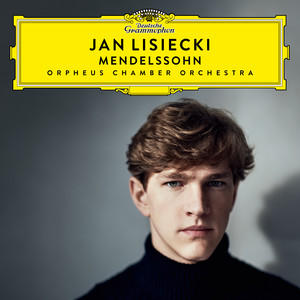 | Lieder ohne Worte, Op. 19: No. 6 in G Minor (Andante sostenuto) "Venetian Gondola Song", MWV U78 | Felix Mendelssohn, Jan Lisiecki | G Minor | 0 | 6A | 168 BPM | |
 | String Quintet No. 60 in C Major, G. 324 "La musica notturna delle strade di Madrid": I. Il campane quando suonano l'Ave Maria | Luigi Boccherini, Cuarteto Casals, Eckart Runge | C Major | 1 | 8B | 103 BPM | |
 | Concerto a 5 in D minor, Op.9, No.2 for Oboe, Strings, and Continuo: 2. Adagio | Tomaso Albinoni, Frank de Bruine, Academy of Ancient Music, Christopher Hogwood | D♭ Major | 2 | 3B | 108 BPM | |
 | Abdelazer, Z.570: Overture & Rondeau | Henry Purcell, Academy of Ancient Music, Christopher Hogwood | D♭ Minor | 2 | 12A | 122 BPM | |
 | Cello Concerto No. 6 in D Major, G. 479: II. Adagio | Luigi Boccherini, Steven Isserlis, Orchestra of the Age of Enlightenment | A Major | 0 | 11B | 71 BPM | |
 | Pygmalion: Overture | Jean-Philippe Rameau, Les Talens Lyriques, Christophe Rousset | E♭ Minor | 1 | 2A | 136 BPM | |
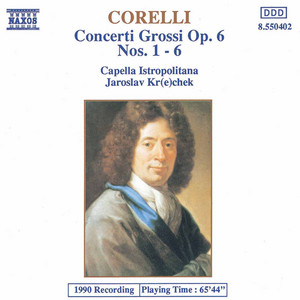 | Concerto Grosso In F Major, Op. 6, No. 6 : III. Largo | Arcangelo Corelli, Quido Holbling, Daniela Ruso, Ludovit Kanta, Anna Holbling, Capella Istropolitana | D Minor | 1 | 7A | 55 BPM | |
 | Concerto Grosso in D Major, Op. 1, No. 5: I. Largo | Pietro Locatelli, Capella Istropolitana, Jaroslav Krcek | F Major | 1 | 7B | 71 BPM | |
 | Les Contes d'Hoffmann / Act 4: Entr'acte (Barcarolle) | Jacques Offenbach, Staatskapelle Dresden, Silvio Varviso | D Major | 0 | 10B | 121 BPM | |
 | Lieder ohne Worte (Songs without Words), Book 2, Op. 30: No. 7 in E-Flat Major, Op. 30, No. 1, MWV U103 | Felix Mendelssohn, Péter Nagy | E♭ Major | 0 | 5B | 65 BPM |
- ISRC
- GBDGQ0610740
- Label
- L-M Records/RCA Records