- BPM
- 86
- Key
- F♯ Minor
- Camelot
- 11A
String Quartet No. 14 in C-Sharp Minor, Op. 131 (Arr. Mitropoulos for String Orchestra): I. Adagio, ma non troppo e molto espressivo - Live by Ludwig van Beethoven, Wiener Philharmoniker, Leonard Bernstein Song Details
"String Quartet No. 14 in C-Sharp Minor, Op. 131 (Arr. Mitropoulos for String Orchestra): I. Adagio, ma non troppo e molto espressivo - Live" by Ludwig van Beethoven, Wiener Philharmoniker, Leonard Bernstein had its release date on January 1, 1992. Since This song is still less than 10 minute long, it is still considered a pretty long duration song compared to the average song length. This song does not appear to be explicit due to the lack of the "E" tag. The song is number 1 out of 11 in Beethoven: String Quartet No.14 in C Sharp Minor, Op.131; String Quartet No.16 in F, Op.135 by Ludwig van Beethoven, Wiener Philharmoniker, Leonard Bernstein. Going off of the ISRC code of this track, we detected that the origin of this track is from Germany. String Quartet No. 14 in C-Sharp Minor, Op. 131 (Arr. Mitropoulos for String Orchestra): I. Adagio, ma non troppo e molto espressivo - Live is below average in popularity right now. In our opinion, the overall tone is not very danceable and projects negative sounds, such as being sad, depressed, or angry.
BPM and Tempo
The tempo marking of String Quartet No. 14 in C-Sharp Minor, Op. 131 (Arr. Mitropoulos for String Orchestra): I. Adagio, ma non troppo e molto espressivo - Live by Ludwig van Beethoven, Wiener Philharmoniker, Leonard Bernstein is Andante (at a walking pace), since this song has a tempo of 86 BPM. With that information, we can conclude that the song has a slow tempo. This song can go great with yoga or pilates. The time signature for this track is 4/4.
Music Key
This song is in the music key of F♯ Minor. This also means that this song has a camelot key of 11A. So, the perfect camelot match for 11A would be either 11A or 10B. While, a low energy boost can consist of either 11B or 12A. For moderate energy boost, you would use 8A and a high energy boost can either be 1A or 6A. However, if you are looking for a low energy drop, finding a song with a camelot key of 10A would be a great choice. Where 2A would give you a moderate drop, and 9A or 4A would be a high energy drop. Lastly, 2B allows you to change the mood.
Want to find the BPM and music key for other songs? Check out our BPM and Key Finder page!
- Popularity
- 31%
- Loudness
- -23.41 dB
- Acousticness
- 94%
- Danceability
- 9%
- Energy
- 8%
- Instrumentalness
- 91%
- Liveness
- 15%
- Loudness
- 61%
- Speechiness
- 4%
- Valence
- 4%
Recommendations
| Track | Artist | Key | Energy | Camelot | BPM | ||
|---|---|---|---|---|---|---|---|
 | Introduction et Rondo capriccioso, Op.28, R. 188 | Camille Saint-Saëns, Itzhak Perlman, New York Philharmonic, Zubin Mehta | A Minor | 1 | 8A | 103 BPM | |
 | Prelude in C-Sharp Minor, Op. 3, No. 2 | Ian Hobson | A Major | 1 | 11B | 104 BPM | |
 | 24 Préludes, Op. 28: 4. In E Minor | Frédéric Chopin, Maurizio Pollini | G Minor | 2 | 6A | 120 BPM | |
 | Le Sacre du Printemps - Revised version for Orchestra (published 1947) / Part 1: The Adoration of the Earth: The Augurs of Spring: Dances of the Young Girls | Igor Stravinsky, Berliner Philharmoniker, Herbert von Karajan | A♭ Minor | 3 | 1A | 104 BPM | |
 | Schoenberg: Verklärte Nacht, Op. 4: IV. Adagio (1943 Version) | Arnold Schoenberg, Daniel Barenboim, Chicago Symphony Orchestra | D Major | 1 | 10B | 82 BPM | |
 | Pictures at an Exhibition (Orch. Ravel): IX. The Hut on Chicken's Legs | Modest Mussorgsky, Wiener Philharmoniker, Gustavo Dudamel | G Major | 2 | 9B | 166 BPM | |
 | The Planets, Op. 32: II. Venus, the Bringer of Peace | Gustav Holst, Berliner Philharmoniker, Herbert von Karajan | F Minor | 0 | 4A | 85 BPM | |
 | Symphony No. 5: IV. Adagietto. Sehr langsam | Gustav Mahler, Berliner Philharmoniker, Claudio Abbado | F Major | 0 | 7B | 91 BPM | |
 | Nuages gris "Trübe Wolken", S. 199 | Franz Liszt, Krystian Zimerman | D Minor | 0 | 7A | 68 BPM | |
 | Piano Concerto in A minor, Op. 16: II. Adagio | Edvard Grieg, Krystian Zimerman, Berliner Philharmoniker, Herbert von Karajan | D♭ Major | 0 | 3B | 77 BPM | |
 | Farandole | Georges Bizet, Semyon Bychkov, Wiener Philharmoniker | G Major | 5 | 9B | 156 BPM | |
 | Haydn: Cello Concerto No. 1 in C Major, Hob. VIIb, 1: I. Moderato (Cadenza by Britten) | Franz Joseph Haydn, Mstislav Rostropovich, Academy of St. Martin in the Fields | C Major | 1 | 8B | 68 BPM | |
 | Bach, JS : Well-Tempered Clavier Book 1 : Prelude No.1 in C major BWV846 | Daniel Barenboim | C Major | 0 | 8B | 95 BPM | |
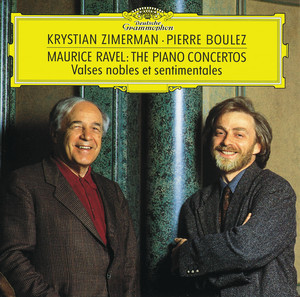 | Piano Concerto in G Major, M. 83: II. Adagio assai | Maurice Ravel, Krystian Zimerman, Cleveland Orchestra, Pierre Boulez | E Major | 0 | 12B | 74 BPM | |
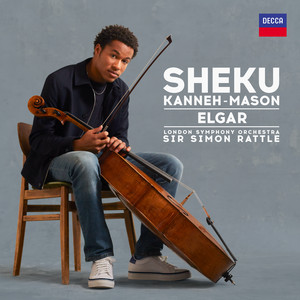 | Cello Concerto in E Minor, Op. 85: I. Adagio - Moderato | Edward Elgar, Sheku Kanneh-Mason, London Symphony Orchestra, Sir Simon Rattle | E Minor | 1 | 9A | 102 BPM | |
| Haydn: Cello Concerto No. 1 in C Major, Hob. VIIb, 1: II. Adagio (Cadenza by Britten) | Franz Joseph Haydn, Mstislav Rostropovich, Academy of St. Martin in the Fields | F Major | 1 | 7B | 124 BPM | |
 | Egmont, Op. 84: Beethoven: Egmont-Overture | Ludwig van Beethoven, Bavarian Radio Symphony Orchestra, Mariss Jansons | F Minor | 1 | 4A | 87 BPM | |
 | String Quartet No. 14 in C-Sharp Minor, Op. 131: 6. Adagio quasi un poco andante | Ludwig van Beethoven, Takács Quartet | A♭ Minor | 0 | 1A | 87 BPM | |
 | Symphony No.2 In D, Op.36: 2. Larghetto | Ludwig van Beethoven, Berliner Philharmoniker, Herbert von Karajan | D Major | 1 | 10B | 143 BPM | |
 | Peer Gynt Suite No. 1, Op. 46: I. Morning Mood | Edvard Grieg, Berliner Philharmoniker, Herbert von Karajan | E Major | 0 | 12B | 141 BPM | |
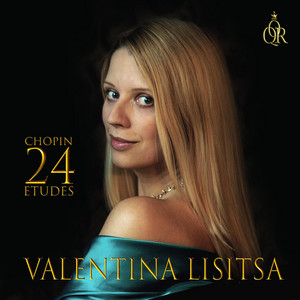 | Etude Op. 10 no. 1 in C Major | Valentina Lisitsa | C Major | 2 | 8B | 88 BPM | |
 | Piano Concerto No. 2 in F Major, Op. 102: I. Allegro | Dmitri Shostakovich, Leonard Bernstein, New York Philharmonic | F Major | 6 | 7B | 154 BPM | |
 | Etude in D-Sharp Minor, Op. 8, No. 12: Patetico - Remastered | Alexander Scriabin, Vladimir Horowitz | D♭ Minor | 3 | 12A | 72 BPM | |
 | Violin Sonata: I. Moderato assai | Leonard Bernstein, Opus Two | C Major | 1 | 8B | 117 BPM | |
 | 12 Études, Op. 10: No. 12 in C Minor "Revolutionary" | Frédéric Chopin, Maurizio Pollini | C Minor | 2 | 5A | 103 BPM |
- ISRC
- DEF057701641
- Label
- L-M Records/RCA Records