- BPM
- 142
- Key
- F Major
- Camelot
- 7B
Serenata in vano by Carl Nielsen, Sebastian Manz, David Fernandez Alonso, Marc Trénel, Dominik Manz, Lars Olaf Schaper, Deutsche Radio Philharmonie Song Details
"Serenata in vano" by Carl Nielsen, Sebastian Manz, David Fernandez Alonso, Marc Trénel, Dominik Manz, Lars Olaf Schaper, Deutsche Radio Philharmonie had its release date on September 4, 2020. Since This song is still less than 10 minute long, it is still considered a pretty long duration song compared to the average song length. This song does not appear to be explicit due to the lack of the "E" tag. There are a total of 8 in the song's album "Nielsen & Lindberg: Clarinet Concertos". In this album, this song's track order is #1. Furthermore, we believe that the track originated from Germany. Based on our statistics, Serenata in vano's popularity is not that popular right now. In our opinion, the overall tone is not very danceable and projects negative sounds, such as being sad, depressed, or angry.
BPM and Tempo
With Serenata in vano by Carl Nielsen, Sebastian Manz, David Fernandez Alonso, Marc Trénel, Dominik Manz, Lars Olaf Schaper, Deutsche Radio Philharmonie having a BPM of 142 with a half-time of 71 BPM and a double-time of 284 BPM, we would consider this track to have a Allegro (fast, quick, and bright) tempo marking. Because of this, we believe that the song has an overall fast tempo. Looking at the BPM of this song, this song might go great with jogging or cycling. The time signature for this track is 4/4.
Music Key
F Major is the music key of this track. This also means that this song has a camelot key of 7B. So, the perfect camelot match for 7B would be either 7B or 8A. While, 8B can give you a low energy boost. For moderate energy boost, you would use 4B and a high energy boost can either be 9B or 2B. Though, if you want a low energy drop, you should looking for songs with either a camelot key of 7A or 6B will give you a low energy drop, 10B would be a moderate one, and 5B or 12B would be a high energy drop. Lastly, 4A allows you to change the mood.
Want to find the BPM and music key for other songs? Check out our BPM and Key Finder page!
- Popularity
- 1%
- Loudness
- -15.799 dB
- Acousticness
- 95%
- Danceability
- 24%
- Energy
- 36%
- Instrumentalness
- 91%
- Liveness
- 20%
- Loudness
- 74%
- Speechiness
- 4%
- Valence
- 7%
Recommendations
| Track | Artist | Key | Energy | Camelot | BPM | ||
|---|---|---|---|---|---|---|---|
 | Violin Sonata in E Minor, P. 85: II. Adagio, ma non tanto (After J.S. Bach's BWV 1023) | Ottorino Respighi, Ilkka Talvi, Seattle Symphony Orchestra, Gerard Schwarz | E Minor | 0 | 9A | 105 BPM | |
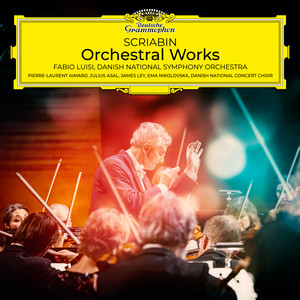 | Symphony No. 1 in E Major, Op. 26: III. Lento | Alexander Scriabin, Danish National Symphony Orchestra, Fabio Luisi | B♭ Minor | 2 | 3A | 86 BPM | |
 | Symphony in F Major, Op. 8, H. 47 "The Cotswolds": I. Allegro con brio | Gustav Holst, Ulster Orchestra, Joann Falletta | C Minor | 3 | 5A | 103 BPM | |
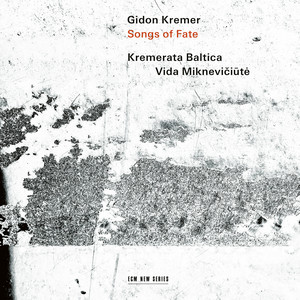 | Kujawiak | Mieczysław Weinberg, Gidon Kremer, Andrei Pushkarev, Kremerata Baltica | A Minor | 1 | 8A | 95 BPM | |
 | Pictures at an Exhibition (Orch. Ravel): VIIIb. Cum mortuis in lingua mortua | Modest Mussorgsky, Wiener Philharmoniker, Gustavo Dudamel | F♯ Major | 0 | 2B | 69 BPM | |
 | Fynsk Forar, Op. 42: "Som en græsgrøn plet" | Carl Nielsen, Esa-Pekka Salonen | C Major | 1 | 8B | 94 BPM | |
 | Valse de Concert Nr. 1 in D Major, Op. 47: Allegro | Alexander Glazunov, Beethoven Orchester Bonn, Stefan Blunier | G Minor | 2 | 6A | 174 BPM | |
 | Nielsen : Little Suite Op.1 - II Intermezzo : Allegro moderato | Carl Nielsen, The Helsinki Strings, Csaba & Gèza Szilvay | B Minor | 0 | 10A | 70 BPM | |
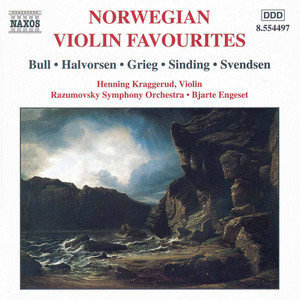 | Suite im alten Stil, Op. 10: Presto | Christian Sinding, Henning Kraggerud, Razumovsky Symphony Orchestra, Bjarte Engeset | A Minor | 2 | 8A | 170 BPM | |
 | Holberg Suite, Op. 40: V. Rigaudon (Allegro con brio) | Edvard Grieg, Gothenburg Symphony Orchestra, Neeme Järvi | E Major | 1 | 12B | 71 BPM | |
 | Serenade for strings in E Minor, Op. 20 | Edward Elgar, Academy of St. Martin in the Fields, Sir Neville Marriner | E Minor | 1 | 9A | 81 BPM | |
 | Schubert / Arr. Kreisler: Ballet Music (From Rosamunde, Op. 26, D. 797) | Franz Schubert, Vilde Frang | G Major | 1 | 9B | 86 BPM | |
 | Symphony No. 1, GMW 11: IIIa. Feierlich und gemessen, ohne zu schleppen | Gustav Mahler, Tonhalle-Orchester Zürich, Paavo Järvi | D Major | 4 | 10B | 87 BPM | |
 | The Music Makers, Op. 69: I. Introduction. Moderato | Edward Elgar, Sarah Connolly, Greg Beardsell, Bournemouth Symphony Chorus, Bournemouth Symphony Orchestra, Simon Wright | G Major | 2 | 9B | 85 BPM | |
 | Pulcinella Suite: II. Serenata | Igor Stravinsky, Tapiola Sinfonietta, Masaaki Suzuki | C Minor | 0 | 5A | 87 BPM | |
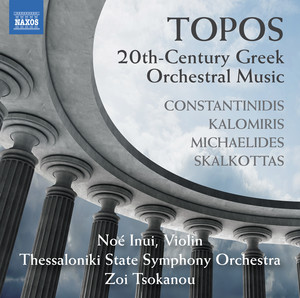 | 5 Greek Dances, AK 11b (Arr. for String Orchestra by Walter Goehr and Nikos Skalkottas): No. 5, Kleftikos. Allegro vivo | Nikos Skalkottas, Thessaloniki State Symphony Orchestra, Zoi Tsokanou | G Minor | 2 | 6A | 160 BPM | |
![Moskva, Cheryomushki (Moscow, Cheryomushki) Suite, Op. 105: II. Waltz [arr. A. Cornall for orchestra] by Dmitri Shostakovich, Rundfunk-Sinfonieorchester Berlin, Steven Sloane](https://i.scdn.co/image/ab67616d00001e02c06e905a88f5d29124ed4988) | Moskva, Cheryomushki (Moscow, Cheryomushki) Suite, Op. 105: II. Waltz [arr. A. Cornall for orchestra] | Dmitri Shostakovich, Rundfunk-Sinfonieorchester Berlin, Steven Sloane | F Major | 4 | 7B | 145 BPM | |
 | Serenade for String Orchestra in C Minor, Op. posth.: III. Allegro | Max Bruch, George Hanson, Sinfonieorchester Wuppertal | A Minor | 1 | 8A | 88 BPM | |
| Piano Concerto in F-Sharp Minor, Op. 20: IIa. Andante | Alexander Scriabin, Danish National Symphony Orchestra, Fabio Luisi | B♭ Minor | 2 | 3A | 86 BPM | |
![Epigrammák (Epigrams): No. 1, Lento [arr. L. Lencses] by Zoltán Kodály, Lajos Lencsés, Budapest Strings](https://i.scdn.co/image/ab67616d00001e02c5a574a0e9716bb5b360b95b) | Epigrammák (Epigrams): No. 1, Lento [arr. L. Lencses] | Zoltán Kodály, Lajos Lencsés, Budapest Strings | A♭ Major | 1 | 4B | 130 BPM | |
 | No. 1, The Wounded Heart | Edvard Grieg, Malmö Symphony Orchestra, Bjarte Engeset | F Minor | 0 | 4A | 77 BPM | |
 | Poulenc: Clarinet Sonata, FP 184: II. Romanza | Francis Poulenc, Sabine Meyer | G Minor | 0 | 6A | 67 BPM | |
 | String Quartet No. 12 in F major, Op. 96 - "American" B.179: 2. Lento | Antonín Dvořák, Hagen Quartett | D Minor | 1 | 7A | 88 BPM | |
 | Stille Musik: I. Walzer des Augenblicks | Valentin Silvestrov, Munich Chamber Orchestra | A Minor | 0 | 8A | 60 BPM | |
 | Symphony No. 5, Op. 50, FS 97: I. Tempo giusto | Carl Nielsen, Sir Colin Davis, London Symphony Orchestra | D Minor | 1 | 7A | 109 BPM |
- ISRC
- DES382043001
- Label
- L-M Records/RCA Records