- BPM
- 96
- Key
- E Major
- Camelot
- 12B
Who Knows Where The Time Goes by Renée Fleming, Brad Mehldau Song Details
Renée Fleming, Brad Mehldau's 'Who Knows Where The Time Goes' had a release date set for January 1, 2013. With this song being around four minutes long, at 4:25, the duration of this song is pretty average compared to other songs. This track is safe for children and doesn't appear to contain any foul language, since the "Explicit" tag was not present in this track. The song is number 6 out of 14 in Christmas In New York by Renée Fleming. In terms of popularity, Who Knows Where The Time Goes is currently not that popular. In our opinion, the overall tone is not very danceable and projects negative sounds, such as being sad, depressed, or angry.
BPM and Tempo
The tempo marking of Who Knows Where The Time Goes by Renée Fleming, Brad Mehldau is Andante (at a walking pace), since this song has a tempo of 96 BPM. With that information, we can conclude that the song has a slow tempo. The time signature for this track is 4/4.
Music Key
This song has a musical key of E Major. This also means that this song has a camelot key of 12B. So, the perfect camelot match for 12B would be either 12B or 1A. While, 1B can give you a low energy boost. For moderate energy boost, you would use 9B and a high energy boost can either be 2B or 7B. Though, if you want a low energy drop, you should looking for songs with either a camelot key of 12A or 11B will give you a low energy drop, 3B would be a moderate one, and 10B or 5B would be a high energy drop. Lastly, 9A allows you to change the mood.
Want to find the BPM and music key for other songs? Check out our BPM and Key Finder page!
- Popularity
- 14%
- Loudness
- -16.277 dB
- Acousticness
- 97%
- Danceability
- 36%
- Energy
- 11%
- Instrumentalness
- 4%
- Liveness
- 11%
- Loudness
- 73%
- Speechiness
- 3%
- Valence
- 27%
Recommendations
| Track | Artist | Key | Energy | Camelot | BPM | ||
|---|---|---|---|---|---|---|---|
 | Les chemins de l'amour, FP 106 | Francis Poulenc, Jessye Norman, Dalton Baldwin | D♭ Major | 1 | 3B | 77 BPM | |
 | La Cenerentola / Act 2: "Non più mesta" | Gioachino Rossini, William Matteuzzi, Cecilia Bartoli, Alessandro Corbelli, Enzo Dara, Michele Pertusi, Fernanda Costa, Gloria Banditelli, Coro del Teatro Comunale di Bologna, Orchestra del Teatro Comunale di Bologna, Riccardo Chailly | E Major | 3 | 12B | 137 BPM | |
 | Norma / Act I: "Casta Diva" (Arr. by Mathieu Herzog for Cello and Orchestra) | Vincenzo Bellini, Camille Thomas, Brussels Philharmonic, Mathieu Herzog | F Major | 1 | 7B | 91 BPM | |
 | Dido and Aeneas: Dido's Lament | Jessye Norman | C Minor | 2 | 5A | 89 BPM | |
 | Nulla in Mundo Pax Sincera - Arr. Edwards/Hirschfelder | Antonio Vivaldi, Jane Edwards, Choir, Geoffrey Lancaster, Gerald Keuneman, Orchestra, Ricky Edwards | E Minor | 1 | 9A | 136 BPM | |
 | Dido and Aeneas, Z. 626 / Act III: "When I Am Laid in Earth" Dido's Lamento (Arr. by Mathieu Herzog for Cello and Strings) | Henry Purcell, Camille Thomas, Brussels Philharmonic, Mathieu Herzog | G Minor | 1 | 6A | 77 BPM | |
 | Agnus Dei (based on ADAGIO for Strings) | John Barry, Samuel Barber | B♭ Minor | 0 | 3A | 71 BPM | |
 | Symphony No. 5 In C Sharp Minor: 4. Adagietto (Sehr langsam) | Gustav Mahler, Gyeonggi Philharmonic Orchestra, Shi-Yeon Sung | F Major | 0 | 7B | 82 BPM | |
 | Martha / Act 2: Last Rose of Summer | Friedrich von Flotow, Renée Fleming, English Chamber Orchestra, Jeffrey Tate | F Major | 1 | 7B | 76 BPM | |
 | Le Carnaval des Animaux, R.125: Le Cygne | Camille Saint-Saëns, Mischa Maisky, Orchestre de Paris, Semyon Bychkov | G Major | 1 | 9B | 114 BPM | |
 | Hebrew Slaves Chorus from Nabucco | The London Symphony Orchestra - The London Symphony Chorus | D♭ Major | 0 | 3B | 69 BPM | |
 | Vivaldi: Gloria in D Major, RV 589: II. Et in terra pax hominibus | Antonio Vivaldi, Choir of King's College, Cambridge, Academy of Ancient Music, Stephen Cleobury | B♭ Minor | 2 | 3A | 130 BPM | |
 | Si mes vers avaient des ailes | Reynaldo Hahn, Susan Graham | E Major | 0 | 12B | 92 BPM | |
 | Orpheo ed Euridice, Wq. 30, Act II: Dance of the Blessed Spirits | Christoph Willibald Gluck, Eugene Ormandy, Philadelphia Orchestra | D Minor | 1 | 7A | 67 BPM | |
 | Il barbiere di Siviglia / Act 1: No.2 Cavatina: "Largo al factotum" | Gioachino Rossini, Dmitri Hvorostovsky, Philharmonia Orchestra, Ion Marin | C Major | 3 | 8B | 148 BPM | |
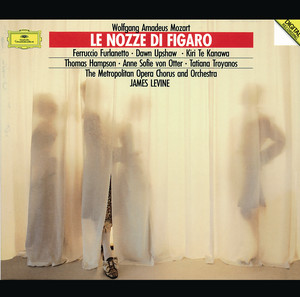 | Le nozze di Figaro, K.492 / Act 3: "Dove sono i bei momenti" | Wolfgang Amadeus Mozart, Kiri Te Kanawa, Metropolitan Opera Orchestra, James Levine | C Major | 1 | 8B | 90 BPM | |
 | Petite messe solennelle: Kyrie | Gioachino Rossini, Orchestre de chambre de Paris, Accentus, Ottavio Dantone | C Major | 0 | 8B | 120 BPM | |
 | Carmina Burana / III. Cour d'amours: "In trutina" | Carl Orff, Gundula Janowitz, Orchester der Deutschen Oper Berlin, Eugen Jochum | G Major | 0 | 9B | 89 BPM | |
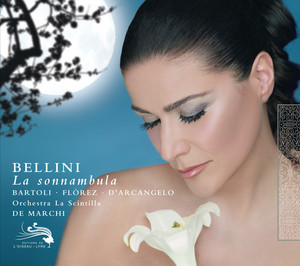 | La Sonnambula / Act 2: Ah! non credea mirarti si presto estinto, o fiore | Vincenzo Bellini, Cecilia Bartoli, Juan Diego Flórez, Orchestra La Scintilla, Alessandro De Marchi | C Major | 0 | 8B | 176 BPM | |
 | Donizetti: L'elisir d'amore, Act 2: "Una furtiva lagrima" (Nemorino) | Gaetano Donizetti, Pene Pati, Emmanuel Villaume, Orchestre National Bordeaux Aquitaine | F Major | 0 | 7B | 69 BPM | |
 | Cilèa: L'Arlesiana, Act 2: "È la solita storia del pastore" (Federico) | Francesco Cilea, Rolando Villazón, Marcello Viotti, Munich Radio Orchestra, Muenchner Rundfunkorchester | A Minor | 1 | 8A | 168 BPM | |
 | L'elisir d'amore: "Una furtiva lagrima" | Gaetano Donizetti, Benjamin Bernheim, PKF – Prague Philharmonia, Emmanuel Villaume | B♭ Minor | 1 | 3A | 78 BPM | |
 | Dido and Aeneas, Z. 626: Act III: When I am Laid in Earth | Henry Purcell, Leontyne Price, Francesco Molinari-Pradelli | G Minor | 1 | 6A | 86 BPM | |
 | Peer Gynt Suite No. 1, Op. 46. Incidental music to Peer Gynt by Ibsen: I. Morning Mood | Edvard Grieg, WDR Sinfonieorchester Köln, Eivind Aadland | B♭ Major | 0 | 6B | 68 BPM | |
 | The Bohemian Girl - Arr. by Karel Mark Chichon: I Dreamt I Dwelt in Marble Halls | Michael William Balfe, Elina Garanca, Orchestra Sinfonica Nazionale Della RAI, Karel Mark Chichon | D Major | 1 | 10B | 87 BPM |
- ISRC
- This song does not have an ISRC.
- Label
- L-M Records/RCA Records