- BPM
- 72
- Key
- A♭ Major
- Camelot
- 4B
Variations on a Theme by Haydn, Op. 56a: Finale: Andante by Johannes Brahms, London Symphony Orchestra, Eugen Jochum Song Details
"Variations on a Theme by Haydn, Op. 56a: Finale: Andante" by Johannes Brahms, London Symphony Orchestra, Eugen Jochum had its release date on January 1, 1975. With this song being around four minutes long, at 3:43, the duration of this song is pretty average compared to other songs. This track is safe for children and doesn't appear to contain any foul language, since the "Explicit" tag was not present in this track. The song is number 25 out of 25 in Elgar: Variations On An Original Theme, Op. 36 "Enigma" / Brahms: Variations On A Theme By Haydn, Op.56a by London Symphony Orchestra, Eugen Jochum. Going off of the ISRC code of this track, we detected that the origin of this track is from Germany. Variations on a Theme by Haydn, Op. 56a: Finale: Andante is not that popular right now. In our opinion, the overall tone is not very danceable and projects negative sounds, such as being sad, depressed, or angry.
BPM and Tempo
The tempo marking of Variations on a Theme by Haydn, Op. 56a: Finale: Andante by Johannes Brahms, London Symphony Orchestra, Eugen Jochum is Adagio (slowly with great expression), since this song has a tempo of 72 BPM. With that information, we can conclude that the song has a slow tempo. The time signature for this track is 3/4.
Music Key
This song is in the music key of A♭ Major. This also means that this song has a camelot key of 4B. So, the perfect camelot match for 4B would be either 4B or 5A. While, 5B can give you a low energy boost. For moderate energy boost, you would use 1B and a high energy boost can either be 6B or 11B. Though, if you want a low energy drop, you should looking for songs with either a camelot key of 4A or 3B will give you a low energy drop, 7B would be a moderate one, and 2B or 9B would be a high energy drop. Lastly, 1A allows you to change the mood.
Want to find the BPM and music key for other songs? Check out our BPM and Key Finder page!
- Popularity
- 3%
- Loudness
- -29.186 dB
- Acousticness
- 94%
- Danceability
- 15%
- Energy
- 0%
- Instrumentalness
- 86%
- Liveness
- 8%
- Loudness
- 51%
- Speechiness
- 4%
- Valence
- 13%
Recommendations
| Track | Artist | Key | Energy | Camelot | BPM | ||
|---|---|---|---|---|---|---|---|
 | Rachmaninov: 10 Preludes, Op. 23: No. 5 in G Minor | Sergei Rachmaninoff, Nikolai Lugansky | G Minor | 1 | 6A | 113 BPM | |
 | Slavonic Dance for Four Hands in E Minor, Op. 72/2: Dumka (Allegretto grazioso) | Antonín Dvořák, Khatia Buniatishvili | C Major | 0 | 8B | 77 BPM | |
 | Souvenir d'un lieu cher, Op. 42: III. Mélodie (Ed. Herrmann) | Pyotr Ilyich Tchaikovsky, Daniel Lozakovich, Stanislav Soloviev | E♭ Major | 1 | 5B | 178 BPM | |
 | Carmen Suite No. 1 (Arr. E. Guiraud): IV. Séguedille | Georges Bizet, Orquestra Simfònica de Barcelona i Nacional de Catalunya, Pablo González | G Minor | 0 | 6A | 66 BPM | |
 | Bruch : Violin Concerto No.1 in G minor Op.26 : III Finale - Allegro energico | Max Bruch, Maxim Vengerov, Kurt Masur, Gewandhausorchester Leipzig | G Major | 2 | 9B | 90 BPM | |
 | Les Contes d'Hoffmann / Act 4: Entr'acte (Barcarolle) | Jacques Offenbach, Staatskapelle Dresden, Silvio Varviso | D Major | 0 | 10B | 121 BPM | |
 | Brahms: Violin Concerto in D Major, Op. 77: III. Allegro giocoso, ma non troppo vivace | Johannes Brahms, Itzhak Perlman, Carlo Maria Giulini, Chicago Symphony Orchestra | G Major | 3 | 9B | 87 BPM | |
 | Fauré: Élégie in C Minor, Op. 24 | Gabriel Fauré, Jacqueline du Pré, Gerald Moore | A♭ Major | 0 | 4B | 56 BPM | |
 | Flute Sonata in E-Flat Major, BWV 1031: II. Siciliano (Arr. for Piano by Ignaz Friedman) | Johann Sebastian Bach, Joseph Banowetz | G Minor | 0 | 6A | 73 BPM | |
 | Carmen Variations | Vladimir Horowitz | E Major | 2 | 12B | 148 BPM | |
 | Violin Sonata No. 5 in F Major, Op. 24 "Spring": 1. Allegro | Ludwig van Beethoven, Itzhak Perlman, Vladimir Ashkenazy | C Major | 2 | 8B | 152 BPM | |
 | Symphony No. 5: IV. Adagietto. Sehr langsam | Gustav Mahler, Wiener Philharmoniker, Pierre Boulez | F Major | 0 | 7B | 87 BPM | |
 | The Lark | Mikhail Glinka, Evgeny Kissin | B♭ Minor | 0 | 3A | 96 BPM | |
 | La Traviata / Act 1: Prelude | Giuseppe Verdi, Bavarian State Orchestra, Carlos Kleiber | B Major | 0 | 1B | 131 BPM | |
 | Cello Sonata No. 1 in E Minor, Op. 38: II. Allegretto quasi menuetto | Johannes Brahms, Maria Kliegel, Kristin Merscher | A Minor | 0 | 8A | 104 BPM | |
![Organ Sonata No. 4, BWV 528: II. Andante [Adagio] (Transcr. by August Stradal) by Johann Sebastian Bach, Víkingur Ólafsson](https://i.scdn.co/image/ab67616d00001e02369f6761d1cccba9a34f05cf) | Organ Sonata No. 4, BWV 528: II. Andante [Adagio] (Transcr. by August Stradal) | Johann Sebastian Bach, Víkingur Ólafsson | B Minor | 0 | 10A | 71 BPM | |
 | Lyric Pieces, Book 9, Op. 68: Badnlat (Cradle Song) | Edvard Grieg, Einar Steen-Nøkleberg | B♭ Major | 0 | 6B | 72 BPM | |
 | Schluss | Fanny Mendelssohn, Heather Schmidt | E Major | 1 | 12B | 87 BPM | |
 | 12 Klavierstücke für kleine und große Kinder, Op. 85: No. 12, Abendlied (Arr. Rot for Cello and Orchestra) | Robert Schumann, Kian Soltani, Camerata Salzburg, Gregory Ahss | E♭ Minor | 2 | 2A | 81 BPM | |
 | Ständchen in D Minor (After Schubert), S. 560 | Franz Liszt, Lise de la Salle | D Major | 0 | 10B | 76 BPM | |
 | Romeo and Juliette, Op. 64 (Arr. for Viola and Piano by Vadim Borisovsky, Orchestration for Viola and String Orchestra by François Vallières): Introduction | Sergei Prokofiev, Elvira Misbakhova, I Musici de Montréal, Jean-François Rivest | D Major | 1 | 10B | 99 BPM | |
 | Pelléas et Mélisande Suite, Op. 80: III. Sicilienne. Allegretto molto moderato | Gabriel Fauré, Berliner Philharmoniker, Daniel Barenboim | E♭ Major | 0 | 5B | 56 BPM | |
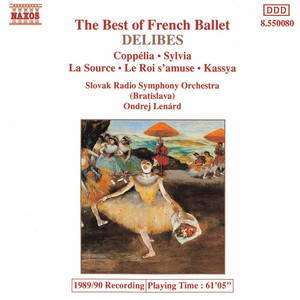 | Le roi s'amuse: Pavane | Léo Delibes, Slovak Philharmonic, Ondrej Lenard | B♭ Major | 0 | 6B | 91 BPM | |
 | Holberg Suite, Op. 40: II. Sarabande (Andante) | Edvard Grieg, Gothenburg Symphony Orchestra, Neeme Järvi | A Major | 1 | 11B | 87 BPM | |
 | Egmont, Op. 84: Overture | Ludwig van Beethoven, Madeleine Pierard, Claus Obalski, New Zealand Symphony Orchestra, James Judd | F Minor | 1 | 4A | 173 BPM |
- ISRC
- DEF057504530
- Label
- L-M Records/RCA Records