- BPM
- 129
- Key
- A♭ Major
- Camelot
- 4B
Duparc: Extase by Henri Duparc, Elsa Dreisig Song Details
"Duparc: Extase" by Henri Duparc, Elsa Dreisig had its release date on January 17, 2020. With this song being around four minutes long, at 3:37, the duration of this song is pretty average compared to other songs. This track is safe for children and doesn't appear to contain any foul language, since the "Explicit" tag was not present in this track. The track order of this song in Elsa Dreisig, Jonathan Ware's "Morgen" album is number 13 out of 21. On top of that, United Kingdom appears to be the country where this track was created. Based on our statistics, Duparc: Extase's popularity is not that popular right now. In our opinion, the overall tone is not very danceable and projects negative sounds, such as being sad, depressed, or angry.
BPM and Tempo
We consider the tempo marking of Duparc: Extase by Henri Duparc, Elsa Dreisig to be Allegro (fast, quick, and bright) because the track has a tempo of 129 BPM, a half-time of 64BPM, and a double-time of 258 BPM. Based on that, the speed of the song's tempo is fast. Activities such as, walking, can go well with this song. The time signature for this track is 3/4.
Music Key
This song is in the music key of A♭ Major. This also means that this song has a camelot key of 4B. So, the perfect camelot match for 4B would be either 4B or 5A. While, 5B can give you a low energy boost. For moderate energy boost, you would use 1B and a high energy boost can either be 6B or 11B. Though, if you want a low energy drop, you should looking for songs with either a camelot key of 4A or 3B will give you a low energy drop, 7B would be a moderate one, and 2B or 9B would be a high energy drop. Lastly, 1A allows you to change the mood.
Want to find the BPM and music key for other songs? Check out our BPM and Key Finder page!
- Popularity
- 1%
- Loudness
- -27.59 dB
- Acousticness
- 100%
- Danceability
- 27%
- Energy
- 1%
- Instrumentalness
- 92%
- Liveness
- 10%
- Loudness
- 54%
- Speechiness
- 4%
- Valence
- 4%
Recommendations
| Track | Artist | Key | Energy | Camelot | BPM | ||
|---|---|---|---|---|---|---|---|
 | Stabat Mater, Op. 58: VII. Virgo virginum praeclara (Largo) | Antonín Dvořák, Philippe Herreweghe, Collegium Vocale Gent, Royal Flemish Philharmonic | B♭ Major | 2 | 6B | 88 BPM | |
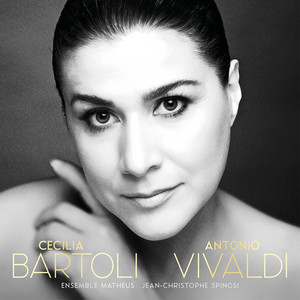 | Il Giustino, RV 717 / Act 2: "Vedrò con mio diletto" | Antonio Vivaldi, Cecilia Bartoli, Ensemble Matheus, Jean-Christophe Spinosi | B Minor | 1 | 10A | 110 BPM | |
 | Duparc: L'invitation au voyage | Henri Duparc, Victoria de los Ángeles, Georges Prêtre, Orchestre De La Société Des Concerts Du Conservatoire | C Minor | 1 | 5A | 139 BPM | |
 | Stabat Mater, RV 621: Eja Mater - Arr. for Voice & Piano | Antonio Vivaldi, Théophile Alexandre, Guillaume Vincent | B Minor | 0 | 10A | 64 BPM | |
 | Concerto for Violin & Orchestra in D Major, Op. 35: II. Romance. Andante | Erich Wolfgang Korngold, Tassilo Probst, Thessaloniki State Symphony Orchestra, Daniel Geiss | G Major | 1 | 9B | 66 BPM | |
 | À Chloris (Transc. Mayer for Oboe and Piano) | Reynaldo Hahn, Albrecht Mayer, Kimiko Imani | E Major | 1 | 12B | 66 BPM | |
 | Cello Sonata in A Minor: III. Adagio | Henriette Bosmans, Raphaela Gromes, Julian Riem | C Major | 1 | 8B | 69 BPM | |
 | 4 Sketches, Op. 15: III. Dreaming | Amy Beach, Raphaela Gromes, Julian Riem | F Major | 0 | 7B | 93 BPM | |
 | Reflection No. 2 | Camille Thomas, Julien Brocal | G Major | 1 | 9B | 66 BPM | |
 | El cant dels ocells (Version for Cello & String Quartet) | Pau Casals, Ofra Harnoy, Orford String Quartet | E♭ Minor | 0 | 2A | 87 BPM | |
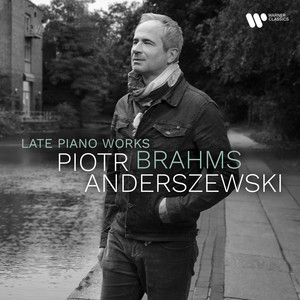 | Brahms: 6 Piano Pieces, Op. 118: No. 2, Intermezzo in A Major | Johannes Brahms, Piotr Anderszewski | G Major | 1 | 9B | 66 BPM | |
 | Dvořák: Rusalka, Op. 114, B. 203, Act 1: Song to the Moon | Antonín Dvořák, Edgar Moreau, Jérémie Moreau | F♯ Major | 0 | 2B | 138 BPM | |
 | Berlioz: Les nuits d'été, Op. 7, H 81b: I. Villanelle, H 82b | Hector Berlioz, Véronique Gens, Louis Langrée, Orchestre De L'Opéra National De Lyon | A Major | 1 | 11B | 134 BPM | |
 | Ravel: 5 Mélodies populaires grecques, M. A 5: No. 4, Chanson des cueilleuses de lentisques | Maurice Ravel, Sabine Devieilhe, Alexandre Tharaud | A Major | 0 | 11B | 71 BPM | |
 | Strauss, R: 4 Lieder, Op. 27: No. 4, Morgen! (Version with Orchestra) | Richard Strauss, Elisabeth Schwarzkopf, George Szell, London Symphony Orchestra | G Major | 1 | 9B | 75 BPM | |
 | 5 Pieces for 2 Violins & Piano (After D. Shostakovich): No. 1, Prelude | Lev Atovmyan, Rudens Turku, Lena Neudauer, Yumiko Urabe | D Minor | 1 | 7A | 119 BPM | |
 | La Damnation de Faust, Op. 24, H 111 / Pt. 1: Scène 1. "Le vieil hiver a fait place au printemps" | Hector Berlioz, Kenneth Riegel, Chicago Symphony Orchestra, Sir Georg Solti | G Major | 1 | 9B | 75 BPM | |
 | Soir - Matin, Op. 76: I. Soir. Andante cantabile | Mel Bonis, Trio Wanderer | G Major | 1 | 9B | 66 BPM | |
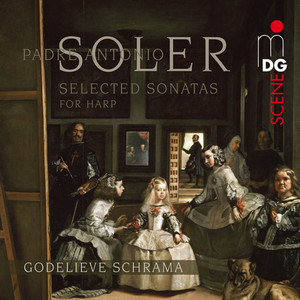 | Harpsichord Sonata No. 18: Cantabile (arr. for Harp) | Antonio Soler, Godelieve Schrama | C Minor | 1 | 5A | 106 BPM | |
 | 7 Chansons grises: No. 5, L'heure exquise | Reynaldo Hahn, Anne Sofie von Otter, Bengt Forsberg | B♭ Major | 0 | 6B | 67 BPM | |
 | Fantasiestücke, Op. 12: Des Abends | Robert Schumann, Tanguy de Williencourt | A Major | 1 | 11B | 87 BPM | |
 | Petite messe solennelle: Kyrie | Gioachino Rossini, Orchestre de chambre de Paris, Accentus, Ottavio Dantone | C Major | 0 | 8B | 120 BPM | |
 | Silent Songs / 11 Songs: No. 7, The Isle | Valentin Silvestrov, Hélène Grimaud, Konstantin Krimmel | E♭ Major | 0 | 5B | 85 BPM | |
 | Ein deutsches Requiem, Op. 45: V. Soprano and Chorus. Ihr habt nun Traurigkeit | Johannes Brahms, Raphael Pichon, Sabine Devieilhe, Ensemble Pygmalion | G Major | 1 | 9B | 127 BPM | |
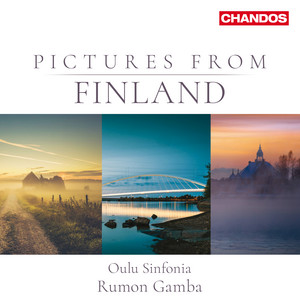 | Pastoraalisarja, Op. 34: III. Legenda | Leevi Madetoja, Oulu Sinfonia, Rumon Gamba | A Minor | 0 | 8A | 75 BPM |
- ISRC
- GBAYC1902261
- Label
- L-M Records/RCA Records