- BPM
- 74
- Key
- D Minor
- Camelot
- 7A
Fountains Of Rome, P. 106: 4. The Villa Medici Fountain At Sunset by Ottorino Respighi, Berliner Philharmoniker, Herbert von Karajan Song Details
"Fountains Of Rome, P. 106: 4. The Villa Medici Fountain At Sunset" by Ottorino Respighi, Berliner Philharmoniker, Herbert von Karajan had its release date on January 1, 1996. This song is about six minutes long, preciously at 5:53, making this song fairly long compared to other songs. There are a total of 18 in the song's album "Respighi: The Fountains of Rome; The Pines of Rome; Ancient Airs and Dances - Suite III / Boccherini: Quintettino / Albinoni: Adagio in G Minor". In this album, this song's track order is #4. Fountains Of Rome, P. 106: 4. The Villa Medici Fountain At Sunset is not that popular right now. In our opinion, the overall tone is not very danceable and projects negative sounds, such as being sad, depressed, or angry.
BPM and Tempo
With Fountains Of Rome, P. 106: 4. The Villa Medici Fountain At Sunset by Ottorino Respighi, Berliner Philharmoniker, Herbert von Karajan having a BPM of 74 with a half-time of 37 BPM and a double-time of 148 BPM, we would consider this track to have a Adagio (slowly with great expression) tempo marking. Because of this, we believe that the song has an overall slow tempo. The time signature for this track is 3/4.
Music Key
This song has a musical key of D Minor. Which also means that the camelot key for this song is 7A. So, the perfect camelot match for 7A would be either 7A or 6B. While, a low energy boost can consist of either 7B or 8A. For moderate energy boost, you would use 4A and a high energy boost can either be 9A or 2A. However, if you are looking for a low energy drop, finding a song with a camelot key of 6A would be a great choice. Where 10A would give you a moderate drop, and 5A or 12A would be a high energy drop. Lastly, 10B allows you to change the mood.
Want to find the BPM and music key for other songs? Check out our BPM and Key Finder page!
- Popularity
- 15%
- Loudness
- -36.423 dB
- Acousticness
- 93%
- Danceability
- 7%
- Energy
- 2%
- Instrumentalness
- 27%
- Liveness
- 10%
- Loudness
- 39%
- Speechiness
- 4%
- Valence
- 3%
Recommendations
| Track | Artist | Key | Energy | Camelot | BPM | ||
|---|---|---|---|---|---|---|---|
 | Symphony No. 3 in C Minor, Op. 78 "Organ": II. Allegro moderato | Camille Saint-Saëns, Eugene Ormandy, Philadelphia Orchestra | F Minor | 1 | 4A | 84 BPM | |
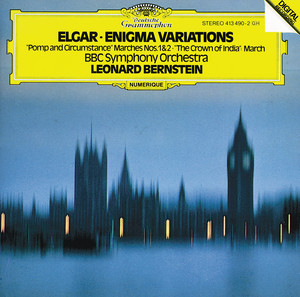 | Enigma Variations, Op. 36: Var. 5. Moderato "R.P.A." | Edward Elgar, BBC Symphony Orchestra, Leonard Bernstein | C Minor | 0 | 5A | 83 BPM | |
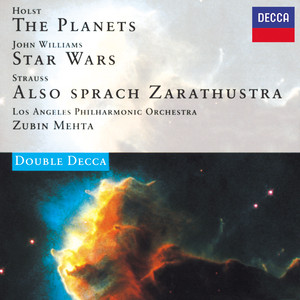 | The Planets, Op. 32: 2. Venus, the Bringer of Peace | Gustav Holst, Los Angeles Philharmonic, Zubin Mehta | F Minor | 0 | 4A | 88 BPM | |
 | Taras Bulba: 3. The Prophecy And The Death Of Taras Bulba | Leoš Janáček, Bavarian Radio Symphony Orchestra, Rafael Kubelik | D♭ Major | 3 | 3B | 132 BPM | |
 | Symphonic Metamorphoses on Themes of Carl Maria von Weber: IV. Marsch | Paul Hindemith, Leonard Bernstein, New York Philharmonic | B♭ Major | 3 | 6B | 77 BPM | |
 | Pictures At An Exhibition: Gnomus | Modest Mussorgsky, Chicago Symphony Orchestra, Carlo Maria Giulini | B Major | 0 | 1B | 99 BPM | |
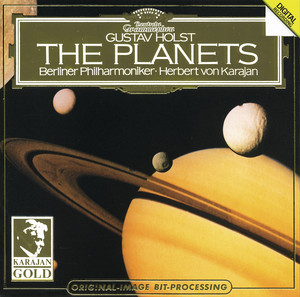 | The Planets, Op. 32: VI. Uranus, the Magician | Gustav Holst, Berliner Philharmoniker, Herbert von Karajan | C Major | 3 | 8B | 110 BPM | |
 | Variations On A Rococo Theme, Op.33, TH.57: Tema: Moderato semplice | Pyotr Ilyich Tchaikovsky, Mstislav Rostropovich, Berliner Philharmoniker, Herbert von Karajan | A Major | 0 | 11B | 94 BPM | |
 | Symphony No. 7 in E Minor: 3. Scherzo | Gustav Mahler, Berliner Philharmoniker, Claudio Abbado | G Minor | 0 | 6A | 91 BPM | |
 | Piano Concerto No. 1 in D-Flat Major, Op. 10: I. Allegro brioso | Sergei Prokofiev, Evgeny Kissin, Berliner Philharmoniker, Claudio Abbado | D♭ Major | 1 | 3B | 66 BPM | |
 | Ancient Airs & Dances, Suite III, P. 172: IV. Passacaglia (Roncalli) | Ottorino Respighi, Berliner Philharmoniker, Herbert von Karajan | G Minor | 1 | 6A | 119 BPM | |
 | Symphony No. 9: IVf. Fliessender, doch durchaus nicht eilend | Gustav Mahler, Berliner Philharmoniker, Herbert von Karajan | B Major | 3 | 1B | 72 BPM | |
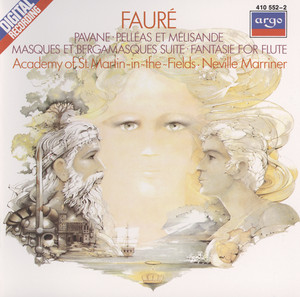 | Pelléas et Mélisande, Op.80: 3. Sicilienne | Gabriel Fauré, Academy of St. Martin in the Fields, Sir Neville Marriner | G Minor | 0 | 6A | 111 BPM | |
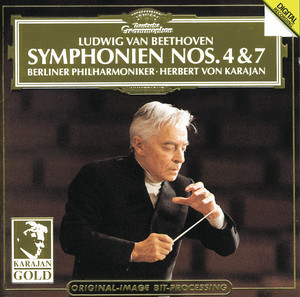 | Symphony No.4 In B Flat, Op.60: 4. Allegro ma non troppo | Ludwig van Beethoven, Berliner Philharmoniker, Herbert von Karajan | B♭ Major | 2 | 6B | 135 BPM | |
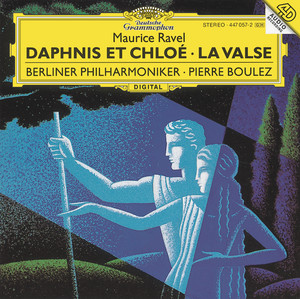 | Daphnis et Chloé, M. 57, Pt. 1: VI. Nocturne. Danse lente et mystérieuse des Nymphes | Maurice Ravel, Berliner Philharmoniker, Pierre Boulez | F Minor | 0 | 4A | 78 BPM | |
 | Symphony No. 8 in C Minor, Op. 65: V. Allegretto | Dmitri Shostakovich, Berliner Philharmoniker, Kirill Petrenko | C Major | 1 | 8B | 93 BPM | |
 | Symphony No. 2, Op. 9, "Antar": I. Largo - Allegro - Largo - Allegretto - Adagio - Allegretto - Largo | Nikolai Rimsky-Korsakov, St. Petersburg State Symphony Orchestra, Andre Anichanov | F♯ Major | 0 | 2B | 71 BPM | |
 | Le Sacre du Printemps - Revised version for Orchestra (published 1947) / Part 1: The Adoration of the Earth: Ritual of the Rival Tribes | Igor Stravinsky, Berliner Philharmoniker, Herbert von Karajan | C Minor | 4 | 5A | 82 BPM | |
 | Le rouet d'Omphale, Op. 31: Le Rouet d'Omphale | Camille Saint-Saëns, Slovak Radio Symphony Orchestra, Stephen Gunzenhauser | D Major | 0 | 10B | 121 BPM | |
 | L'Arlésienne Suite No.1: Adagietto | Georges Bizet, Berliner Philharmoniker, Herbert von Karajan | F Major | 0 | 7B | 112 BPM | |
| Variations On An Original Theme, Op.36 "Enigma": 11. G.R.S. (Allegro di molto) | Edward Elgar, BBC Symphony Orchestra, Leonard Bernstein | D Major | 3 | 10B | 85 BPM | |
 | Suite No. 1, P. 109: IV. Passo Mezzo E Mascherada: Allegro Vivo | Ottorino Respighi, RTÉ National Symphony Orchestra | D Major | 2 | 10B | 137 BPM | |
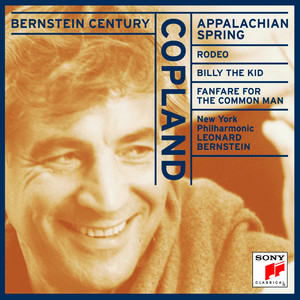 | 4 Dance Episodes from Rodeo: II. Corral Nocturne | Aaron Copland, Leonard Bernstein, New York Philharmonic | C Major | 0 | 8B | 92 BPM | |
 | Symphony No. 5 in E Minor, Op. 64: IV. Finale. Andante maestoso – Allegro vivace – Moderato assai e molto maestoso – Presto – Molto meno mosso | Pyotr Ilyich Tchaikovsky, Berliner Philharmoniker, Kirill Petrenko | E Major | 3 | 12B | 141 BPM | |
 | Ancient Airs & Dances, Suite I, P. 109: I. Balletto detto "Il conte Orlando" (Molinaro) | Ottorino Respighi, Boston Symphony Orchestra, Seiji Ozawa | D Major | 1 | 10B | 120 BPM |
- ISRC
- This song does not have an ISRC.
- Label
- L-M Records/RCA Records