- BPM
- 200
- Key
- D♭ Major
- Camelot
- 3B
Prelude, Fugue and Riffs: Fugue by Leonard Bernstein, Anita Bohlin, Mårten Landström, Swedish Wind Ensemble, Christian Lindberg Song Details
"Prelude, Fugue and Riffs: Fugue" by Leonard Bernstein, Anita Bohlin, Mårten Landström, Swedish Wind Ensemble, Christian Lindberg had its release date on January 1, 2007. With This song being less than two minutes long, at 1:42, we are fairly confident that this song is not explicit and is safe for all ages. Based on the duration of this song, this song duration is much smaller than the average song duration. The song is number 2 out of 14 in Baadsvik, Oystein: Prelude, Fnugg and Riffs by Øystein Baadsvik, Christian Lindberg. Going off of the ISRC code of this track, we detected that the origin of this track is from Sweden. The popularity of Prelude, Fugue and Riffs: Fugue is currently unknown right now. Although the tone can be danceable to some, this track does projects more of a negative sound rather than a postive one.
BPM and Tempo
The tempo marking of Prelude, Fugue and Riffs: Fugue by Leonard Bernstein, Anita Bohlin, Mårten Landström, Swedish Wind Ensemble, Christian Lindberg is Presto (very, very fast), since this song has a tempo of 200 BPM. The time signature for this track is 4/4.
Music Key
This song is in the music key of D♭ Major. This also means that this song has a camelot key of 3B. So, the perfect camelot match for 3B would be either 3B or 4A. While, 4B can give you a low energy boost. For moderate energy boost, you would use 12B and a high energy boost can either be 5B or 10B. Though, if you want a low energy drop, you should looking for songs with either a camelot key of 3A or 2B will give you a low energy drop, 6B would be a moderate one, and 1B or 8B would be a high energy drop. Lastly, 12A allows you to change the mood.
Want to find the BPM and music key for other songs? Check out our BPM and Key Finder page!
- Popularity
- 0%
- Loudness
- -25.061 dB
- Acousticness
- 25%
- Danceability
- 44%
- Energy
- 0%
- Instrumentalness
- 0%
- Liveness
- 8%
- Loudness
- 58%
- Speechiness
- 57%
- Valence
- 0%
Recommendations
| Track | Artist | Key | Energy | Camelot | BPM | ||
|---|---|---|---|---|---|---|---|
 | Poulenc: Concerto for Two Pianos in D Minor, FP 61: I. Allegro ma non troppo | Francis Poulenc, James Conlon, Rotterdam Philharmonic Orchestra | E♭ Major | 1 | 5B | 103 BPM | |
 | Symphony No. 3 In C Minor, Op. 78 "Organ Symphony": 2. Allegro moderato - Presto - Allegro moderato - Maestoso - Più allegro - Molto allegro | Camille Saint-Saëns, Simon Preston, Berliner Philharmoniker, James Levine | F Minor | 2 | 4A | 117 BPM | |
 | Pictures at an Exhibition (Orch. Ravel): IX. The Hut on Chicken's Legs | Modest Mussorgsky, Wiener Philharmoniker, Gustavo Dudamel | G Major | 2 | 9B | 166 BPM | |
 | Symphony No. 1 in D Major: III. Feierlich und gemessen, ohne zu schleppen - Live | Gustav Mahler, Berliner Philharmoniker, Claudio Abbado | G Minor | 0 | 6A | 56 BPM | |
 | L'Apprenti sorcier | Paul Dukas, Berliner Philharmoniker, James Levine | F Minor | 4 | 4A | 125 BPM | |
 | Symphony No. 2 in D Major, Op. 43: I. Allegretto | Jean Sibelius, Leonard Bernstein, New York Philharmonic | B♭ Major | 3 | 6B | 98 BPM | |
 | Serenade in B flat, K.361 "Gran partita": 3. Adagio | Wolfgang Amadeus Mozart, Academy of St. Martin in the Fields Wind Ensemble, Sir Neville Marriner | E♭ Major | 4 | 5B | 89 BPM | |
 | The Planets, Op. 32: 4. Jupiter, the Bringer of Jollity | Gustav Holst, Berliner Philharmoniker, Herbert von Karajan | G Minor | 3 | 6A | 140 BPM | |
 | Requiem, K. 626 (Ed. Beyer/Levin): IIIc. Rex tremendae - Live | Wolfgang Amadeus Mozart, Berliner Philharmoniker, Claudio Abbado, Swedish Radio Choir, Kay Johannsen | G Minor | 3 | 6A | 108 BPM | |
 | Piano Concerto No. 2 in C Minor, Op. 18: I. Moderato | Sergei Rachmaninoff, Arthur Rubinstein, Fritz Reiner | C Minor | 1 | 5A | 71 BPM | |
 | Respighi: Pini di Roma, P. 141: IV. I pini della Via Appia | Ottorino Respighi, Riccardo Muti, Philadelphia Orchestra | B Major | 2 | 1B | 87 BPM | |
 | Polovetsian Dances from Prince Igor: Moderato alla breve | Alexander Borodin, George Szell, The Cleveland Orchestra | A Major | 2 | 11B | 108 BPM | |
 | Mass: No. 24, Trope. I Believe in God | Leonard Bernstein, Morgan State University Choir, Baltimore Symphony Orchestra, Marin Alsop | C Minor | 3 | 5A | 86 BPM | |
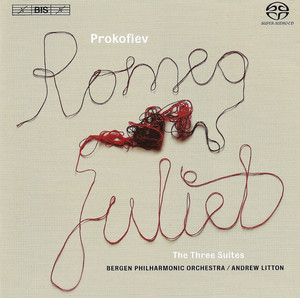 | Romeo and Juliet Suite No. 2, Op. 64ter: VII. Romeo at Juliet's Grave | Sergei Prokofiev, Bergen Philharmonic Orchestra, Andrew Litton | D Major | 1 | 10B | 104 BPM | |
![Etudes symphoniques (Symphonic Etudes), Op. 13, Adagio and Allegro brillante: Variation 11 [arr. P.I. Tchaikovsky for orchestra] by Robert Schumann, Seattle Symphony Orchestra, Gerard Schwarz](https://i.scdn.co/image/ab67616d00001e029057c124b554163ef1edd618) | Etudes symphoniques (Symphonic Etudes), Op. 13, Adagio and Allegro brillante: Variation 11 [arr. P.I. Tchaikovsky for orchestra] | Robert Schumann, Seattle Symphony Orchestra, Gerard Schwarz | A Minor | 0 | 8A | 104 BPM | |
 | The Gadfly, Op. 97 (Reconstructed by M. Fitz-Gerald): Overture | Mark Fitz-Gerald, Deutsche Staatsphilharmonie Rheinland-Pfalz | C Minor | 3 | 5A | 117 BPM | |
 | Lullaby for string orchestra | George Gershwin, The Cleveland Orchestra, Riccardo Chailly | G Major | 0 | 9B | 94 BPM | |
 | West Side Story Symphonic Dances: VI. Meeting Scene - Live | Leonard Bernstein, Los Angeles Philharmonic | A Minor | 0 | 8A | 92 BPM | |
 | Also sprach Zarathustra, Op.30, TrV 176: Prelude (Sonnenaufgang) | Richard Strauss, Berliner Philharmoniker, Herbert von Karajan | C Major | 3 | 8B | 72 BPM | |
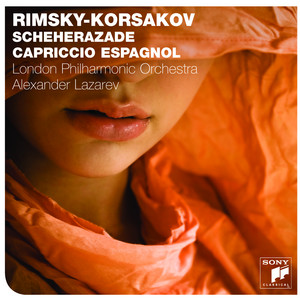 | Scheherazade: The Young Prince | Nikolai Rimsky-Korsakov, Lars Hjalmar Joakim | G Major | 1 | 9B | 91 BPM | |
 | Peer Gynt Suite No. 1, Op. 46: II. Åse's Death | Edvard Grieg, Wiener Philharmoniker, Zubin Mehta | G Major | 0 | 9B | 99 BPM | |
 | VIII. Romance | Dmitri Shostakovich, Ukraine National Symphony Orchestra, Theodore Kuchar | D♭ Major | 0 | 3B | 138 BPM | |
 | Tristan und Isolde, Act I: Prelude | Richard Wagner, Staatskapelle Dresden, Carlos Kleiber | A Major | 1 | 11B | 82 BPM | |
 | A Midsummer Night's Dream: Nocturne | Felix Mendelssohn, Eirian James, Judith Howarth, Jamie Laredo, Scottish Chamber Orchestra | E Major | 0 | 12B | 151 BPM | |
| "West Side Story" - Symphonic Dances: IX. Finale - Live | Leonard Bernstein, Los Angeles Philharmonic | C Major | 0 | 8B | 170 BPM |
- ISRC
- SEAEQ0725020
- Label
- L-M Records/RCA Records