- BPM
- 88
- Key
- D Major
- Camelot
- 10B
String Sextet No. 1, Op. 18: II. Andante ma moderato by Johannes Brahms, Belcea Quartet, Tabea Zimmermann, Jean-Guihen Queyras Song Details
"String Sextet No. 1, Op. 18: II. Andante ma moderato" by Johannes Brahms, Belcea Quartet, Tabea Zimmermann, Jean-Guihen Queyras had its release date on March 11, 2022. Since This song is still less than 10 minute long, it is still considered a pretty long duration song compared to the average song length. This song does not appear to be explicit due to the lack of the "E" tag. The song is number 2 out of 8 in Brahms: String Sextets by Johannes Brahms, Belcea Quartet, Tabea Zimmermann, Jean-Guihen Queyras. Going off of the ISRC code of this track, we detected that the origin of this track is from France. String Sextet No. 1, Op. 18: II. Andante ma moderato is not that popular right now. In our opinion, the overall tone is not very danceable and projects negative sounds, such as being sad, depressed, or angry.
BPM and Tempo
The tempo marking of String Sextet No. 1, Op. 18: II. Andante ma moderato by Johannes Brahms, Belcea Quartet, Tabea Zimmermann, Jean-Guihen Queyras is Andante (at a walking pace), since this song has a tempo of 88 BPM. With that information, we can conclude that the song has a slow tempo. This song can go great with yoga or pilates. The time signature for this track is 4/4.
Music Key
This song is in the music key of D Major. This also means that this song has a camelot key of 10B. So, the perfect camelot match for 10B would be either 10B or 11A. While, 11B can give you a low energy boost. For moderate energy boost, you would use 7B and a high energy boost can either be 12B or 5B. Though, if you want a low energy drop, you should looking for songs with either a camelot key of 10A or 9B will give you a low energy drop, 1B would be a moderate one, and 8B or 3B would be a high energy drop. Lastly, 7A allows you to change the mood.
Want to find the BPM and music key for other songs? Check out our BPM and Key Finder page!
- Popularity
- 18%
- Loudness
- -21.697 dB
- Acousticness
- 93%
- Danceability
- 17%
- Energy
- 10%
- Instrumentalness
- 34%
- Liveness
- 11%
- Loudness
- 64%
- Speechiness
- 4%
- Valence
- 10%
Recommendations
| Track | Artist | Key | Energy | Camelot | BPM | ||
|---|---|---|---|---|---|---|---|
 | Violin Concerto No. 5 in A Major, K. 219: I. Allegro aperto | Wolfgang Amadeus Mozart, Joseph Joachim, Ossip Schnirlin, Anne-Sophie Mutter, Berliner Philharmoniker, Herbert von Karajan | A Major | 2 | 11B | 113 BPM | |
 | String Sextet No. 1, Op. 18: III. Scherzo. Allegro molto | Johannes Brahms, Belcea Quartet, Tabea Zimmermann, Jean-Guihen Queyras | F Major | 2 | 7B | 137 BPM | |
 | Cello Concerto in A Major, Wq.172: III. Allegro assai | Carl Philipp Emanuel Bach, Jean-Guihen Queyras, Ensemble Resonanz, Riccardo Minasi | D♭ Minor | 2 | 12A | 77 BPM | |
 | Requiem, Op. 66 (version for 3 cellos and piano) | David Popper, Martin Rummel, Alexander Hülshoff, Bertin Christelbauer, Mari Kato | E♭ Major | 1 | 5B | 88 BPM | |
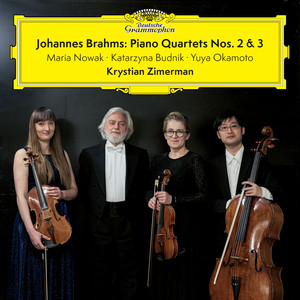 | Piano Quartet No. 2 in A Major, Op. 26: III. Scherzo. Poco allegro – Trio | Johannes Brahms, Krystian Zimerman, Maria Nowak, Katarzyna Budnik, Yuya Okamoto | A Major | 1 | 11B | 93 BPM | |
 | L'Abbandono | Giovanni Allevi | F Major | 5 | 7B | 67 BPM | |
 | Horn Trio in E-Flat Major, Op. 40: III. Adagio mesto | Johannes Brahms, Isabelle Faust, Alexander Melnikov, Teunis van der Zwart | E♭ Minor | 0 | 2A | 68 BPM | |
 | Schumann: Violin Concerto in D Minor, WoO 23: II. Langsam | Robert Schumann, Daniel Harding, Renaud Capuçon, Mahler Chamber Orchestra | B♭ Major | 1 | 6B | 62 BPM | |
 | Langsamer Satz | Anton Webern, Leonkoro Quartet | D Minor | 4 | 7A | 110 BPM | |
 | String Quintet No. 2 in G Major, Op. 111: III. Un poco allegretto | Johannes Brahms, Bartholdy Quintett | G Minor | 1 | 6A | 76 BPM | |
 | Violin Concerto No. 1: Movement I | Philip Glass, Leonard Bernstein, Dennis Russell Davies, Bruckner Orchester Linz, Renaud Capuçon | D Minor | 2 | 7A | 74 BPM | |
 | Sibelius: Violin Concerto in D Minor, Op. 47: II. Adagio di molto | Renaud Capuçon, Orchestre de la Suisse Romande, Daniel Harding | B♭ Major | 1 | 6B | 86 BPM | |
 | Cello Sonata, Op. 46: II. Andante Sostenuto (Arr. for Violin and String Ensemble by Ellie Consta) | Louise Farrenc, Esther Abrami, Her Ensemble | D Major | 5 | 10B | 140 BPM | |
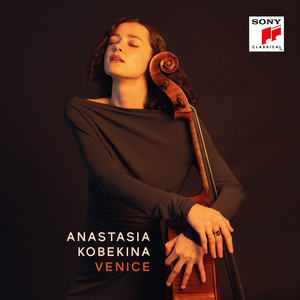 | L'orfeo: Se desti pietà | Antonio Sartorio, Anastasia Kobekina, Kammerorchester Basel | F♯ Major | 2 | 2B | 142 BPM | |
 | String Quartet No. 2 Op.13 in A minor: I Adagio - Allegro vivace | Felix Mendelssohn, Quatuor Ébène | A Minor | 3 | 8A | 70 BPM | |
 | Two Waltzes in A Major, Op. 39, No. 15 & Op. 52, No. 6 (Arr. Stephan Koncz) | Johannes Brahms, Andreas Ottensamer, Leonidas Kavakos, Christoph Koncz, Antoine Tamestit, Stephan Koncz, Odon Racz | D Major | 3 | 10B | 102 BPM | |
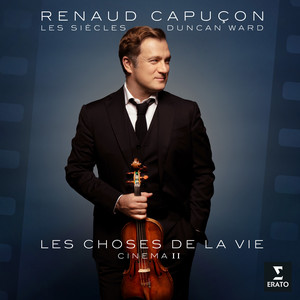 | The Shape of Water | Renaud Capuçon, Les Siècles, Duncan Ward | A Minor | 1 | 8A | 69 BPM | |
 | Widmung, Op. 25/1 | Nils Mönkemeyer | B♭ Major | 0 | 6B | 100 BPM | |
 | 6 Sonatas for Violin Solo, Op. 27 / Sonata No. 5 in G Major: II. Danse rustique | Eugène Ysaÿe, Hilary Hahn | E Minor | 1 | 9A | 80 BPM | |
 | Clarinet Quintet in A Major, K. 581: II. Larghetto | Wolfgang Amadeus Mozart, David Shifrin, Emerson String Quartet | A♭ Major | 1 | 4B | 140 BPM | |
 | Handel / Orch. Hale: Keyboard Suite No. 4 in D Minor, HWV 437: III. Sarabande | George Frideric Handel, Alexander Briger, Academy of St. Martin in the Fields | D Minor | 0 | 7A | 116 BPM | |
| 6 Sonatas for Violin Solo, Op. 27 / Sonata No. 4 in E Minor: I. Allemande | Eugène Ysaÿe, Hilary Hahn | E Minor | 1 | 9A | 105 BPM | |
 | Symphony No. 5 in C-Sharp Minor: IV. Adagietto (Arr. for Cello and Harp by Mischa Maisky) | Gustav Mahler, Mischa Maisky, Sophie Hallynck | F Major | 1 | 7B | 86 BPM | |
 | Adagio and Allegro, Op. 70 (arr. for viola and piano) | Tabea Zimmermann, Robert Schumann, Hartmut Höll | A♭ Major | 1 | 4B | 84 BPM | |
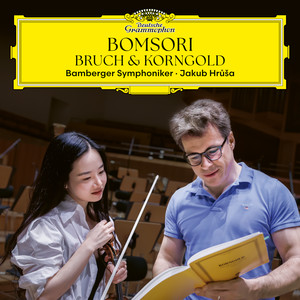 | Violin Concerto No. 1 in G Minor, Op. 26: I. Prelude. Allegro moderato – | Max Bruch, Bomsori, Bamberger Symphoniker, Jakub Hrůša | G Major | 1 | 9B | 95 BPM |
- ISRC
- FR50X2179202
- Label
- L-M Records/RCA Records