- BPM
- 119
- Key
- D Major
- Camelot
- 10B
The King Shall Rejoice, Coronation Anthem No. 3, HWV 260: I. Introduction. The King Shall Rejoice by George Frideric Handel, Academy of St Martin in the Fields Chorus, Academy of St. Martin in the Fields, Sir Neville Marriner Song Details
George Frideric Handel, Academy of St Martin in the Fields Chorus, Academy of St. Martin in the Fields, Sir Neville Marriner's ' "The King Shall Rejoice, Coronation Anthem No. 3, HWV 260: I. Introduction. The King Shall Rejoice" was released on its scheduled release date, January 1, 1985. The duration of This song is about two minutes long, specifically at 2:33. This song does not appear to have any foul language. The King Shall Rejoice, Coronation Anthem No. 3, HWV 260: I. Introduction. The King Shall Rejoice's duration is considered a little bit shorter than the average duration of a typical track. The track order of this song in George Frideric Handel, Joan Rodgers, Catherine Denly, Anthony Rolfe Johnson, Robert Dean, Academy of St. Martin in the Fields Chorus, Academy of St. Martin in the Fields, Sir Neville Marriner, Alastair Ross's "Handel: Coronation Anthems" album is number 2 out of 15. On top of that, Netherlands appears to be the country where this track was created. In terms of popularity, The King Shall Rejoice, Coronation Anthem No. 3, HWV 260: I. Introduction. The King Shall Rejoice is currently not that popular. Since there is more of a neutral sound being played, this makes the track somewhat danceable.
BPM and Tempo
We consider the tempo marking of The King Shall Rejoice, Coronation Anthem No. 3, HWV 260: I. Introduction. The King Shall Rejoice by George Frideric Handel, Academy of St Martin in the Fields Chorus, Academy of St. Martin in the Fields, Sir Neville Marriner to be Moderato (at a moderate speed) because the track has a tempo of 119 BPM, a half-time of 60BPM, and a double-time of 238 BPM. Based on that, the speed of the song's tempo is moderate. Activities such as, walking, can go well with this song. The time signature for this track is 4/4.
Music Key
This song is in the music key of D Major. This also means that this song has a camelot key of 10B. So, the perfect camelot match for 10B would be either 10B or 11A. While, 11B can give you a low energy boost. For moderate energy boost, you would use 7B and a high energy boost can either be 12B or 5B. Though, if you want a low energy drop, you should looking for songs with either a camelot key of 10A or 9B will give you a low energy drop, 1B would be a moderate one, and 8B or 3B would be a high energy drop. Lastly, 7A allows you to change the mood.
Want to find the BPM and music key for other songs? Check out our BPM and Key Finder page!
- Popularity
- 8%
- Loudness
- -15.003 dB
- Acousticness
- 91%
- Danceability
- 55%
- Energy
- 33%
- Instrumentalness
- 95%
- Liveness
- 42%
- Loudness
- 75%
- Speechiness
- 4%
- Valence
- 54%
Recommendations
| Track | Artist | Key | Energy | Camelot | BPM | ||
|---|---|---|---|---|---|---|---|
 | Concerto grosso in G Minor, Op. 6 No. 8, "Fatto per la Notte di Natale": III. Adagio - Allegro - Adagio (Rev. Vittorio Negri) | Arcangelo Corelli, Felix Ayo, Arnaldo Apostoli, Enzo Altobelli, Maria Teresa Garatti, Guy Bovet, I Musici | E♭ Major | 1 | 5B | 85 BPM | |
 | Tafelmusik - Banquet Music In 3 Parts / Production 1 - 3. Concert In A Major, TWV 53:A2: 2. Allegro | Georg Philipp Telemann, Musica Antiqua Köln, Reinhard Goebel | A♭ Major | 2 | 4B | 126 BPM | |
 | Concerto Grosso No. 3 in F Major: IV. Largo | Alessandro Scarlatti, Capella Istropolitana, Jaroslav Krcek | D Minor | 1 | 7A | 168 BPM | |
 | Piano Sonata No. 11 in A major, K331: I. Adante Grazioso | Wolfgang Amadeus Mozart, Writing on Silence | A♭ Major | 1 | 4B | 47 BPM | |
 | Cello Concerto No. 1 in G Major: II. Romance. Andantino | Carl Stamitz, Christian Benda, Prague Chamber Orchestra | B♭ Major | 0 | 6B | 176 BPM | |
 | Serenata notturna in D Major, K. 239: I. Marcia. Maestoso | Wolfgang Amadeus Mozart, Thomas Brandis, Emil Maas, Neithart Resa, Rainer Zepperitz, Berliner Philharmoniker, Herbert von Karajan | D Major | 1 | 10B | 99 BPM | |
 | Concerto Grosso in B Minor, Op. 6, No. 12, HWV 330: II. Allegro | George Frideric Handel, Simon Standage, Elizabeth Wilcock, Anthony Pleeth, Robert Woolley, Trevor Pinnock, The English Concert | D♭ Minor | 1 | 12A | 76 BPM | |
 | Oboe Concerto in D Minor, S. Z799: III. Presto | Alessandro Marcello, Marcel Ponseele, Il Gardellino | D♭ Minor | 3 | 12A | 70 BPM | |
 | Orfeo ed Euridice, Wq. 30, Act II: Danse des champs-elysées "Mélodie" (Arr. for Piano by Ignaz Friedman) | Christoph Willibald Gluck, Joseph Banowetz | A Major | 0 | 11B | 72 BPM | |
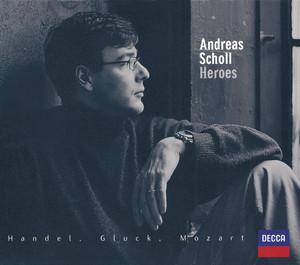 | Orfeo ed Euridice (Orphée et Eurydice), Wq. 30 - Vienna Version (1762) / Act 3: "Che farò senza Euridice?" | Christoph Willibald Gluck, Andreas Scholl, Orchestra of the Age of Enlightenment, Sir Roger Norrington | F♯ Major | 0 | 2B | 103 BPM | |
 | Recorder Concerto in C Major, TWV 51:C1: IV. Tempo di Minuet | Georg Philipp Telemann, Dan Laurin, Arte dei Suonatori | B Major | 2 | 1B | 141 BPM | |
 | Keyboard Sonata in E Major, Kk. 20 | Domenico Scarlatti, Ivo Pogorelich | E Major | 0 | 12B | 130 BPM | |
 | Le Bourgeois Gentilhomme - Comédie-Ballet, LWV 43: Ouverture | Jean-Baptiste Lully, Gustav Leonhardt, La Petite Bande, Sigiswald Kuijken | F♯ Minor | 1 | 11A | 106 BPM | |
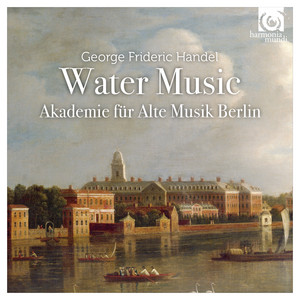 | Water Music, Suite No. 1, HWV 348: No. 2, Adagio e staccato | George Frideric Handel, Akademie für Alte Musik Berlin | A Major | 0 | 11B | 35 BPM | |
 | Oboe Concerto in E Minor, TWV 51:e1: I. Andante | Georg Philipp Telemann, Musica Bohemica, Jaroslav Krcek, Gabriela Krčková | E Minor | 2 | 9A | 74 BPM | |
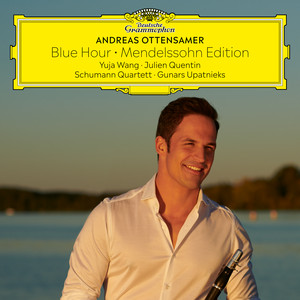 | Lieder ohne Worte I, Op. 19b: VI. Andante sostenuto "Venetian Gondola Song", MWV U78 (Arr. Ottensamer for Clarinet & Strings) | Felix Mendelssohn, Andreas Ottensamer, Schumann Quartett, Gunars Upatnieks | G Minor | 0 | 6A | 84 BPM | |
 | Fantasia & Fugue in C Minor, Op. 86 (After J.S. Bach's BWV 537): Fantasia | Edward Elgar, Seattle Symphony Orchestra, Gerard Schwarz | F Minor | 1 | 4A | 143 BPM | |
 | Sonata in C Minor, Jung III.2.B: I. Largo | Johann Georg Pisendel, Concerto Köln, Mayumi Hirasaki | B Minor | 1 | 10A | 96 BPM | |
 | Symphony No. 1 in B-Flat Major, Op. 2: II. Moderato e dolce | William Boyce, Aradia Ensemble, Kevin Mallon | D♭ Major | 1 | 3B | 131 BPM | |
| Oboe Concerto in D Minor, S. Z799: II. Adagio | Alessandro Marcello, Musica Bohemica, Jaroslav Krcek, Gabriela Krčková | D Minor | 1 | 7A | 134 BPM | |
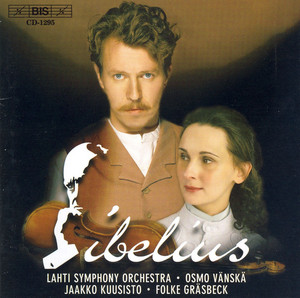 | Andante festivo, JS 34b (Version for String Orchestra & Timpani) | Jean Sibelius, Sinfonia Lahti, Osmo Vänskä | G Major | 2 | 9B | 57 BPM | |
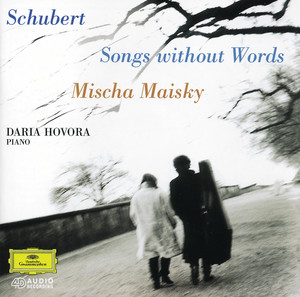 | Die schöne Müllerin, D. 795: No. 19, Der Müller und der Bach - Performed on Cello & Piano | Franz Schubert, Mischa Maisky, Daria Hovora | G Major | 0 | 9B | 96 BPM | |
 | Overture (Suite) In C Major, TWV 55: C6: I. Ouverture: Grave. Allegro. Grave | Cologne Chamber Orchestra, Georg Philipp Telemann | G Major | 3 | 9B | 116 BPM | |
 | Keyboard Concerto in F Major, Hob. XVIII:3: II. Largo cantabile | Joseph Haydn, Sebastian Knauer, Kolner Kammerorchester, Helmut Müller-Brühl | F♯ Minor | 3 | 11A | 178 BPM | |
 | L'Allegro, Il Penseroso, ed il Moderato, HWV 55, Part III: "As steals the morn" | George Frideric Handel, Lucy Crowe, Mark Padmore, The English Concert, Andrew Manze | A Major | 1 | 11B | 84 BPM |
- ISRC
- NLA508318902
- Label
- L-M Records/RCA Records