- BPM
- 128
- Key
- G Minor
- Camelot
- 6A
Баядера, действие I: Выход Одетты by Имре Кальман, Людмила Белобрагина, Большой хор Всесоюзного радио и Центрального телевидения, Юрий Силантьев, Эстрадно-симфонический оркестр Всесоюзного радио и Центрального телевидения Song Details
Имре Кальман, Людмила Белобрагина, Большой хор Всесоюзного радио и Центрального телевидения, Юрий Силантьев, Эстрадно-симфонический оркестр Всесоюзного радио и Центрального телевидения's ' "Баядера, действие I: Выход Одетты" was released on its scheduled release date, January 1, 1973. With this song being about 5 minutes long, at This song is fairly a long song compared to the average song length. This song does not have an "Explicit" tag, making it safe for all ages. There is only one song in Имре Кальман: Баядера, so we believe that "Баядера, действие I: Выход Одетты" is a single. Based on our statistics, Баядера, действие I: Выход Одетты's popularity is unknown right now. Since there is more of a neutral sound being played, this makes the track somewhat danceable.
BPM and Tempo
The tempo marking of Баядера, действие I: Выход Одетты by Имре Кальман, Людмила Белобрагина, Большой хор Всесоюзного радио и Центрального телевидения, Юрий Силантьев, Эстрадно-симфонический оркестр Всесоюзного радио и Центрального телевидения is Allegro (fast, quick, and bright), since this song has a tempo of 128 BPM. With that information, we can conclude that the song has a fast tempo. This song can go great with walking. The time signature for this track is 4/4.
Music Key
G Minor is the music key of this track. Because this track belongs in the G Minor key, the camelot key is 6A. So, the perfect camelot match for 6A would be either 6A or 5B. While, a low energy boost can consist of either 6B or 7A. For moderate energy boost, you would use 3A and a high energy boost can either be 8A or 1A. However, if you are looking for a low energy drop, finding a song with a camelot key of 5A would be a great choice. Where 9A would give you a moderate drop, and 4A or 11A would be a high energy drop. Lastly, 9B allows you to change the mood.
Want to find the BPM and music key for other songs? Check out our BPM and Key Finder page!
- Popularity
- 0%
- Loudness
- -10.12 dB
- Acousticness
- 77%
- Danceability
- 43%
- Energy
- 46%
- Instrumentalness
- 10%
- Liveness
- 22%
- Loudness
- 83%
- Speechiness
- 8%
- Valence
- 43%
Recommendations
| Track | Artist | Key | Energy | Camelot | BPM | ||
|---|---|---|---|---|---|---|---|
 | Misatango, Misa a Buenos Aires: XI. Sanctus | MartÍn Palmeri, Chœur régional Vittoria d'Ile de France, Orchestre Pasdeloup, Michel Piquemal, Sophie Hanne, Gilberto Pereyra | G Minor | 2 | 6A | 96 BPM | |
 | Los gavilanes, Acto II: Amigos, siempre amigos | Ataúlfo Argenta, Coros Cantores De Madrid, José Perera, Orquesta de Cámara de Madrid, Teresa Berganza, Toñy Rosado, Jacinto Guerrero | B♭ Major | 3 | 6B | 135 BPM | |
 | Gloria, FP 177: II. Laudamus te | Francis Poulenc, Britten Sinfonia, Polyphony, Stephen Layton, The Choir Of Trinity College, Cambridge | D Minor | 2 | 7A | 130 BPM | |
 | Баядера, действие II: Речитатив и вальс Одетты и Принца Раджами | Имре Кальман, Людмила Белобрагина, Анатолий Моксяков, Юрий Силантьев, Эстрадно-симфонический оркестр Всесоюзного радио и Центрального телевидения | E Major | 3 | 12B | 86 BPM | |
 | Acte I - Tableau I : "Où est Blanche" | Francis Poulenc, Jean-Pierre Marty | D Major | 2 | 10B | 84 BPM | |
 | The Infinite Shining Heavens | Γιάννη Yang | D Minor | 5 | 7A | 52 BPM | |
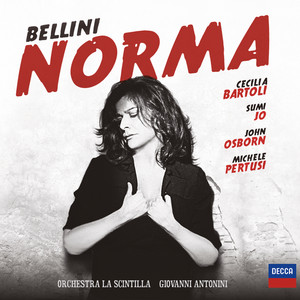 | Norma / Act 2 Scene 1: "Si, fino all’ore estreme" (Critical Ed. Maurizio Biondi and Riccardo Minasi) | Vincenzo Bellini, Cecilia Bartoli, Sumi Jo, Orchestra La Scintilla, Giovanni Antonini | F Major | 5 | 7B | 135 BPM | |
 | Suor Angelica: O sorelle in pio lavoro | Giacomo Puccini, Isobel Buchanan, Dame Joan Sutherland, Elizabeth Connell, Miriam Bowen, National Philharmonic Orchestra, Richard Bonynge | D♭ Major | 1 | 3B | 91 BPM | |
 | Già il sole dal Gange | Alessandro Scarlatti, Ramón Vargas | A Major | 2 | 11B | 75 BPM | |
 | Prince Igor (Knyaz Igor), Act II: Ni sna ne otdikha | Alexander Borodin, Dmitri Hvorostovsky, Russia Spiritual Revival Choir, Philharmonia of Russia, Constantine Orbelian | D♭ Major | 3 | 3B | 132 BPM | |
 | Oh! quand je dors, S. 282 (2nd Version) | Franz Liszt, Samuel Mariño, Jonathan Ware | E Major | 0 | 12B | 125 BPM | |
 | Marcha de la Novia - Remastered | Sofía Nöel | A Major | 2 | 11B | 80 BPM | |
 | Katiuska - Noche hermosa | Pablo Sorozábal | G Major | 3 | 9B | 85 BPM | |
 | Dolente immagine di Fille mia | Vincenzo Bellini, Cecilia Bartoli, James Levine | E Minor | 0 | 9A | 82 BPM | |
 | Lecuona: María la O: "Eschucha al ruisenor" | Lisette Oropesa | E♭ Major | 1 | 5B | 93 BPM | |
 | 'O marenariello | Pene Pati, Antonello Paliotti, Raffaele La Ragione, Giulio d'Alessio, Il Pomo D'oro | D Major | 2 | 10B | 139 BPM | |
 | Lucrezia Borgia: Prologue: Com'e bello! quale incanto (Lucrezia, Don Alfonso, Rustighello) | Gaetano Donizetti, Dimitra Theodossiou, Roberto De Biasio, Enrico Giuseppe Iori, Nidia Palacios, Luigi Albani, Giuseppe Di Paola, Mauro Corna, Livio Scarpellini, Giovanni Manfrin, Luca Dall'Amico, Dario Giorgele, Bergamo Musica Festival Chorus, Bergamo Mu | E♭ Major | 0 | 5B | 88 BPM | |
 | La Boheme: Acto III: "Donde Lieta Usce" | Victoria de los Ángeles | D♭ Major | 1 | 3B | 98 BPM | |
 | La alegría del batallón: "Aquí está quien lo tiene tó y no tiene ná" (Tajuña) | Jose Serrano, Orquesta Juvenil Sinfonía por el Perú, Guillermo García Calvo, Juan Diego Flórez | D Major | 1 | 10B | 75 BPM | |
| La pícara molinera, Act II: "Mi locura… Paxarín, tú que vuelas" (Juan) | Pablo Luna, Orquesta Juvenil Sinfonía por el Perú, Guillermo García Calvo, Juan Diego Flórez | D♭ Major | 1 | 3B | 68 BPM | |
 | Ya Vstretil Vas... | Dmitri Hvorostovsky | C Minor | 2 | 5A | 179 BPM | |
 | Tace Il Labbro T'Amo | F. Lehar - V. Leon - L. Stein - F. Fontana - L. Ramo, Cesare Gallino | G Major | 2 | 9B | 87 BPM | |
 | Amo | Beloxxy | A♭ Major | 1 | 4B | 97 BPM | |
 | Che fiero costume | Giovanni Legrenzi, Holly Bewlay, Sarah Rhee | G Minor | 1 | 6A | 107 BPM | |
 | Duparc: Chanson triste | Henri Duparc, Huw Montague Rendall, Ben Glassberg, Opéra Orchestre Normandie Rouen | E♭ Major | 0 | 5B | 100 BPM |
- ISRC
- RUAAX2100437
- Label
- L-M Records/RCA Records