- BPM
- 132
- Key
- F Minor
- Camelot
- 4A
Serenade In Blue by André Previn, David Rose Song Details
André Previn, David Rose's 'Serenade In Blue' had a release date set for January 1, 1960. The duration of This song is about 3 minutes long, at 3:08. Based on our data, This song appears to be safe for all ages and is not considered explicit. This track is about the average length of a typical track. The track order of this song in André Previn, David Rose's "Like Blue" album is number 3 out of 12. On top of that, United Kingdom appears to be the country where this track was created. Based on our statistics, Serenade In Blue's popularity is not that popular right now. Although the tone can be danceable to some, this track does projects more of a negative sound rather than a postive one.
BPM and Tempo
We consider the tempo marking of Serenade In Blue by André Previn, David Rose to be Allegro (fast, quick, and bright) because the track has a tempo of 132 BPM, a half-time of 66BPM, and a double-time of 264 BPM. Based on that, the speed of the song's tempo is fast. Activities such as, walking, can go well with this song. The time signature for this track is 4/4.
Music Key
F Minor is the music key of this track. Because this track belongs in the F Minor key, the camelot key is 4A. So, the perfect camelot match for 4A would be either 4A or 3B. While, a low energy boost can consist of either 4B or 5A. For moderate energy boost, you would use 1A and a high energy boost can either be 6A or 11A. However, if you are looking for a low energy drop, finding a song with a camelot key of 3A would be a great choice. Where 7A would give you a moderate drop, and 2A or 9A would be a high energy drop. Lastly, 7B allows you to change the mood.
Want to find the BPM and music key for other songs? Check out our BPM and Key Finder page!
- Popularity
- 2%
- Loudness
- -15.515 dB
- Acousticness
- 98%
- Danceability
- 45%
- Energy
- 25%
- Instrumentalness
- 63%
- Liveness
- 15%
- Loudness
- 74%
- Speechiness
- 3%
- Valence
- 30%
Recommendations
| Track | Artist | Key | Energy | Camelot | BPM | ||
|---|---|---|---|---|---|---|---|
 | Scheherezade, Op. 35: I. The Sea and Sinbad's Ship | Nikolai Rimsky-Korsakov, Pelin Halkacı Alkın, Sascha Goetzel, Borusan Istanbul Philharmonic Orchestra | E Minor | 1 | 9A | 70 BPM | |
 | Paquita: Variation 5: Allegro non troppo (by Cherepnin) | Ludwig Minkus, Anna Takova-Baynova, Valentina Raicheva, Sofia National Opera Orchestra, Boris Spassov | A Major | 2 | 11B | 140 BPM | |
 | Danse Bacchanale | Camille Saint-Saëns, N/A, Banda de Lalín, Bram Sniekers | D Major | 2 | 10B | 125 BPM | |
 | 12 Songs, Op. 21: V. Lilacs (Transcr. Rachmaninoff for Solo Piano) | Sergei Rachmaninoff, Sergei Babayan | A♭ Major | 0 | 4B | 78 BPM | |
 | The Four Seasons: Concerto No. 2 in G Minor, RV 315 "L'estate" (summer): III. Presto | Antonio Vivaldi, Adrian Chandler, La Serenissima | G Major | 5 | 9B | 157 BPM | |
 | Lieder ohne Worte, Op. 19b: Lieder ohne Worte (Song without Words) No. 6 in G Minor, Op. 19, No. 6, "Venezianisches Gondellied" [Venetian Gondola Song] | Felix Mendelssohn, Péter Nagy | G Major | 0 | 9B | 101 BPM | |
 | Shéhérazade, Op. 35: I. The Sea and Sinbad's Ship | Nikolai Rimsky-Korsakov, Sergej Galaktionov, Gianandrea Noseda, Filarmonica Teatro Regio Torino | E Major | 1 | 12B | 136 BPM | |
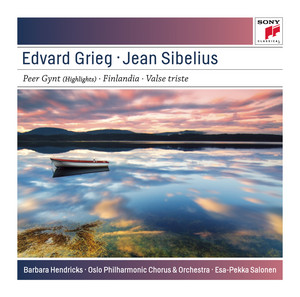 | Peer Gynt, Op. 23: Act II, 7, In the Hall of the Mountain King | Edvard Grieg, Esa-Pekka Salonen | B Minor | 2 | 10A | 104 BPM | |
 | The Planets, Op. 32: II. Venus, the Bringer of Peace | Gustav Holst, Lorin Maazel, L'Orchestre National de France, Orchestre National De France | A♭ Major | 0 | 4B | 139 BPM | |
 | Rachmaninov: Symphony No. 3 in A Minor, Op. 44: II. Adagio ma non troppo - Allegro vivace | Sergei Rachmaninoff, Mariss Jansons, St. Petersburg Philharmonic Orchestra | E♭ Minor | 0 | 2A | 117 BPM | |
 | Giselle: Act II: Ensemble des Wilis | Adolphe Adam, Slovak Radio Symphony Orchestra, Andrew Mogrelia | A♭ Major | 0 | 4B | 89 BPM | |
 | Nutcracker - Waltz of the Flowers | Wiener Symphoniker, Willi Boskovsky | D Major | 1 | 10B | 100 BPM | |
 | Raymonda, Op. 57: Act III - Variation IV | Alexander Glazunov, Moscow Symphony Orchestra, Alexander Anissimov | D Minor | 0 | 7A | 90 BPM | |
 | Violin Concerto No. 2 in B Minor, Op. 7, "La campanella": III. Rondo | Niccolò Paganini, Netherlands Symphony Orchestra, Rudolf Koelman, Jan Willem de Vriend | B Minor | 2 | 10A | 105 BPM | |
 | Carmen Suite No. 1 (Arr. E. Guiraud): IV. Séguedille | Georges Bizet, Orquestra Simfònica de Barcelona i Nacional de Catalunya, Pablo González | G Minor | 0 | 6A | 66 BPM | |
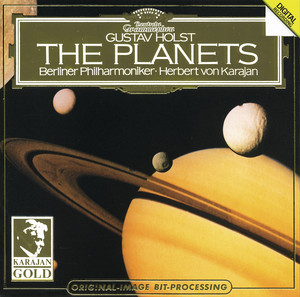 | The Planets, Op. 32: VI. Uranus, the Magician | Gustav Holst, Berliner Philharmoniker, Herbert von Karajan | C Major | 3 | 8B | 110 BPM | |
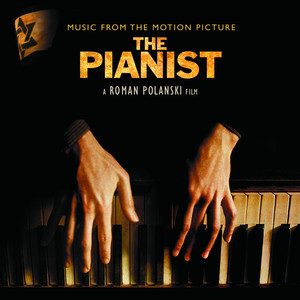 | Prélude in E minor, Op. 28, No. 4 | Frédéric Chopin, Janusz Olejniczak | E Minor | 0 | 9A | 63 BPM | |
 | Mendelssohn: String Quartet No. 6 in F Minor, Op. 80, MWV R37: II. Allegro assai | Felix Mendelssohn, Quatuor Ébène | F Minor | 3 | 4A | 139 BPM | |
 | Romance No. 2 In F Major, Op. 50 | Slovak Philharmonic, Takako Nishizaki, Ludwig van Beethoven | F Major | 1 | 7B | 88 BPM | |
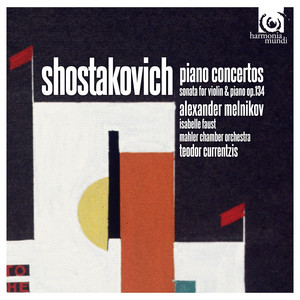 | Piano Concerto No. 2 Op. 102 in F Major: II. Andante | Dmitri Shostakovich, Alexander Melnikov, Mahler Chamber Orchestra, Teodor Currentzis | C Minor | 0 | 5A | 78 BPM | |
 | Cello Concerto No. 2 in D Minor, Op. 119: II. Allegro non troppo - Cadenza - Molto allegro | Camille Saint-Saëns, Gabriel Schwabe, Malmö Symphony Orchestra, Marc Soustrot | D Major | 1 | 10B | 92 BPM | |
| The Planets, Op. 32: 3. Mercury, the Winged Messenger | Gustav Holst, Berliner Philharmoniker, Herbert von Karajan | A Major | 1 | 11B | 108 BPM | |
 | 8 Slavonic Dances, Op. 72, B. 147: 2. Dumka. Allegretto grazioso | Antonín Dvořák, Czech Philharmonic, Jiří Bělohlávek | C Major | 2 | 8B | 97 BPM | |
 | Giselle, Act 2: No. 12 Ensemble Dance of the Wilis, Lead Wilis’ Variations, Myrtha’s Second, Variation, Lead Wilis and ensemble | Adolphe Adam, Tasmanian Symphony Orchestra, Nicolette Fraillon | A♭ Major | 1 | 4B | 129 BPM | |
 | Don Quixote, Act IV: Basilio's Variation | Ludwig Minkus, Valery Zhelobinsky, Sofia National Opera Orchestra, Boris Spassov | D Major | 0 | 10B | 78 BPM |
- ISRC
- GBRKQ2245407
- Label
- L-M Records/RCA Records