- BPM
- 135
- Key
- E♭ Major
- Camelot
- 5B
Tango (Version for Orchestra) - Version for 19 Instruments, 1953 by Igor Stravinsky Song Details
"Tango (Version for Orchestra) - Version for 19 Instruments, 1953" by Igor Stravinsky had its release date on 1948. With this song being around four minutes long, at 4:08, the duration of this song is pretty average compared to other songs. This track is safe for children and doesn't appear to contain any foul language, since the "Explicit" tag was not present in this track. There are a total of 148 in the song's album "The Original Jacket Collection: Stravinsky Conducts Stravinsky - The Classic LP Recordings". In this album, this song's track order is #7. Furthermore, we believe that the track originated from United States. Based on our statistics, Tango (Version for Orchestra) - Version for 19 Instruments, 1953's popularity is unknown right now. In our opinion, the overall tone is not very danceable and projects negative sounds, such as being sad, depressed, or angry.
BPM and Tempo
With Tango (Version for Orchestra) - Version for 19 Instruments, 1953 by Igor Stravinsky having a BPM of 135 with a half-time of 68 BPM and a double-time of 270 BPM, we would consider this track to have a Allegro (fast, quick, and bright) tempo marking. Because of this, we believe that the song has an overall fast tempo. Looking at the BPM of this song, this song might go great with walking. The time signature for this track is 3/4.
Music Key
This song is in the music key of E♭ Major. Or for those who are familiar with the camelot wheel, this song has a camelot key of 5B. So, the perfect camelot match for 5B would be either 5B or 6A. While, 6B can give you a low energy boost. For moderate energy boost, you would use 2B and a high energy boost can either be 7B or 12B. Though, if you want a low energy drop, you should looking for songs with either a camelot key of 5A or 4B will give you a low energy drop, 8B would be a moderate one, and 3B or 10B would be a high energy drop. Lastly, 2A allows you to change the mood.
Want to find the BPM and music key for other songs? Check out our BPM and Key Finder page!
- Popularity
- 0%
- Loudness
- -38.033 dB
- Acousticness
- 90%
- Danceability
- 15%
- Energy
- 0%
- Instrumentalness
- 64%
- Liveness
- 14%
- Loudness
- 37%
- Speechiness
- 4%
- Valence
- 3%
Recommendations
| Track | Artist | Key | Energy | Camelot | BPM | ||
|---|---|---|---|---|---|---|---|
 | Gayane Suite No. 1: IV. Matsak and Armen | Aram Khachaturian, St. Petersburg State Symphony Orchestra, Andre Anichanov | B Major | 6 | 1B | 90 BPM | |
 | String Quartet No.8 In C Minor, Op.110: 1. Largo - Live | Dmitri Shostakovich, Emerson String Quartet | C Major | 0 | 8B | 60 BPM | |
 | St. Paul's Suite, Op. 29 No. 2: II. Ostinato | Gustav Holst, English Sinfonia, Howard Griffiths | C Major | 1 | 8B | 108 BPM | |
 | Nocturnes, CD 98: II. Fêtes | Claude Debussy, Berliner Philharmoniker, Claudio Abbado | A Major | 2 | 11B | 79 BPM | |
 | La mer, L. 109: III. Dialogue of the Wind and the Sea | Claude Debussy, Berliner Philharmoniker, Herbert von Karajan | D♭ Major | 2 | 3B | 78 BPM | |
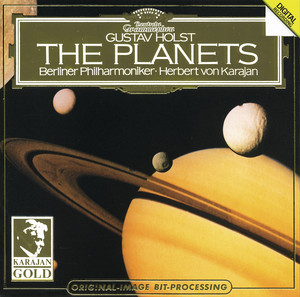 | The Planets, Op. 32: 3. Mercury, the Winged Messenger | Gustav Holst, Berliner Philharmoniker, Herbert von Karajan | A Major | 1 | 11B | 108 BPM | |
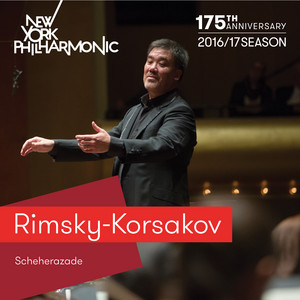 | Scheherazade, Op. 35: II. Lento - Andantino "The Legend of the Kalendar Prince" | Nikolai Rimsky-Korsakov, New York Philharmonic, Alan Gilbert, Lawrence Rock | G Major | 1 | 9B | 59 BPM | |
 | The Hebrides, Op. 26 "Fingal's Cave" | Felix Mendelssohn, John Eliot Gardiner, London Symphony Orchestra | D Major | 1 | 10B | 137 BPM | |
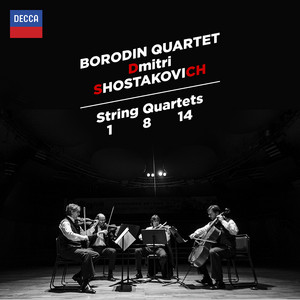 | String Quartet No. 8 in C Minor, Op. 110: I. Largo | Dmitri Shostakovich, Borodin Quartet | C Minor | 1 | 5A | 114 BPM | |
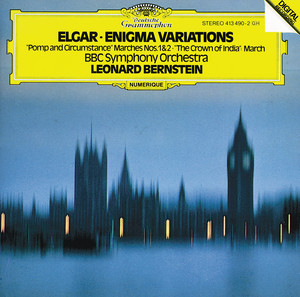 | Enigma Variations, Op. 36: Var. 2. Allegro "H.D.S-P." | Edward Elgar, BBC Symphony Orchestra, Leonard Bernstein | G Minor | 1 | 6A | 113 BPM | |
 | Britten: Young Apollo, Op. 16 | Benjamin Britten, Martin James Bartlett, Mozarteumorchester Salzburg, Howard Griffiths | E Minor | 1 | 9A | 106 BPM | |
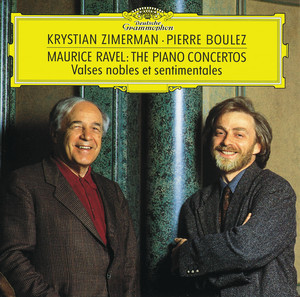 | Piano Concerto in G Major, M. 83: I. Allegramente | Maurice Ravel, Krystian Zimerman, The Cleveland Orchestra, Pierre Boulez | D Major | 1 | 10B | 129 BPM | |
 | Symphony No. 3 In D Minor / Part 1: 1. - Immer das gleiche Tempo - Live | Gustav Mahler, New York Philharmonic, Leonard Bernstein | A Minor | 0 | 8A | 107 BPM | |
 | Copland: Symphony No. 3: I. Molto moderato, with simple expression | Aaron Copland, San Francisco Symphony, Michael Tilson Thomas | A Major | 1 | 11B | 82 BPM | |
 | Ein Heldenleben, Op. 40, TrV 190: Der Held | Richard Strauss, Berliner Philharmoniker, Herbert von Karajan | E♭ Major | 2 | 5B | 112 BPM | |
 | La Mer, L.109: 2. Play of the Waves (Jeux de vagues) | Claude Debussy, Orchestre Symphonique de Montréal, Charles Dutoit | E Major | 1 | 12B | 113 BPM | |
 | Quatuor pour la fin du Temps: VIII. Louange à l'immortalité de Jésus | Olivier Messiaen, Lucas Debargue | E Major | 0 | 12B | 76 BPM | |
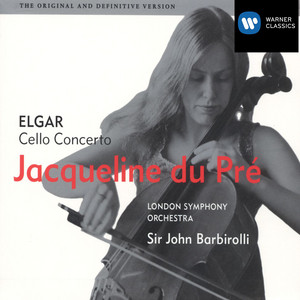 | Elgar: Cello Concerto in E Minor, Op. 85: II. Lento - Allegro molto | Edward Elgar, Jacqueline du Pré, London Symphony Orchestra, Sir John Barbirolli | G Major | 2 | 9B | 87 BPM | |
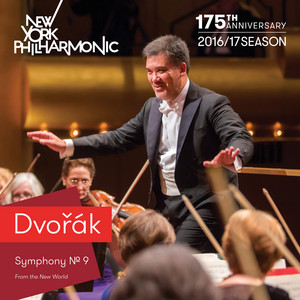 | Symphony No. 9 in E Minor, Op. 95 "From the New World": I. Adagio — Allegro molto | Antonín Dvořák, New York Philharmonic, Alan Gilbert | E Minor | 1 | 9A | 125 BPM | |
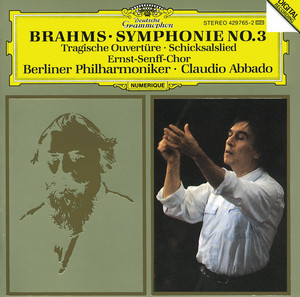 | Tragic Overture, Op. 81 | Johannes Brahms, Berliner Philharmoniker, Claudio Abbado | D Minor | 1 | 7A | 85 BPM | |
| Variations On An Original Theme, Op.36 "Enigma": 3. R.B.T. (Allegretto) | Edward Elgar, BBC Symphony Orchestra, Leonard Bernstein | G Major | 0 | 9B | 86 BPM | |
 | Sinfonietta: 5. Andante con moto - Maestoso - Tempo I - Allegretto - Allegro - Maestoso - Adagio | Leoš Janáček, Bavarian Radio Symphony Orchestra, Rafael Kubelik | E♭ Minor | 3 | 2A | 60 BPM | |
| Brook Green Suite: II. Air | Gustav Holst, English Sinfonia, Howard Griffiths | E♭ Major | 0 | 5B | 128 BPM | |
 | Daphnis et Chloé, M. 57, Pt. 3: XIa-b. Pantomime. Daphnis et Chloé miment l'aventure de Pan et de Syrinx | Maurice Ravel, Berliner Philharmoniker, Pierre Boulez | F♯ Minor | 0 | 11A | 169 BPM | |
 | Symphony No. 3 in C Minor, Op. 78 "Organ": Allegro moderato | Camille Saint-Saëns, Eugene Ormandy, Philadelphia Orchestra | A♭ Major | 1 | 4B | 109 BPM |
- ISRC
- USSM16501074
- Label
- L-M Records/RCA Records