- BPM
- 71
- Key
- B Major
- Camelot
- 1B
The New English Hymnal: No. 197, For All the Saints by Ralph Vaughan Williams, St Edmundsbury Cathedral Choir, Michael Bawtree, James Thomas Song Details
"The New English Hymnal: No. 197, For All the Saints" by Ralph Vaughan Williams, St Edmundsbury Cathedral Choir, Michael Bawtree, James Thomas had its release date on 2003. This song is about six minutes long, preciously at 5:31, making this song fairly long compared to other songs. There are a total of 22 in the song's album "The Complete New English Hymnal, Vol. 12". In this album, this song's track order is #13. Furthermore, we believe that the track originated from United Kingdom. The New English Hymnal: No. 197, For All the Saints is not that popular right now. In our opinion, the overall tone is not very danceable and projects negative sounds, such as being sad, depressed, or angry.
BPM and Tempo
With The New English Hymnal: No. 197, For All the Saints by Ralph Vaughan Williams, St Edmundsbury Cathedral Choir, Michael Bawtree, James Thomas having a BPM of 71 with a half-time of 36 BPM and a double-time of 142 BPM, we would consider this track to have a Adagio (slowly with great expression) tempo marking. Because of this, we believe that the song has an overall slow tempo. The time signature for this track is 3/4.
Music Key
This song has a musical key of B Major. Or for those who are familiar with the camelot wheel, this song has a camelot key of 1B. So, the perfect camelot match for 1B would be either 1B or 2A. While, 2B can give you a low energy boost. For moderate energy boost, you would use 10B and a high energy boost can either be 3B or 8B. Though, if you want a low energy drop, you should looking for songs with either a camelot key of 1A or 12B will give you a low energy drop, 4B would be a moderate one, and 11B or 6B would be a high energy drop. Lastly, 10A allows you to change the mood.
Want to find the BPM and music key for other songs? Check out our BPM and Key Finder page!
- Popularity
- 10%
- Loudness
- -25.946 dB
- Acousticness
- 100%
- Danceability
- 23%
- Energy
- 16%
- Instrumentalness
- 97%
- Liveness
- 11%
- Loudness
- 57%
- Speechiness
- 5%
- Valence
- 8%
Recommendations
| Track | Artist | Key | Energy | Camelot | BPM | ||
|---|---|---|---|---|---|---|---|
 | Enigma Variations, Op. 36: Var. 1. L'istesso tempo "C.A.E." | Edward Elgar, BBC Symphony Orchestra, Leonard Bernstein | G Minor | 0 | 6A | 81 BPM | |
 | Nocturne-serenade, Op. 45 | Pablo de Sarasate, Tianwa Yang, Orquesta Sinfónica de Navarra, Ernest Martinez Izquierdo | B♭ Major | 0 | 6B | 107 BPM | |
 | Abendlied, Op. 107 No. 6 | Robert Schumann, Neeme Järvi, Detroit Symphony Orchestra | D♭ Major | 0 | 3B | 78 BPM | |
 | Was mir behagt, ist nur die muntre Jagd!, BWV 208: No. 9, Schafe können sicher weiden (Transcr. L. Stokowski) | Johann Sebastian Bach, Bournemouth Symphony Orchestra, José Serebrier | B♭ Major | 0 | 6B | 95 BPM | |
| Messiah, HWV 56, Pt. I: Pastoral Symphony, "Pifa" (Arr. L. Stokowski) | George Frideric Handel, Bournemouth Symphony Orchestra, José Serebrier | C Major | 0 | 8B | 84 BPM | |
 | Bruch: Scottish Fantasy, Op. 46: I. (b) Adagio cantabile | Max Bruch, Itzhak Perlman, Jesús López-Cobos, New Philharmonia Orchestra | E♭ Minor | 0 | 2A | 59 BPM | |
 | Copland: Appalachian Spring: VII. Doppio movimento (Variations on a Shaker Hymn - Simple Gifts) | Aaron Copland, Aurora Orchestra, Nicholas Collon | D♭ Major | 1 | 3B | 82 BPM | |
 | Carmen Suite No. 2: Nocturne: Andantino molto* (Act III) | Georges Bizet, Leonard Bernstein, New York Philharmonic, David Nadien, William Vacchiano | E♭ Major | 2 | 5B | 100 BPM | |
 | Appalachian Spring: I. Very Slowly | Aaron Copland, Leonard Bernstein, New York Philharmonic | A Major | 0 | 11B | 78 BPM | |
 | Delius: 2 Pieces for Small Orchestra: No. 1, On Hearing the First Cuckoo in Spring | Frederick Delius, Vernon Handley, London Philharmonic Orchestra | A Minor | 2 | 8A | 130 BPM | |
 | Symphony No. 2 in One Movement, Op. 30: V. Adagio | Ruth Gipps, Rumon Gamba, BBC National Orchestra Of Wales | B♭ Major | 0 | 6B | 115 BPM | |
 | Violin Concerto No. 1 in G Minor, Op. 26: II. Adagio | Max Bruch, Joshua Bell, Academy of St. Martin in the Fields | E♭ Major | 2 | 5B | 95 BPM | |
 | Symphony No. 1 in E Minor: II. Largo, maestoso | Florence Beatrice Price, Philadelphia Orchestra, Yannick Nézet-Séguin | A Major | 0 | 11B | 70 BPM | |
 | Kol Nidrei - Adagio For Cello, Opus 47 | Max Bruch, Alisa Weilerstein, Staatskapelle Berlin, Daniel Barenboim | D Major | 1 | 10B | 81 BPM | |
 | On hearing the first Cuckoo in Spring | Frederick Delius, Academy of St. Martin in the Fields, Sir Neville Marriner | G Major | 1 | 9B | 80 BPM | |
 | Serenade in G Major: II. Air. Lento, ma non troppo (Original Version) | Ernest John Moeran, Ulster Orchestra, Joann Falletta | B♭ Major | 3 | 6B | 156 BPM | |
 | 3 Dance Episodes from On the Town: No. 2, Lonely Town | Leonard Bernstein, Bournemouth Symphony Orchestra, Marin Alsop | D Minor | 2 | 7A | 105 BPM | |
 | Serenade for String Orchestra, Op. 11: I. Preludium: Allegro molto | Dag Wirén, Bournemouth Sinfonietta, Richard Studt | C Major | 1 | 8B | 129 BPM | |
 | Symphony No. 3, "Pastoral Symphony": II. Lento moderato | Ralph Vaughan Williams, Brendan O'Brien, Patricia Rozario, Bournemouth Symphony Orchestra, Kees Bakels | G Minor | 0 | 6A | 88 BPM | |
 | Montgomery Variations: IV. Dawn in Dixie | Margaret Bonds, Kellen Gray, Royal Scottish National Orchestra | D Minor | 0 | 7A | 168 BPM | |
 | Suite No. 1, "Orientale": I. Okenstamning: Adagio | Kurt Atterberg, Ferenc Balogh, Gyorgy Kertesz, Andras Kiss, Ilona Prunyi | B Minor | 1 | 10A | 61 BPM | |
 | Orpheo ed Euridice, Wq. 30, Act II: Dance of the Blessed Spirits | Christoph Willibald Gluck, Eugene Ormandy, Philadelphia Orchestra | D Minor | 1 | 7A | 67 BPM | |
 | Borodin: String Quartet No. 2 in D Major: III. Notturno. Andante (Orch. Marriner) | Alexander Borodin, Sir Neville Marriner, Academy of St. Martin in the Fields, Denis Vigay, Kenneth Sillito | A Major | 1 | 11B | 93 BPM | |
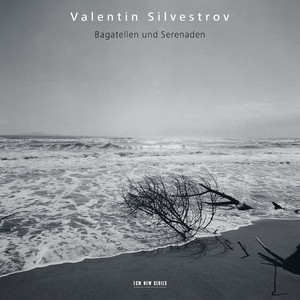 | Stille Musik: III. Augenblicke der Serenade | Valentin Silvestrov | C Major | 0 | 8B | 86 BPM | |
 | Skibbereen | Patrick Cassidy | E Minor | 1 | 9A | 84 BPM |
- ISRC
- GBXUX0871213
- Label
- L-M Records/RCA Records