- BPM
- 145
- Key
- C Major
- Camelot
- 8B
Stravinsky: Le Chant du rossignol: II. Marche chinoise by Igor Stravinsky, Finnish Radio Symphony Orchestra, Jukka-Pekka Saraste Song Details
"Stravinsky: Le Chant du rossignol: II. Marche chinoise" by Igor Stravinsky, Finnish Radio Symphony Orchestra, Jukka-Pekka Saraste had its release date on January 1, 1992. The duration of This song is about 3 minutes long, at 3:27. Based on our data, This song appears to be safe for all ages and is not considered explicit. This track is about the average length of a typical track. There are a total of 11 in the song's album "Stravinsky: Le chant du rossignol, Symphony in C & Symphony in 3 Movements". In this album, this song's track order is #2. Furthermore, we believe that the track originated from United Kingdom. Based on our statistics, Stravinsky: Le Chant du rossignol: II. Marche chinoise's popularity is not that popular right now. In our opinion, the overall tone is not very danceable and projects negative sounds, such as being sad, depressed, or angry.
BPM and Tempo
With Stravinsky: Le Chant du rossignol: II. Marche chinoise by Igor Stravinsky, Finnish Radio Symphony Orchestra, Jukka-Pekka Saraste having a BPM of 145 with a half-time of 72 BPM and a double-time of 290 BPM, we would consider this track to have a Allegro (fast, quick, and bright) tempo marking. Because of this, we believe that the song has an overall fast tempo. Looking at the BPM of this song, this song might go great with jogging or cycling. The time signature for this track is 4/4.
Music Key
This song is in the music key of C Major. Or for those who are familiar with the camelot wheel, this song has a camelot key of 8B. So, the perfect camelot match for 8B would be either 8B or 9A. While, 9B can give you a low energy boost. For moderate energy boost, you would use 5B and a high energy boost can either be 10B or 3B. Though, if you want a low energy drop, you should looking for songs with either a camelot key of 8A or 7B will give you a low energy drop, 11B would be a moderate one, and 6B or 1B would be a high energy drop. Lastly, 5A allows you to change the mood.
Want to find the BPM and music key for other songs? Check out our BPM and Key Finder page!
- Popularity
- 4%
- Loudness
- -21.773 dB
- Acousticness
- 99%
- Danceability
- 35%
- Energy
- 6%
- Instrumentalness
- 97%
- Liveness
- 9%
- Loudness
- 64%
- Speechiness
- 4%
- Valence
- 12%
Recommendations
| Track | Artist | Key | Energy | Camelot | BPM | ||
|---|---|---|---|---|---|---|---|
 | Symphony No.2 in C minor - "Resurrection" / 1st Movement - Allegro maestoso (Totenfeier): Wie zu Anfang | Gustav Mahler, Wiener Philharmoniker, Gilbert Kaplan | E♭ Major | 1 | 5B | 82 BPM | |
 | Lutosławski: Concerto for Orchestra: I. Intrada. Allegro maestoso | Witold Lutosławski, Daniel Barenboim, Chicago Symphony Orchestra | F♯ Minor | 1 | 11A | 128 BPM | |
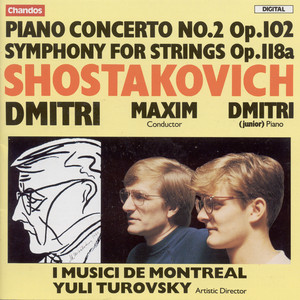 | Piano Concerto No. 2 in F Major, Op. 102: I. Allegro | Dmitri Shostakovich, I Musici de Montréal, Maxim Shostakovich | B♭ Major | 3 | 6B | 160 BPM | |
 | Britten: Young Apollo, Op. 16 | Benjamin Britten, Martin James Bartlett, Mozarteumorchester Salzburg, Howard Griffiths | A Major | 2 | 11B | 75 BPM | |
 | Symphony No. 1 in C Minor, Op. 68: II. Andante sostenuto | Johannes Brahms, Berliner Philharmoniker, Herbert von Karajan | E Major | 1 | 12B | 85 BPM | |
 | Symphony No. 1 in D Major: 2. Kräftig bewegt - Live | Gustav Mahler, Berliner Philharmoniker, Claudio Abbado | A Major | 1 | 11B | 96 BPM | |
 | Symphony No. 5 in E-Flat Major, Op. 82: III. Allegro molto - Misterioso - Largamente assai - Un pochettino stretto | Jean Sibelius, Berliner Philharmoniker, Sir Simon Rattle | A♭ Major | 1 | 4B | 77 BPM | |
 | Symphony in D Minor, FWV 48 (Remastered): III. Finale - Allegro non troppo | César Franck, Pierre Monteux, Chicago Symphony Orchestra | D Major | 2 | 10B | 84 BPM | |
 | La Mer, L. 109: I. De l'aube à midi sur la mer | Claude Debussy, Valery Gergiev, London Symphony Orchestra | F♯ Major | 0 | 2B | 90 BPM | |
 | Apollo (1947 revision): Tableau I: Prologue: The Birth of Apollo | London Symphony Orchestra, Robert Craft | G Major | 0 | 9B | 98 BPM | |
 | Concerto for Oboe and Small Orchestra in D Major, Op. 144: I. Allegro moderato | Richard Strauss, François Leleux, Swedish Radio Symphony Orchestra, Daniel Harding | D Major | 2 | 10B | 133 BPM | |
 | Symphony No. 8 in B Minor, D. 759 "Unfinished": 1. Allegro moderato | Franz Schubert, Berliner Philharmoniker, Herbert von Karajan | B Minor | 1 | 10A | 107 BPM | |
 | The Planets Suite, Op. 32: VII. Neptune | Gustav Holst, Vladimir Jurowski, Neville Creed, London Philharmonic Choir, London Philharmonic Orchestra | E Major | 0 | 12B | 95 BPM | |
 | Eine Alpensinfonie, Op.64, TrV 233: 19. Gewitter und Sturm, Abstieg | Richard Strauss, David Bell, Berliner Philharmoniker, Herbert von Karajan | B♭ Minor | 6 | 3A | 148 BPM | |
 | Symphonie fantastique, H. 48: Va. Songe d'une nuit du Sabbat. Larghetto - Allegro | Hector Berlioz, Chicago Symphony Orchestra, Claudio Abbado | C Minor | 1 | 5A | 105 BPM | |
 | Symphony No. 2 in C minor - "Resurrection" / 5th Movement: Sehr langsam und gedehnt ("der grosse Appell") | Gustav Mahler, Wiener Philharmoniker, Gilbert Kaplan | D♭ Minor | 0 | 12A | 67 BPM | |
 | 4 Ragtime Dances: No. 4, — | Charles Ives, Orchestra New England, James Sinclair | B♭ Major | 4 | 6B | 93 BPM | |
 | Peer Gynt Suite No. 1, Op. 46: II. The Death of Åse - Recorded 1982 | Edvard Grieg, Berliner Philharmoniker, Herbert von Karajan | G Major | 0 | 9B | 45 BPM | |
 | Poulenc: Concerto for Two Pianos in D Minor, FP 61: I. Allegro ma non troppo | Francis Poulenc, James Conlon, Rotterdam Philharmonic Orchestra | E♭ Major | 1 | 5B | 103 BPM | |
 | Sinfonia antartica "Symphony No. 7": II. Scherzo. Moderato | Ralph Vaughan Williams, BBC Symphony Orchestra, Martyn Brabbins | B♭ Major | 2 | 6B | 125 BPM | |
 | Callirhoé, suite de ballet: I. Prélude | Cécile Chaminade, Orchestre national de Metz Grand Est, David Reiland | E Major | 1 | 12B | 101 BPM | |
 | La mer, CD 111: III. Dialogue du vent et de la mer - Recorded 1985 | Claude Debussy, Berliner Philharmoniker, Herbert von Karajan | A Major | 2 | 11B | 75 BPM | |
 | Symphony No. 7 in D Minor, Op. 70, B. 141: I. Allegro maestoso | Antonín Dvořák, London Symphony Orchestra, Sir Colin Davis | B♭ Major | 1 | 6B | 170 BPM | |
 | Symphony No. 8 in G Minor, Op. 88, B. 163: II. Adagio | Antonín Dvořák, London Symphony Orchestra, Sir Colin Davis | C Major | 0 | 8B | 54 BPM | |
 | Pictures at an Exhibition (Orch. Ravel): VIIIb. Cum mortuis in lingua mortua | Modest Mussorgsky, Wiener Philharmoniker, Gustavo Dudamel | F♯ Major | 0 | 2B | 69 BPM |
- ISRC
- GBAYC9105107
- Label
- L-M Records/RCA Records