- BPM
- 93
- Key
- B♭ Major
- Camelot
- 6B
Variations on an Original Theme by Handel: Fuga by Johannes Brahms, David Wilde Song Details
Johannes Brahms, David Wilde's 'Variations on an Original Theme by Handel: Fuga' had a release date set for March 2, 2009. With this song being about 5 minutes long, at This song is fairly a long song compared to the average song length. This song does not have an "Explicit" tag, making it safe for all ages. This song is part of Wilde Plays Brahms: Two Rhapsodies, Variations on an Original Theme, Three Intermezzi by Johannes Brahms, David Wilde. The song's track number on the album is #44 out of 44 tracks. Based on our data, United Kingdom was the country where this track was produced or recorded. In terms of popularity, Variations on an Original Theme by Handel: Fuga is currently unknown. In our opinion, the overall tone is not very danceable and projects negative sounds, such as being sad, depressed, or angry.
BPM and Tempo
Since Variations on an Original Theme by Handel: Fuga by Johannes Brahms, David Wilde has a tempo of 93 beats per a minute, the tempo markings of this song would be Andante (at a walking pace). With Variations on an Original Theme by Handel: Fuga being at 93 BPM, the half-time would be 46 BPM with a double-time of 186 BPM.In addition, we consider the tempo speed to be pretty slow for this song. This makes this song perfect for activities such as, yoga or pilates. The time signature for this track is 4/4.
Music Key
This song is in the music key of B♭ Major. Or for those who are familiar with the camelot wheel, this song has a camelot key of 6B. So, the perfect camelot match for 6B would be either 6B or 7A. While, 7B can give you a low energy boost. For moderate energy boost, you would use 3B and a high energy boost can either be 8B or 1B. Though, if you want a low energy drop, you should looking for songs with either a camelot key of 6A or 5B will give you a low energy drop, 9B would be a moderate one, and 4B or 11B would be a high energy drop. Lastly, 3A allows you to change the mood.
Want to find the BPM and music key for other songs? Check out our BPM and Key Finder page!
- Popularity
- 0%
- Loudness
- -19.008 dB
- Acousticness
- 98%
- Danceability
- 24%
- Energy
- 25%
- Instrumentalness
- 86%
- Liveness
- 11%
- Loudness
- 68%
- Speechiness
- 4%
- Valence
- 27%
Recommendations
| Track | Artist | Key | Energy | Camelot | BPM | ||
|---|---|---|---|---|---|---|---|
 | Variations on a Rococo Theme, Op. 33, TH 57: Var: VI. Andante | Pyotr Ilyich Tchaikovsky, Jean-Guihen Queyras, BBC Symphony Orchestra, Jiří Bělohlávek | D Major | 0 | 10B | 114 BPM | |
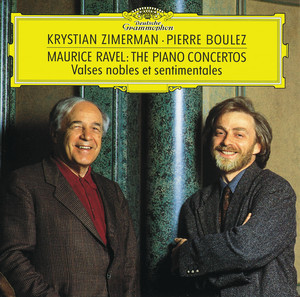 | Piano Concerto in G Major, M. 83: II. Adagio assai | Maurice Ravel, Krystian Zimerman, Cleveland Orchestra, Pierre Boulez | E Major | 0 | 12B | 74 BPM | |
 | Keyboard Sonata in D Minor, Kk. 1 | Domenico Scarlatti, Ivo Pogorelich | D Minor | 1 | 7A | 107 BPM | |
 | Mozart: Clarinet Concerto in A Major, K. 622: II. Adagio | Wolfgang Amadeus Mozart, Sabine Meyer, Berliner Philharmoniker, Claudio Abbado | D Major | 0 | 10B | 95 BPM | |
 | Weber: Clarinet Concerto No. 1 in F Minor, Op. 73, J. 114: I. Allegro | Carl Maria von Weber, Sabine Meyer, Staatskapelle Dresden, Herbert Blomstedt | F Minor | 1 | 4A | 128 BPM | |
 | Orfeo ed Euridice, Wq. 30: Dance of the Blessed Spirits "Melody" (Arr. Sgambati for Piano) | Christoph Willibald Gluck, Yuja Wang | D Minor | 0 | 7A | 70 BPM | |
 | Le roi s'amuse: Passepied | Léo Delibes, Slovak Philharmonic, Ondrej Lenard | A Major | 1 | 11B | 88 BPM | |
 | Le carnaval des animaux, R. 125: Le cygne | Camille Saint-Saëns, Mischa Maisky, Orpheus Chamber Orchestra | C Major | 0 | 8B | 83 BPM | |
 | Piano Concerto No. 2 in A Minor, Op. 85: II. Larghetto | Johann Nepomuk Hummel, Stephen Hough, English Chamber Orchestra, Bryden Thomson | F Major | 1 | 7B | 127 BPM | |
 | 6 Impromptus, Op. 5: Impromptu V | Jean Sibelius, Leif Ove Andsnes | B Minor | 0 | 10A | 72 BPM | |
 | 5 Lieder, Op. 49: No. 4. Wiegenlied (arr. P. Nagy): Cradle Song (trans. P. Nagy) | Péter Nagy, Johannes Brahms | E♭ Major | 0 | 5B | 134 BPM | |
 | Jeux d'enfants, Op. 22: No. 3, La poupée | Georges Bizet, Katia Labèque, Marielle Labèque | B Major | 0 | 1B | 64 BPM | |
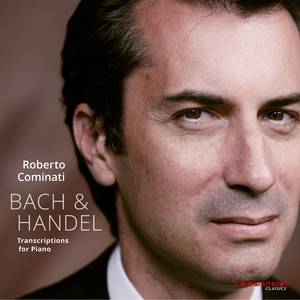 | Minuet in G Minor, HWV 434 No. 4 (Transc. W. Kempff) | George Frideric Handel, Roberto Cominati | G Minor | 0 | 6A | 66 BPM | |
 | Wiegenlied, Op. 49, No. 4 | Johannes Brahms, Leonidas Kavakos, Yuja Wang | E♭ Major | 0 | 5B | 74 BPM | |
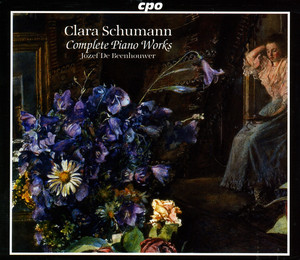 | 3 Preludes and Fugues, Op. 16: No. 2, Prelude and Fugue in B-Flat Major | Clara Schumann, Jozef De Beenhouwer | B♭ Major | 0 | 6B | 101 BPM | |
 | Five pieces for Two Violins and Piano: I. Prelude- Moderato | Dmitri Shostakovich, Brodsky Quartet, Christian Blackshaw | B Minor | 0 | 10A | 82 BPM | |
 | Violin Concerto No. 1 in G Minor, Op. 26: II. Adagio | Max Bruch, Joshua Bell, Academy of St. Martin in the Fields, Sir Neville Marriner | E♭ Major | 1 | 5B | 85 BPM | |
 | Piano Concerto No. 2 in F Major, Op. 102: II. Andante | Dmitri Shostakovich, Boris Giltburg, Royal Liverpool Philharmonic Orchestra, Vasily Petrenko | C Minor | 0 | 5A | 80 BPM | |
 | Intermezzo Op. 76, No. 7 in A minor | Evgeny Kissin | A Minor | 0 | 8A | 70 BPM | |
 | Liszt: Lieder aus Franz Schubert's "Schwanengesang", S. 560: No. 7 Ständchen | Franz Liszt, Mariam Batsashvili | A Minor | 1 | 8A | 120 BPM | |
 | 21 Hungarian Dances, WoO 1 (arr. J. Joachim for violin and piano): No. 6 in D Major (original in D-Flat Major) | Joseph Joachim, Johannes Brahms, Marat Bisengaliev, John Lenehan | B♭ Major | 1 | 6B | 72 BPM | |
 | Violin Concerto No. 5 in A Major, K. 219 "Turkish": I. Allegro aperto | Wolfgang Amadeus Mozart, Arabella Steinbacher, Festival Strings Lucerne (musical direction), Lucerne Festival Strings, Daniel Dodds | A Major | 1 | 11B | 121 BPM | |
 | Vocalise, Op. 34, No. 14 | Sergei Rachmaninoff, Berliner Philharmoniker, Lorin Maazel | E Minor | 1 | 9A | 76 BPM | |
 | Sonata in E Major, K. 380 | Domenico Scarlatti, Khatia Buniatishvili | B Major | 0 | 1B | 84 BPM | |
 | II. Adagio cantabile from Piano Sonata No. 8 in C minor, Op. 13 "Pathetique" - Instrumental | Ludwig van Beethoven, Murray Perahia | A♭ Major | 0 | 4B | 62 BPM |
- ISRC
- GBEBL0904044
- Label
- L-M Records/RCA Records