- BPM
- 76
- Key
- A Major
- Camelot
- 11B
Schubert: Rondo for Violin and Orchestra in A Major, D. 438: I. Adagio by Franz Schubert, Sir Neville Marriner, Josef Suk, Academy of St. Martin in the Fields Song Details
"Schubert: Rondo for Violin and Orchestra in A Major, D. 438: I. Adagio" by Franz Schubert, Sir Neville Marriner, Josef Suk, Academy of St. Martin in the Fields had its release date on February 3, 2025. With this song being around four minutes long, at 3:41, the duration of this song is pretty average compared to other songs. This track is safe for children and doesn't appear to contain any foul language, since the "Explicit" tag was not present in this track. The song is number 5 out of 6 in Beethoven: Romances for Violin and Orchestra - Schubert: Rondo, D. 438 - Mozart: Adagio, K. 261 & Rondo, K. 373 by Josef Suk, Sir Neville Marriner, Academy of St. Martin in the Fields, Franz Schubert, Ludwig van Beethoven, Wolfgang Amadeus Mozart. Going off of the ISRC code of this track, we detected that the origin of this track is from United Kingdom. Schubert: Rondo for Violin and Orchestra in A Major, D. 438: I. Adagio is not that popular right now. In our opinion, the overall tone is not very danceable and projects negative sounds, such as being sad, depressed, or angry.
BPM and Tempo
The tempo marking of Schubert: Rondo for Violin and Orchestra in A Major, D. 438: I. Adagio by Franz Schubert, Sir Neville Marriner, Josef Suk, Academy of St. Martin in the Fields is Adagio (slowly with great expression), since this song has a tempo of 76 BPM. With that information, we can conclude that the song has a slow tempo. The time signature for this track is 4/4.
Music Key
A Major is the music key of this track. This also means that this song has a camelot key of 11B. So, the perfect camelot match for 11B would be either 11B or 12A. While, 12B can give you a low energy boost. For moderate energy boost, you would use 8B and a high energy boost can either be 1B or 6B. Though, if you want a low energy drop, you should looking for songs with either a camelot key of 11A or 10B will give you a low energy drop, 2B would be a moderate one, and 9B or 4B would be a high energy drop. Lastly, 8A allows you to change the mood.
Want to find the BPM and music key for other songs? Check out our BPM and Key Finder page!
- Popularity
- 3%
- Loudness
- -19.719 dB
- Acousticness
- 95%
- Danceability
- 19%
- Energy
- 10%
- Instrumentalness
- 12%
- Liveness
- 45%
- Loudness
- 67%
- Speechiness
- 6%
- Valence
- 11%
Recommendations
| Track | Artist | Key | Energy | Camelot | BPM | ||
|---|---|---|---|---|---|---|---|
 | Pärt: Spiegel im Spiegel | Arvo Pärt, Renaud Capuçon, Guillaume Bellom | F Major | 0 | 7B | 85 BPM | |
 | 3 Romances sans paroles, Op. 17: No. 3 in A-Flat Major (Arr. P. Gouin for Cello & Piano) | Gabriel Fauré, Jesper Svedberg, Simon Crawford-Phillips | A Major | 0 | 11B | 79 BPM | |
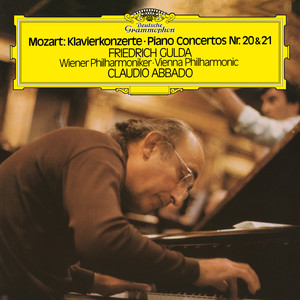 | Piano Concerto No. 21 in C Major, K. 467: II. Andante | Wolfgang Amadeus Mozart, Friedrich Gulda, Wiener Philharmoniker, Claudio Abbado | F Major | 0 | 7B | 81 BPM | |
 | 3 Intermezzi, Op. 117: No. 1 in E-Flat Major. Andante moderato | Johannes Brahms, Radu Lupu | E♭ Major | 0 | 5B | 73 BPM | |
 | Sonata in D Minor, K. 9 | Domenico Scarlatti, Ivo Pogorelich | D Minor | 0 | 7A | 94 BPM | |
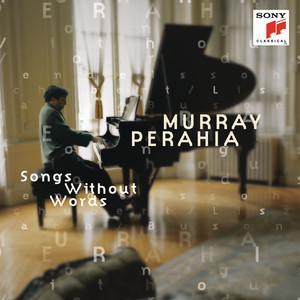 | Lieder ohne Worte, Op. 19, No. 1 | Felix Mendelssohn, Murray Perahia | E Major | 0 | 12B | 138 BPM | |
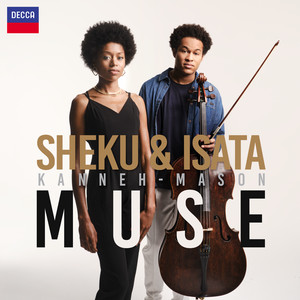 | 12 Romances, Op. 21: No. 7, How Fair This Spot (Arr. Sheku Kanneh-Mason for Cello and Piano) | Sergei Rachmaninoff, Sheku Kanneh-Mason, Isata Kanneh-Mason | A Major | 1 | 11B | 89 BPM | |
 | La separation, Nocturne in F Minor | Mikhail Glinka, Victor Ryabchikov | F Minor | 1 | 4A | 73 BPM | |
 | Violin Concerto No. 1 in G Minor, Op. 26: III. Allegro energico | Max Bruch, Itzhak Perlman, Bernard Haitink, Royal Concertgebouw Orchestra | G Major | 3 | 9B | 97 BPM | |
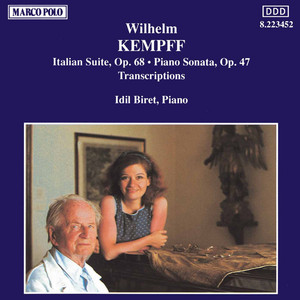 | Orphée et Eurydice, Wq. 30: Dance of the Blessed Spirits (Arr. W. Kempff for Piano) | Christoph Willibald Gluck, Idil Biret | F Major | 0 | 7B | 89 BPM | |
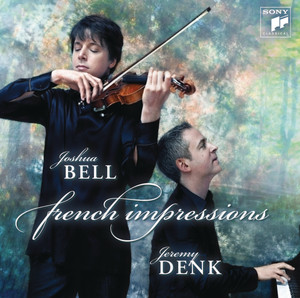 | Violin Sonata in A major, FWV 8: IV. Allegretto poco mosso | César Franck, Joshua Bell, Jeremy Denk | A Major | 1 | 11B | 94 BPM | |
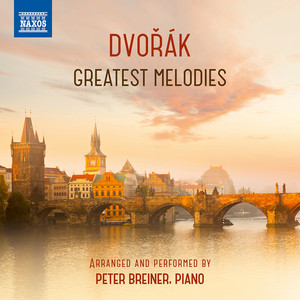 | III. Allegretto grazioso | Antonín Dvořák, Peter Breiner | G Major | 1 | 9B | 179 BPM | |
 | 6 Moments musicaux, D. 780: No. 3 in F Minor. Allegro moderato | Franz Schubert, Seong-Jin Cho | A Major | 1 | 11B | 87 BPM | |
 | Cello Concerto in A Minor, Op. 129: III. Sehr lebhaft | Robert Schumann, Kian Soltani, Camerata Salzburg, Gregory Ahss | E Minor | 2 | 9A | 119 BPM | |
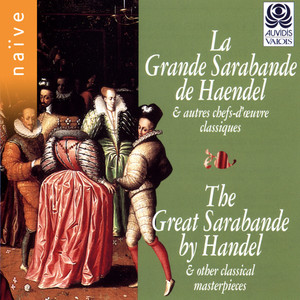 | Suite in D Minor, HWV 437: III. Saraband | George Frideric Handel, Karol Teutsch, Orchestre Leopoldinum-wroclaw | D Minor | 1 | 7A | 60 BPM | |
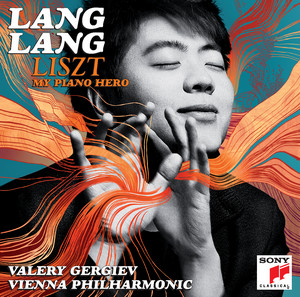 | Consolation No. 3 in D-Flat Major, S. 172 | Franz Liszt, Lang Lang | D♭ Major | 0 | 3B | 74 BPM | |
 | Kinderszenen, Op. 15: Träumerei | Robert Schumann, Vladimir Horowitz | F Major | 0 | 7B | 63 BPM | |
 | 美しき水車小屋の娘 Op. 25, D. 795: 第4曲 小川への言葉 | Wilhelm Müller, Franz Schubert, John Ken NUZZO, 近藤亜紀 | G Major | 1 | 9B | 83 BPM | |
 | 2 Pieces for the Left Hand, Op. 9: No. 2, Nocturne in D-Flat Major | Alexander Scriabin, Maria Lettberg | A♭ Major | 0 | 4B | 74 BPM | |
 | La forza del destino: Overture (Sinfonia) | Giuseppe Verdi, Berliner Philharmoniker, Claudio Abbado | E Minor | 2 | 9A | 80 BPM | |
 | Le carnaval des animaux, R. 125: Le cygne | Camille Saint-Saëns, Mischa Maisky, Orpheus Chamber Orchestra | C Major | 0 | 8B | 83 BPM | |
 | Haydn: Cello Concerto No. 1 in C Major, Hob. VIIb, 1: I. Moderato (Cadenza by Britten) | Franz Joseph Haydn, Mstislav Rostropovich, Academy of St. Martin in the Fields | C Major | 1 | 8B | 68 BPM | |
 | 3 Romances sans paroles, Op. 17: No. 3 in A-Flat Major. Andante moderato | Gabriel Fauré, Kun-Woo Paik | A♭ Major | 0 | 4B | 65 BPM | |
 | The Carnival of the Animals, R. 125: XIII. The Swan (Arr. for Cello and Piano) | Camille Saint-Saëns, Yo-Yo Ma, Kathryn Stott | C Major | 2 | 8B | 99 BPM | |
 | Piano Concerto No. 23 in A Major, K. 488: II. Adagio | Wolfgang Amadeus Mozart, Vladimir Horowitz, Orchestra Del Teatro Alla Scala, Milano, Carlo Maria Giulini | F♯ Minor | 0 | 11A | 108 BPM |
- ISRC
- GBAYC2301951
- Label
- L-M Records/RCA Records