- BPM
- 116
- Key
- C Major
- Camelot
- 8B
Albumblätter, Op. 39: No. 1, Moderato by Hans Sitt, Alicia Calabuig, Jorge Blasco Song Details
"Albumblätter, Op. 39: No. 1, Moderato" by Hans Sitt, Alicia Calabuig, Jorge Blasco had its release date on October 13, 2023. The duration of This song is about two minutes long, specifically at 2:43. This song does not appear to have any foul language. Albumblätter, Op. 39: No. 1, Moderato's duration is considered a little bit shorter than the average duration of a typical track. The track order of this song in Hans Sitt, Alicia Calabuig, Jorge Blasco's "Hans Sitt: Viola and Piano Works" album is number 1 out of 16. On top of that, Spain appears to be the country where this track was created. In terms of popularity, Albumblätter, Op. 39: No. 1, Moderato is currently not that popular. In our opinion, the overall tone is not very danceable and projects negative sounds, such as being sad, depressed, or angry.
BPM and Tempo
We consider the tempo marking of Albumblätter, Op. 39: No. 1, Moderato by Hans Sitt, Alicia Calabuig, Jorge Blasco to be Moderato (at a moderate speed) because the track has a tempo of 116 BPM, a half-time of 58BPM, and a double-time of 232 BPM. Based on that, the speed of the song's tempo is moderate. Activities such as, walking, can go well with this song. The time signature for this track is 4/4.
Music Key
This song is in the music key of C Major. This also means that this song has a camelot key of 8B. So, the perfect camelot match for 8B would be either 8B or 9A. While, 9B can give you a low energy boost. For moderate energy boost, you would use 5B and a high energy boost can either be 10B or 3B. Though, if you want a low energy drop, you should looking for songs with either a camelot key of 8A or 7B will give you a low energy drop, 11B would be a moderate one, and 6B or 1B would be a high energy drop. Lastly, 5A allows you to change the mood.
Want to find the BPM and music key for other songs? Check out our BPM and Key Finder page!
- Popularity
- 1%
- Loudness
- -23.89 dB
- Acousticness
- 99%
- Danceability
- 24%
- Energy
- 4%
- Instrumentalness
- 32%
- Liveness
- 7%
- Loudness
- 60%
- Speechiness
- 5%
- Valence
- 6%
Recommendations
| Track | Artist | Key | Energy | Camelot | BPM | ||
|---|---|---|---|---|---|---|---|
 | Sonata in G Minor for Cello and Piano, Op. 19: II. Allegro scherzando | Sergei Rachmaninoff, Pablo Ferrandez, Denis Kozhukhin | A♭ Major | 1 | 4B | 176 BPM | |
 | Elfentanz | Randall Goosby, Zhu Wang | D Major | 1 | 10B | 75 BPM | |
 | 4 Romantic Pieces, Op. 75, B. 150 (Arr. for Violin & Orchestra by Alex Fortes): No. 1, Allegro moderato | Antonín Dvořák, Grace Park, PKF - Prague Philharmonia, Emmanuel Villaume | B♭ Major | 1 | 6B | 94 BPM | |
 | Ave Maria (Arr. for Cello and Orchestra by Martin Ulikhanyan) | Camille Thomas, Sergey Smbatyan, Armenian State Symphony Orchestra | F Major | 1 | 7B | 85 BPM | |
 | Franck: Violin Sonata in A Major, FWV 8: I. Allegretto ben moderato | César Franck, Daniel Lozakovich, Mikhail Pletnev | F♯ Minor | 1 | 11A | 104 BPM | |
 | Albumblätter, Op. 39: No. 1, Moderato | Hans Sitt, Alicia Calabuig, Jorge Blasco | C Major | 0 | 8B | 116 BPM | |
 | 2 Stücke, Op. 16: II. Humoreske (Allegro con brio) | Leone Sinigaglia, Raphaela Gromes, Julian Riem | D Major | 2 | 10B | 140 BPM | |
 | 3 Compositions for Violin and Piano, Op. 40: No. 2, Berceuse, Op. 40: No. 2, Berceuse | Amy Beach, Alessandro Clerici, Elena Brunello | D Major | 0 | 10B | 73 BPM | |
 | O ma belle rebelle | Charles Gounod, Christian-Pierre La Marca | E Minor | 0 | 9A | 80 BPM | |
 | Bottesini: Double Bass Concerto No. 2 in B Minor: II. Andante | Giovanni Bottesini, Mikyung Sung, Clay Couturiaux, Bradetich Competition Orchestra | G Major | 1 | 9B | 72 BPM | |
 | Bagatelles, Op. 47, B. 79: No. 3 in G Minor, Allegretto scherzando | Antonín Dvořák, Josef Suk, Miroslav Ambroš, Jiří Bárta, Jan Simon | E♭ Major | 4 | 5B | 91 BPM | |
 | String Quartet in F Major, 2nd Movement | Maurice Ravel, vision string quartet | E Major | 0 | 12B | 72 BPM | |
 | 6 Morceaux, Op. 19: No. 4, Nocturne (Version for Cello & Strings) | Pyotr Ilyich Tchaikovsky, Harriet Krijgh, Gustavo Gimeno, Deutsche Staatsphilharmonie Rheinland-Pfalz | D Minor | 1 | 7A | 79 BPM | |
 | Song Without Words No. 7 | Heath Olean, Yaroslav Medvedev-Taraldset | G Minor | 2 | 6A | 169 BPM | |
 | 8 Pieces, Op. 39: No. 3, Berceuse | Reinhold Glière, Friedemann Eichhorn, Martin Rummel, Alexander Hülshoff | E Minor | 2 | 9A | 82 BPM | |
 | Violin Concertino in A Minor, Op. 93: I. Allegro moderato | Hans Sitt, Andrzej Ladomirski, Monika Kruk | C Major | 2 | 8B | 126 BPM | |
 | Love Theme: Kmotr | Prague Cello Quartet | D Minor | 1 | 7A | 67 BPM | |
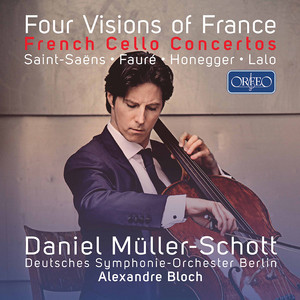 | Cello Concerto No. 1 in A Minor, Op. 33, R. 193: III. Allegro non troppo | Camille Saint-Saëns, Daniel Müller-Schott, Deutsches Symphonie-Orchester Berlin, Alexandre Bloch | F Major | 0 | 7B | 78 BPM | |
 | Etudes-Tableaux, Op. 33, No. 2 in C Major | Hélène Grimaud | F Major | 0 | 7B | 84 BPM | |
 | Estrellita | Manuel Ponce, Pablo Ferrandez, Julien Quentin | F♯ Major | 1 | 2B | 111 BPM | |
 | Der Opernball: Midnight Bells (Arr. Kreisler for Violin and Piano) | Richard Heuberger, Janine Jansen, Antonio Pappano | C Major | 1 | 8B | 80 BPM | |
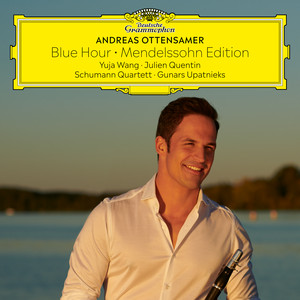 | Lieder ohne Worte IV, Op. 53: V. Volkslied. Allegro con fuoco, MWV U153 (Arr. Ottensamer for Clarinet & Strings) | Felix Mendelssohn, Andreas Ottensamer, Schumann Quartett, Gunars Upatnieks | A Minor | 3 | 8A | 72 BPM | |
 | Romeo and Juliet, Op. 64 (Orch. by Jean-Pierre Haeck): I. Introduction | Sergei Prokofiev, Adrien La Marca, Liège Royal Philharmonic, Christian Arming | D Major | 2 | 10B | 71 BPM | |
 | Histoire du Tango: II. Café 1930 (Arr. for violin and piano by Dmitriy Varelas) | Louise Bessette, Marc Djokic | G Minor | 1 | 6A | 132 BPM | |
 | Chanson de matin, Op. 15 No. 2 | Edward Elgar, Geneviève Laurenceau, Jean-Frédéric Neuburger | E Major | 0 | 12B | 72 BPM |
- ISRC
- ES25S2300068
- Label
- L-M Records/RCA Records