- BPM
- 100
- Key
- A Major
- Camelot
- 11B
Strauss, R: An Alpine Symphony, Op. 64: II. Sunrise by Richard Strauss, Rudolf Kempe, Staatskapelle Dresden Song Details
"Strauss, R: An Alpine Symphony, Op. 64: II. Sunrise" by Richard Strauss, Rudolf Kempe, Staatskapelle Dresden had its release date on 2013. With This song being less than two minutes long, at 1:24, we are fairly confident that this song is not explicit and is safe for all ages. Based on the duration of this song, this song duration is much smaller than the average song duration. There are a total of 103 in the song's album "Strauss, Richard: Complete Orchestral Works". In this album, this song's track order is #21. Furthermore, we believe that the track originated from United Kingdom. In terms of popularity, Strauss, R: An Alpine Symphony, Op. 64: II. Sunrise is currently not that popular. In our opinion, the overall tone is not very danceable and projects negative sounds, such as being sad, depressed, or angry.
BPM and Tempo
With Strauss, R: An Alpine Symphony, Op. 64: II. Sunrise by Richard Strauss, Rudolf Kempe, Staatskapelle Dresden having a BPM of 100 with a half-time of 50 BPM and a double-time of 200 BPM, we would consider this track to have a Andante (at a walking pace) tempo marking. Because of this, we believe that the song has an overall slow tempo. The time signature for this track is 4/4.
Music Key
This song has a musical key of A Major. Or for those who are familiar with the camelot wheel, this song has a camelot key of 11B. So, the perfect camelot match for 11B would be either 11B or 12A. While, 12B can give you a low energy boost. For moderate energy boost, you would use 8B and a high energy boost can either be 1B or 6B. Though, if you want a low energy drop, you should looking for songs with either a camelot key of 11A or 10B will give you a low energy drop, 2B would be a moderate one, and 9B or 4B would be a high energy drop. Lastly, 8A allows you to change the mood.
Want to find the BPM and music key for other songs? Check out our BPM and Key Finder page!
- Popularity
- 2%
- Loudness
- -7.479 dB
- Acousticness
- 59%
- Danceability
- 13%
- Energy
- 58%
- Instrumentalness
- 97%
- Liveness
- 33%
- Loudness
- 88%
- Speechiness
- 4%
- Valence
- 16%
Recommendations
| Track | Artist | Key | Energy | Camelot | BPM | ||
|---|---|---|---|---|---|---|---|
 | Romeo and Juliette, Op. 64 (Arr. for Viola and Piano by Vadim Borisovsky, Orchestration for Viola and String Orchestra by François Vallières): Introduction | Sergei Prokofiev, Elvira Misbakhova, I Musici de Montréal, Jean-François Rivest | D Major | 1 | 10B | 99 BPM | |
 | La Cenerentola: Overture (Sinfonia) | Gioachino Rossini, Orchestra del Teatro Comunale di Bologna, Riccardo Chailly | A Minor | 1 | 8A | 116 BPM | |
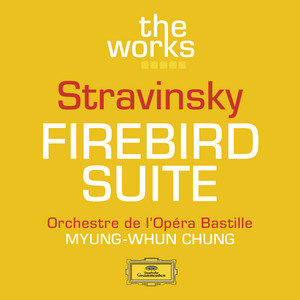 | The Firebird (L'oiseau De Feu) - Suite (1919): Finale | Igor Stravinsky, Orchestre de l'Opéra National de Paris, Myung-Whun Chung | E Major | 2 | 12B | 78 BPM | |
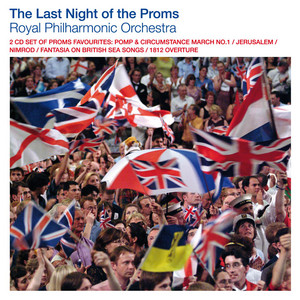 | Elgar: Variations on an Original Theme, Op. 36 "Enigma": Variation IX. Adagio "Nimrod" | Edward Elgar, Royal Philharmonic Orchestra, Philip Ellis | E♭ Major | 1 | 5B | 112 BPM | |
 | Der fliegende Holländer: Overture | Richard Wagner, Chicago Symphony Orchestra, Sir Georg Solti | D Minor | 3 | 7A | 91 BPM | |
 | Symphony No. 3 In C Minor, Op. 78 "Organ Symphony": 2. Allegro moderato - Presto - Allegro moderato - Maestoso - Più allegro - Molto allegro | Camille Saint-Saëns, Simon Preston, Berliner Philharmoniker, James Levine | F Minor | 2 | 4A | 117 BPM | |
 | Zdes' khorosho ('How Fair This Spot'), Op. 21, No. 7 | Sergei Rachmaninoff, Pablo Ferrandez, Denis Kozhukhin | A Major | 0 | 11B | 87 BPM | |
 | Lyric Suite, Op. 54: III. Notturno (Nocturne) | Edvard Grieg, Malmö Symphony Orchestra, Bjarte Engeset | C Major | 0 | 8B | 118 BPM | |
 | I. Prélude. Andantino | César Franck, Jean-Pierre Armengaud | D Major | 0 | 10B | 66 BPM | |
 | The Music Makers, Op. 69: II. We Are the music makers | Edward Elgar, Sarah Connolly, Greg Beardsell, Bournemouth Symphony Chorus, Bournemouth Symphony Orchestra, Simon Wright | B♭ Minor | 0 | 3A | 79 BPM | |
 | Elektra: V. Mit Messern gräbt Tag um Tag… | Hugo von Hofmannsthal, Richard Strauss, Anita Soldh, Laila Andersson-palme, Royal Swedish Opera Orchestra, Siegfried Köhler | D♭ Major | 5 | 3B | 118 BPM | |
 | Prince Igor: Polovtsian Dances (Version for Chorus) | Alexander Borodin, Kiev Chamber Choir, Ukraine National Radio Symphony Orchestra, Theodore Kuchar | A Major | 2 | 11B | 110 BPM | |
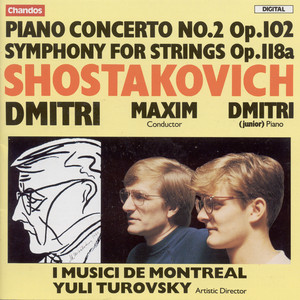 | Piano Concerto No. 2 in F Major, Op. 102: I. Allegro | Dmitri Shostakovich, I Musici de Montréal, Maxim Shostakovich | B♭ Major | 3 | 6B | 160 BPM | |
 | 3 Études de Concert, S. 144: No. 3 in D-Flat Major "Un sospiro" | Franz Liszt, Daniil Trifonov | D♭ Major | 1 | 3B | 76 BPM | |
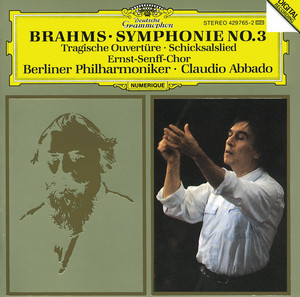 | Tragic Overture, Op. 81 | Johannes Brahms, Berliner Philharmoniker, Claudio Abbado | D Minor | 1 | 7A | 85 BPM | |
 | Nocturnes, CD 98: II. Fêtes | Claude Debussy, Berliner Philharmoniker, Claudio Abbado | A Major | 2 | 11B | 79 BPM | |
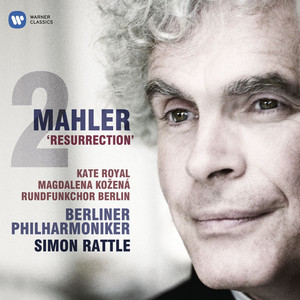 | Mahler: Symphony No. 2 in C Minor "Resurrection": V. (g) Mit Aufschwung aber nicht eilen. "O Schmerz !" | Gustav Mahler, Sir Simon Rattle, Kate Royal, Magdalena Kozená, Rundfunkchor Berlin, Berliner Philharmoniker | E♭ Major | 4 | 5B | 80 BPM | |
 | Piano Concerto No. 2 in C Minor, Op. 18: I. Moderato | Sergei Rachmaninoff, Yuja Wang, Los Angeles Philharmonic, Gustavo Dudamel | G Minor | 3 | 6A | 97 BPM | |
 | Piano Concerto No. 2 in F Major, Op. 102: II. Andante | Dmitri Shostakovich, Yuja Wang, Boston Symphony Orchestra, Andris Nelsons | F Major | 1 | 7B | 104 BPM | |
 | Strauss, R: Der Bürger als Edelmann Suite, Op. 60-IIIa: IV. Auftritt und Tanz der Schneider | Richard Strauss, Jeffrey Tate, English Chamber Orchestra, Clifford Benson, José-Luis Garcia | B♭ Major | 1 | 6B | 79 BPM | |
 | Vier letzte Lieder, TrV 296: 3. Beim Schlafengehen | Richard Strauss, Jessye Norman, Gewandhausorchester, Kurt Masur | D♭ Major | 1 | 3B | 82 BPM | |
 | Symphony No. 1, Op. 9: I. Allegro ma non troppo | Samuel Barber, Leonard Slatkin, St. Louis Symphony | D♭ Major | 0 | 3B | 106 BPM | |
 | 2nd Movement: Largo | London Philharmonic Orchestra | D♭ Major | 0 | 3B | 74 BPM | |
 | Piano Sonata in B Minor, Op. 5, TrV 103: II. Adagio cantabile | Richard Strauss, Stefan Veselka | E Major | 0 | 12B | 74 BPM | |
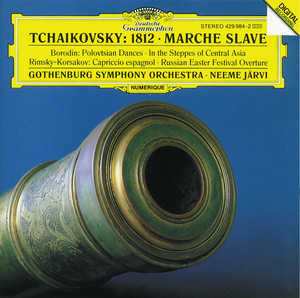 | Polovtsian Dances From "Prince Igor" | Alexander Borodin, Torgny Sporsen, Gothenburg Symphony Orchestra, Neeme Järvi, Gothenburg Symphony Choir | D Major | 1 | 10B | 103 BPM |
- ISRC
- GBAYC1201647
- Label
- L-M Records/RCA Records