- BPM
- 144
- Key
- E♭ Major
- Camelot
- 5B
Sonata for Flute and Piano: IV. Rondo. Finale by Erwin Schulhoff, Sarah Rumer, Ulrich Koella Song Details
Erwin Schulhoff, Sarah Rumer, Ulrich Koella's 'Sonata for Flute and Piano: IV. Rondo. Finale' had a release date set for June 2, 2023. The duration of This song is about two minutes long, specifically at 2:33. This song does not appear to have any foul language. Sonata for Flute and Piano: IV. Rondo. Finale's duration is considered a little bit shorter than the average duration of a typical track. There are a total of 4 in the song's album "Schulhoff: Sonata for Flute and Piano". In this album, this song's track order is #4. Furthermore, we believe that the track originated from Switzerland. Based on our statistics, Sonata for Flute and Piano: IV. Rondo. Finale's popularity is not that popular right now. Although the tone can be danceable to some, this track does projects more of a negative sound rather than a postive one.
BPM and Tempo
With Sonata for Flute and Piano: IV. Rondo. Finale by Erwin Schulhoff, Sarah Rumer, Ulrich Koella having a BPM of 144 with a half-time of 72 BPM and a double-time of 288 BPM, we would consider this track to have a Allegro (fast, quick, and bright) tempo marking. Because of this, we believe that the song has an overall fast tempo. Looking at the BPM of this song, this song might go great with jogging or cycling. The time signature for this track is 4/4.
Music Key
E♭ Major is the music key of this track. Or for those who are familiar with the camelot wheel, this song has a camelot key of 5B. So, the perfect camelot match for 5B would be either 5B or 6A. While, 6B can give you a low energy boost. For moderate energy boost, you would use 2B and a high energy boost can either be 7B or 12B. Though, if you want a low energy drop, you should looking for songs with either a camelot key of 5A or 4B will give you a low energy drop, 8B would be a moderate one, and 3B or 10B would be a high energy drop. Lastly, 2A allows you to change the mood.
Want to find the BPM and music key for other songs? Check out our BPM and Key Finder page!
- Popularity
- 2%
- Loudness
- -22.704 dB
- Acousticness
- 99%
- Danceability
- 48%
- Energy
- 12%
- Instrumentalness
- 93%
- Liveness
- 12%
- Loudness
- 62%
- Speechiness
- 4%
- Valence
- 27%
Recommendations
| Track | Artist | Key | Energy | Camelot | BPM | ||
|---|---|---|---|---|---|---|---|
 | String Quartet No. 2: IV. Finale. Andante quasi introduzione - Allegro molto | Erwin Schulhoff, Aviv Quartet | C Major | 3 | 8B | 115 BPM | |
 | String Quartet No. 2 'Intimate Pages': String Quartet No. 2 'Intimate Pages': III. Moderato. Andante. Adagio | Leoš Janáček, Jerusalem Quartet | D♭ Minor | 1 | 12A | 88 BPM | |
 | Sibelius: Symphony No. 1 in E Minor, Op. 39: III. Scherzo. Allegro | Jean Sibelius, Paavo Berglund, Helsinki Philharmonic Orchestra | C Major | 2 | 8B | 109 BPM | |
 | String Quartet No. 1 in D Major, Op. 25: I. Andante Sostenuto - Allegro Vivo | Benjamin Britten, Barbican Quartet | G Major | 1 | 9B | 77 BPM | |
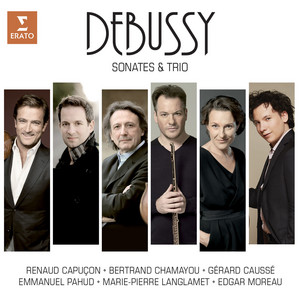 | Debussy: Violin Sonata in G Minor, CD 148, L. 140: II. Intermède. Fantasque et léger | Claude Debussy, Renaud Capuçon, Bertrand Chamayou | D♭ Major | 1 | 3B | 94 BPM | |
 | Five Pieces for String Quartet, WV 68: No. 2, Alla Serenata | Erwin Schulhoff, Leonkoro Quartet | F Major | 2 | 7B | 105 BPM | |
 | String Quartet No. 13, 3rd Movement | Antonín Dvořák, vision string quartet | F Major | 2 | 7B | 105 BPM | |
| Lyric Suite: IV. Adagio appassionato | Alban Berg, Leonkoro Quartet | F Major | 2 | 7B | 105 BPM | |
 | Sextet for Wind Quintet & Piano, FP 100: I. Allegro vivace: Tres vite et emporte | Francis Poulenc, Philippe Bernold, Olivier Doise, Ronald Van Spaendonck, Laurent Lefèvre, Hervé Joulain, Alexandre Tharaud | A Minor | 1 | 8A | 140 BPM | |
 | 5 Pieces for String Quartet: No. 2, Alla serenata | Erwin Schulhoff, Gallia Kastner, Adam Millstein, Cara Pogossian, Ben Solomonow | A♭ Major | 0 | 4B | 103 BPM | |
 | The Tempest Suite No. 1, Op. 109, No. 2: I. The Oak Tree | Jean Sibelius, Lahti Symphony Orchestra, Okko Kamu | B♭ Major | 0 | 6B | 86 BPM | |
 | Piano Trio, M. 67: II. Pantoum. Assez vif | Maurice Ravel, Beaux Arts Trio | F Major | 2 | 7B | 105 BPM | |
 | From the Bohemian Forest, Op. 68: No. 5, Waldesruhe (Version for Cello and Orchestra) | Antonín Dvořák, Raphaël Jouan, Orchestre national de Metz Grand Est, David Reiland | F Major | 2 | 7B | 105 BPM | |
 | Trio (Lamento), for Oud, Viola and Piano: IV. Un Poco Piu Mosso | Menachem Wiesenberg, Yuval Gotlibovich, Taiseer Elias | G Major | 1 | 9B | 87 BPM | |
 | Suite No. 1, "Orientale": I. Okenstamning: Adagio | Kurt Atterberg, Ferenc Balogh, Gyorgy Kertesz, Andras Kiss, Ilona Prunyi | B Minor | 1 | 10A | 61 BPM | |
 | Soir - Matin, Op. 76: I. Soir. Andante cantabile | Mel Bonis, Trio Wanderer | F Major | 2 | 7B | 105 BPM | |
 | Piano Trio in G Minor, Op. 17: II. Scherzo. Tempo di Menuetto | Clara Schumann, Ragna Schirmer, Iason Keramidis, Benedict Kloeckner | E♭ Major | 0 | 5B | 83 BPM | |
 | Suite, Op. 157b: II. Divertissement | Darius Milhaud, Jean-Marc Fessard, Frédéric Pélassy, Eliane Reyes | F♯ Major | 0 | 2B | 82 BPM | |
 | Dvořák: Piano Trio No. 4 in E Minor, Op. 90, B. 166 "Dumky": VI. Lento maestoso - Vivace | Antonín Dvořák, Beaux Arts Trio | C Minor | 1 | 5A | 109 BPM | |
 | Violin Sonata, FP 119: Allegro con fuoco | Francis Poulenc, Graf Mourja, Alexandre Tharaud | B♭ Minor | 1 | 3A | 124 BPM | |
 | Digital Aurora | Lumi Risto | C Minor | 8 | 5A | 112 BPM | |
| Piano Trio No. 3 in A Minor, Op. 26: III. Très lent | Édouard Lalo, Trio Wanderer | F Major | 2 | 7B | 105 BPM | |
 | Clarinet Quintet in B Minor, Op. 115: IV. Con moto | Johannes Brahms, Martin Fröst, Janine Jansen, Boris Brovtsyn, Maxim Rysanov, Torleif Thedéen | B Minor | 1 | 10A | 76 BPM | |
 | Symphony No. 3: III. Allegro comodo — Allegro deciso | Allan Pettersson, Christian Lindberg, Norrköping Symphony Orchestra | F Major | 2 | 7B | 105 BPM | |
 | Damase: Berceuse pour cor et piano, Op. 19 | Jean-Michel Damase, David Pyatt, Martin Jones | B♭ Major | 0 | 6B | 69 BPM |
- ISRC
- CHE272200994
- Label
- L-M Records/RCA Records